Women's Fitness Guide India 2026: PCOS, Fat Loss & Strength Plan That Works
Struggling with PCOS, thyroid, or stubborn belly fat? This guide covers exactly what Indian women need — hormonal fitness, strength training myths busted, and a practical plan that fits Indian lifestyle.

Medical Safety Note: This article is for general educational purposes only and is not a substitute for professional medical advice, diagnosis, or treatment. If you are pregnant, managing a condition like diabetes, PCOS, or thyroid disorder, or taking medication, please consult a qualified doctor or registered dietitian before changing your diet, supplements, or exercise routine.
Affiliate Disclosure: As an Amazon Associate I earn from qualifying purchases. This post contains affiliate links. If you buy through them, we may earn a small commission at no extra cost to you — this never affects our recommendations. We only suggest products we believe in. Read our full affiliate disclosure.
Important note: This guide is for informational purposes only. Women with PCOS, thyroid disorders, or other medical conditions should consult their doctor before starting a new fitness or supplement program. Supplement recommendations here are based on published research — they are not medical prescriptions.
Why Women's Fitness Advice Fails Indian Women
Most fitness content for women falls into one of two traps:
- Western-centric advice built around gym machines, protein shakes, and eating patterns that don't translate to Indian family life
- Overly cautious, "gentle" advice that underestimates what women can and should do physically
Indian women face unique challenges that most fitness guides ignore: PCOS (affecting 1 in 5 Indian women), thyroid disorders, hormonal changes with age, family and social pressure around food, and the cultural normalisation of prioritising everyone else's health before your own.
This guide is built for Indian women specifically — addressing both the physical and the hormonal reality.
Part 1: The Biggest Fitness Myths That Hold Women Back
Myth 1: Lifting Weights Makes Women Bulky
This is the most damaging fitness myth that still circulates in India.
The truth: Women have 10–15 times less testosterone than men. This hormone is the primary driver of large muscle mass. A woman's hormonal profile makes it physiologically very difficult to build the kind of bulk seen in male bodybuilders.
What strength training actually does for women:
- Builds lean, toned muscle (not bulk)
- Increases resting metabolic rate (burn more calories at rest)
- Strengthens bones (critical for preventing osteoporosis)
- Improves insulin sensitivity
- Reduces belly fat more effectively than cardio alone
- Improves confidence and posture
➡️ Deep dive: Strength Training for Women India
If you're adding strength training to your routine, creatine is one of the few supplements with real evidence behind it for strength and recovery — and it carries the same "bulky" myth. Our creatine for women guide breaks down what it actually does.
Myth 2: Women Should Eat Very Little to Lose Weight
Extreme calorie restriction (under 1,000–1,200 calories/day) causes rapid muscle loss, hormonal disruption, nutrient deficiencies, and metabolic adaptation — meaning your body burns fewer calories. The fat returns quickly once normal eating resumes.
Sustainable fat loss for women: 250–400 calorie daily deficit (not 1,000+).
Myth 3: Cardio Is Enough
Cardio burns calories during exercise. Strength training builds muscle that burns calories 24/7. For lasting body composition changes, women need both — with strength training being the more important of the two for most goals.
Myth 4: Women Shouldn't Train During Periods
There is no medical reason to avoid exercise during menstruation. Gentle movement (walking, yoga) often reduces cramps and PMS symptoms by improving circulation and releasing endorphins. Adjust intensity based on how you feel, not cultural assumption.
➡️ Related: Best Yoga Poses for Stress Relief and Flexibility
Part 2: Fitness in Your 20s, 30s, and 40s — What Changes and What Doesn't
Most fitness guides treat all women the same. But your body's priorities shift significantly across decades — and your training should reflect that.
In Your 20s
This is your peak bone density building window. The bone density you build before 30 is what protects you from fractures at 60. Strength training now is an investment that pays off over decades.
- Prioritise strength training 3–4 days/week
- Protein intake: 1.6–2.0g/kg bodyweight
- This is the easiest decade to build fitness habits — start now, not later
In Your 30s
Metabolism begins slowing roughly 1–2% per decade. Muscle mass maintenance becomes the priority because muscle is what keeps metabolism healthy.
- Recovery takes longer than in your 20s — sleep and rest days are training tools, not optional
- Protein intake becomes even more important
- Hormonal changes (especially post-pregnancy) can affect fat distribution — strength training counteracts this
In Your 40s and Beyond
Perimenopause typically begins between 45–50 for Indian women. Oestrogen decline affects bone density, muscle retention, and fat distribution — most women notice more belly fat accumulating even without dietary changes.
- Strength training becomes the single most important fitness tool in this decade
- Calcium and Vitamin D requirements increase
- Sleep quality matters more than ever — prioritise it as a non-negotiable
➡️ Related: Fitness After 40: Complete Guide for Indians
Part 3: Women's Hormonal Health and Fitness
Why Do Hormones Matter So Much for Indian Women?
Hormonal imbalances affect a disproportionately large number of Indian women due to:
- High rates of PCOS (polycystic ovary syndrome)
- Vitamin D and iron deficiency (affecting thyroid and reproductive hormones)
- High dietary carbohydrate intake (drives insulin resistance)
- Chronic stress (elevates cortisol, disrupts oestrogen/progesterone balance)
- Sedentary lifestyles
Understanding your hormonal environment is essential for choosing the right exercise and diet strategy.
➡️ Deep dive: Hormonal Imbalance Signs and Diet Fix for Women
PCOS: The Most Common Indian Women's Hormonal Issue
PCOS affects approximately 20% of Indian women — the highest rate globally. Key characteristics: irregular periods, elevated androgens, insulin resistance, and often difficulty losing fat.
Why fat loss is harder with PCOS:
- Insulin resistance makes the body store fat more readily
- Elevated androgens (testosterone) promote belly fat storage
- Higher cortisol sensitivity worsens with poor sleep and stress
- Cravings are often more intense due to blood sugar dysregulation
What works for PCOS fat loss:
Diet:
- Low glycaemic index carbohydrates (millets, oats, legumes over white rice and maida)
- Higher protein intake (1.8–2.2g/kg) — reduces insulin spikes and improves satiety
- Anti-inflammatory foods: turmeric, ginger, green vegetables, omega-3 rich foods
- Reduce: sugar, refined carbs, excess dairy (for some women with PCOS)
Exercise:
- Strength training 3–4 days/week — improves insulin sensitivity better than cardio alone
- Moderate cardio (walking, cycling) — avoid excessive HIIT which can spike cortisol
- Yoga and stress-reduction practices — cortisol management is critical for PCOS
Quick Answer: Best Exercise Plan for Indian Women with PCOS
Research consistently shows that a combination of strength training and moderate cardio — not excessive HIIT — produces the best outcomes for PCOS. Here's a practical weekly structure:
← Swipe to compare →
| Day | Workout | Duration |
|---|---|---|
| Monday | Strength training — lower body | 35–40 min |
| Tuesday | Brisk walk or yoga | 30 min |
| Wednesday | Strength training — upper body | 35–40 min |
| Thursday | Rest or gentle stretching | — |
| Friday | Full body strength training | 40 min |
| Saturday | Low-intensity cardio (walk or cycle) | 30–45 min |
| Sunday | Complete rest | — |
Key rule for PCOS: Maximum 2 HIIT sessions per week. Strength training 3–4 days is the non-negotiable priority. Excessive high-intensity work spikes cortisol — which directly worsens PCOS symptoms.
Supplements with evidence for PCOS:
- Inositol (myo-inositol + D-chiro-inositol): strong evidence for insulin sensitivity and cycle regulation
- Vitamin D: almost universally deficient in PCOS patients
- Magnesium: improves insulin sensitivity and sleep
- Omega-3: reduces inflammation and androgen levels
The most practical way to get therapeutic inositol doses is through supplementation — food sources simply don't provide enough for clinical benefit. The clinically studied ratio is 40:1 myo-inositol to D-chiro-inositol.
Carbamide Forte Myo-Inositol with D-Chiro Inositol — 40:1 Ratio
The clinically studied 40:1 ratio of myo-inositol to D-chiro-inositol. Supports insulin sensitivity, cycle regularity, and hormone balance in PCOS. 120 tablets — approximately 2 month supply at standard dose.
➡️ Deep dive: PCOS Weight Loss Guide ➡️ Diet specifics: PCOS Diet Plan — Indian Foods ➡️ Ashwagandha for PCOS: Ashwagandha for Women — PCOS and Hormones
Thyroid Issues in Indian Women
Thyroid disorders (both hypothyroid and hyperthyroid) are significantly more common in women than men, and rates are increasing in India. The thyroid affects metabolism, energy levels, weight, mood, and menstrual regularity.
For hypothyroidism (underactive thyroid):
- Fat loss is slower but not impossible — same principles apply, just with more patience
- Selenium and iodine are critical nutrients for thyroid function
- Avoid raw cruciferous vegetables in very large amounts (cooking neutralises goitrogens)
- Consistent sleep and stress management are non-negotiable
➡️ Deep dive: Thyroid Weight Management Guide ➡️ Diet plan: Thyroid Diet Plan — Indian Foods
What Role Does Stress Play in Women's Health?
Cortisol (the stress hormone) disrupts oestrogen and progesterone balance, worsens PCOS symptoms, promotes belly fat storage, increases sugar cravings, and impairs sleep quality. Indian women often carry disproportionately high stress loads.
Cortisol management strategies that work:
- Consistent sleep schedule (same wake time every day, 7–9 hours)
- Daily stress-reduction practice (yoga, meditation, walking — even 10 minutes matters)
- Avoid over-exercising (excessive HIIT + calorie restriction spikes cortisol further)
➡️ Deep dive: Stress and Weight Gain Connection ➡️ Meditation guide: Meditation for Beginners India
Part 4: Training Around Your Monthly Cycle
Your hormones shift significantly across your 28-day cycle — and your training can work with these shifts rather than against them. This isn't about doing less. It's about doing the right things at the right times.
Phase 1 — Menstrual (Days 1–5)
Oestrogen and progesterone are at their lowest. Energy dips are normal and expected.
- Light yoga, walking, or stretching is ideal
- Don't force heavy training if fatigue is significant
- Focus on rest and recovery — this is part of the process, not weakness
Phase 2 — Follicular (Days 6–13)
Oestrogen begins rising — this is when energy and strength start climbing.
- Best phase for progressive overload and heavier lifting
- Your body recovers faster during this phase
- Try new exercises or increase weights here
Phase 3 — Ovulatory (Around Day 14)
Peak oestrogen — energy and strength are at their highest for the entire month.
- Ideal time for your most challenging workouts
- Best phase for attempting personal bests in strength or endurance
- High-intensity sessions work well here
Phase 4 — Luteal (Days 15–28)
Progesterone rises, then both hormones drop sharply before menstruation begins.
- Energy gradually decreases toward the end of this phase
- Focus on form over load — reduce intensity in the final days
- Cravings increase (especially for carbs and sugar) — this is hormonal, not weakness
- Magnesium supplementation can help with PMS symptoms in this phase
Part 5: The Women's Fitness Plan
The Beginner Plan (Weeks 1–4)
Goal: Build baseline fitness, introduce strength training, establish habits Schedule: 3 days/week, 30 minutes per session
Day 1 — Lower Body + Core
- Bodyweight squats: 3 × 12
- Glute bridges: 3 × 15
- Reverse lunges: 3 × 10 each leg
- Plank: 3 × 20 seconds
- Superman hold: 3 × 12
Day 2 — Upper Body + Cardio
- Knee push-ups (progress to full): 3 × 8–10
- Seated shoulder press (water bottles): 3 × 12
- Tricep dips (chair): 3 × 10
- 20-minute brisk walk
Day 3 — Full Body
- Squat to press (with water bottles): 3 × 10
- Step-ups: 3 × 10 each leg
- Push-ups: 3 × 8
- Side plank: 3 × 15 sec each side
- Dead bug: 3 × 10 each side
➡️ Full beginner guide: Female Fitness Beginner Guide
The Intermediate Plan (Weeks 5–12)
Goal: Build lean muscle, improve fat loss, increase strength Schedule: 4 days/week — alternating push/pull/legs/full body
Key exercise progressions:
- Knee push-up → Full push-up → Decline push-up
- Regular squat → Pause squat → Bulgarian split squat
- Glute bridge → Single-leg glute bridge → Hip thrust
- Plank → Moving plank → Plank with hip dip
At the intermediate stage, resistance bands unlock a significant range of exercises that aren't possible with bodyweight alone — banded squats, lateral walks for glutes, banded shoulder work, and assisted pull-up progressions. If you're training at home, a quality band set covers the full intermediate plan without any other equipment.
Boldfit Loop Resistance Bands Set — 5 Bands
Five resistance levels from extra-light to heavy — covers the full intermediate plan. Banded squats, glute bridges, lateral walks, shoulder activation, and more. No gym needed. Durable latex, comes with carry bag.
Adding Yoga to Your Routine
Yoga complements strength training beautifully for women by:
- Improving flexibility and joint health
- Reducing cortisol and stress
- Building core strength and balance
- Supporting hormonal balance (especially hip-opening poses)
Even 15–20 minutes of yoga daily (separate from your workout) produces measurable improvements in stress markers, sleep quality, and mood within 4–6 weeks.
➡️ Getting started: Beginner Yoga Poses for Stress Relief and Flexibility ➡️ Pilates option: Pilates for Beginners India
Part 6: Nutrition for Indian Women
Protein — The Most Important Priority
Indian women are chronically undereating protein. The cultural pattern of serving larger portions to the men in the family while women eat less, combined with predominantly carbohydrate-based meals, creates a significant protein gap.
Target: 1.6–2.0g protein per kg of body weight
Best Indian protein sources for women:
- Paneer: 18g per 100g — most versatile Indian protein
- Eggs: 6g per egg — affordable, complete protein
- Curd/Greek yogurt: 10–15g per 150g serving
- Dal/lentils (cooked): 7–9g per 100g
- Chicken: 25–30g per 100g cooked
- Tofu: 8g per 100g
➡️ Full list: High-Protein Vegetarian Diet Plan — 7 Days
Iron — Critical for Women
Indian women lose iron through menstruation every month. Combined with low meat consumption in many households, iron deficiency is extremely common — affecting up to 50% of Indian women.
Signs of iron deficiency: chronic fatigue, breathlessness on exertion, pale skin, hair loss, cold hands and feet, poor exercise recovery.
Best vegetarian iron sources: Ragi, rajma, spinach (with vitamin C to aid absorption), pumpkin seeds, til (sesame), drumstick leaves.
Note: Tea and coffee inhibit iron absorption. Avoid drinking them within 1–2 hours of iron-rich meals.
If you're consistently experiencing fatigue, hair loss, or breathlessness during light activity, get bloodwork done first. For confirmed deficiency, ferrous bisglycinate is better tolerated than standard ferrous sulphate tablets — gentler on the stomach and better absorbed.
Himalayan Organics Iron Supplement for Women | 90 Veg capsules
Ferrous bisglycinate formula — gentler on the stomach than standard iron tablets with better absorption. Includes Vitamin C, Vitamin B12 and folic acid which support iron uptake. Formulated specifically for women's iron requirements.
Calcium for Bone Health
Women are four times more likely than men to develop osteoporosis. Bone density peaks around age 30 — building strong bones before then reduces fracture risk significantly later in life.
Daily calcium target: 1,000mg (1,200mg after menopause)
Best Indian sources: Dahi/curd, milk, paneer, ragi (finger millet — one of the richest calcium sources in Indian food), til, chia seeds, green leafy vegetables.
Most Indian women — especially those avoiding dairy — fall short of daily calcium targets through food alone. If you're not consistently hitting 1,000mg through diet, a calcium supplement with Vitamin D3 and K2 is worth considering. K2 is important because it directs calcium to bones rather than soft tissue.
Joint and skin health are closely tied to the same ageing process that affects bone density — collagen production naturally declines with age and after menopause. If you're noticing joint stiffness, thinning skin, or weaker nails alongside bone health concerns, our collagen supplements guide covers what's actually worth taking.
HealthKart HK Vitals Calcium, Magnesium & Zinc with Vitamin D3
Complete bone health formula — calcium paired with Magnesium, Zinc, and Vitamin D3 for optimal absorption and utilisation. 60 tablets. Suitable for women 25+ who don't consistently meet calcium targets through diet.
Part 7: Common Mistakes Indian Women Make
Mistake 1: Only Doing Cardio
Walking and Zumba are excellent for heart health and mood — but they don't preserve muscle during a calorie deficit. Without strength training, fat loss causes loss of both fat and muscle, leaving you "skinny fat" (low weight but high body fat percentage) with a slower metabolism.
Mistake 2: Eating Too Little
Eating 800–1,000 calories daily is not more effective than eating 1,400. It causes muscle loss, hormonal disruption, extreme hunger (leading to bingeing), and metabolic adaptation. Sustainable fat loss requires only a moderate deficit.
Mistake 3: Ignoring Sleep
Poor sleep increases ghrelin (hunger hormone), decreases leptin (fullness hormone), raises cortisol, and promotes belly fat specifically. For women with PCOS, poor sleep dramatically worsens insulin resistance.
7–9 hours of quality sleep is not optional — it's a fitness tool.
➡️ Deep dive: Sleep, Recovery & Fat Loss Guide
Mistake 4: Doing the Same Workout Forever
Your body adapts. The yoga routine you've done for 3 years stopped producing results after the first 6 weeks. Progressive challenge — whether through Zumba → weights, or harder yoga poses, or longer walks — is necessary for continued improvement.
Mistake 5: Comparing to Men's Results
Men lose fat faster initially due to higher testosterone, higher muscle mass (burns more calories), and typically higher starting calorie intake. Women's fat loss is slower but no less real. Don't compare your week 4 to a man's week 4.
FAQs
Can I exercise during my period?
Yes. Light to moderate exercise often reduces period pain by improving blood flow and releasing endorphins. Reduce intensity if you feel significant discomfort, but there is no medical reason to stop completely.
Will strength training help with PCOS?
Yes — strength training is one of the most evidence-backed interventions for PCOS because it directly improves insulin sensitivity, which is the root driver of most PCOS symptoms.
How long until I see visible results?
- 2–3 weeks: improved energy, better sleep, reduced stress
- 4–6 weeks: clothes fitting better, improved strength
- 8–12 weeks: visible body composition changes (with consistent diet + training)
Results require diet changes alongside exercise. Training alone produces about 30–40% of potential results.
Is it safe to do HIIT with PCOS?
Moderate HIIT (2 days/week maximum) is fine. Excessive high-intensity training spikes cortisol, which worsens PCOS symptoms. Prioritise strength training (3–4 days) and moderate cardio (walking, cycling) over daily intense HIIT sessions.
What should I eat before a workout?
Light meal or snack 60–90 minutes before training: banana + curd, 1 roti with peanut butter, oats, or a small portion of rice with dal. Avoid heavy meals within 30 minutes of training.
➡️ More detail: Best Pre-Workout Foods for Indians
How do I start if I've never exercised before?
Start with the 3-day beginner plan in Part 5 of this guide. Week 1, focus only on showing up — don't worry about intensity. The habit matters more than the workout at this stage. After 4 weeks of consistency, move to the intermediate plan.
What's the best time to exercise for Indian women?
Any time you'll actually do it consistently is the best time. That said — morning workouts (before family obligations begin) tend to have the highest consistency rates for Indian women. Evening workouts (5–7 PM) work well for energy levels. Avoid intense training within 2 hours of bedtime as it can disrupt sleep.
Free Tools to Help You
Put this article into action — use our free calculators to get your personalized numbers.
Was this article helpful?
Want More Tips Like This?
Join 1,000+ readers getting weekly fitness, diet, and wellness tips + FREE meal plan
No spam, ever. Unsubscribe anytime.

About the Author: Ashwani
Fitness influencer and wellness writer helping Indians build healthier lifestyles.
Read more about us →Comments
Leave a Comment
Your email will not be published. Comments are reviewed before appearing.
You Might Also Like
Continue your wellness journey
26 min read
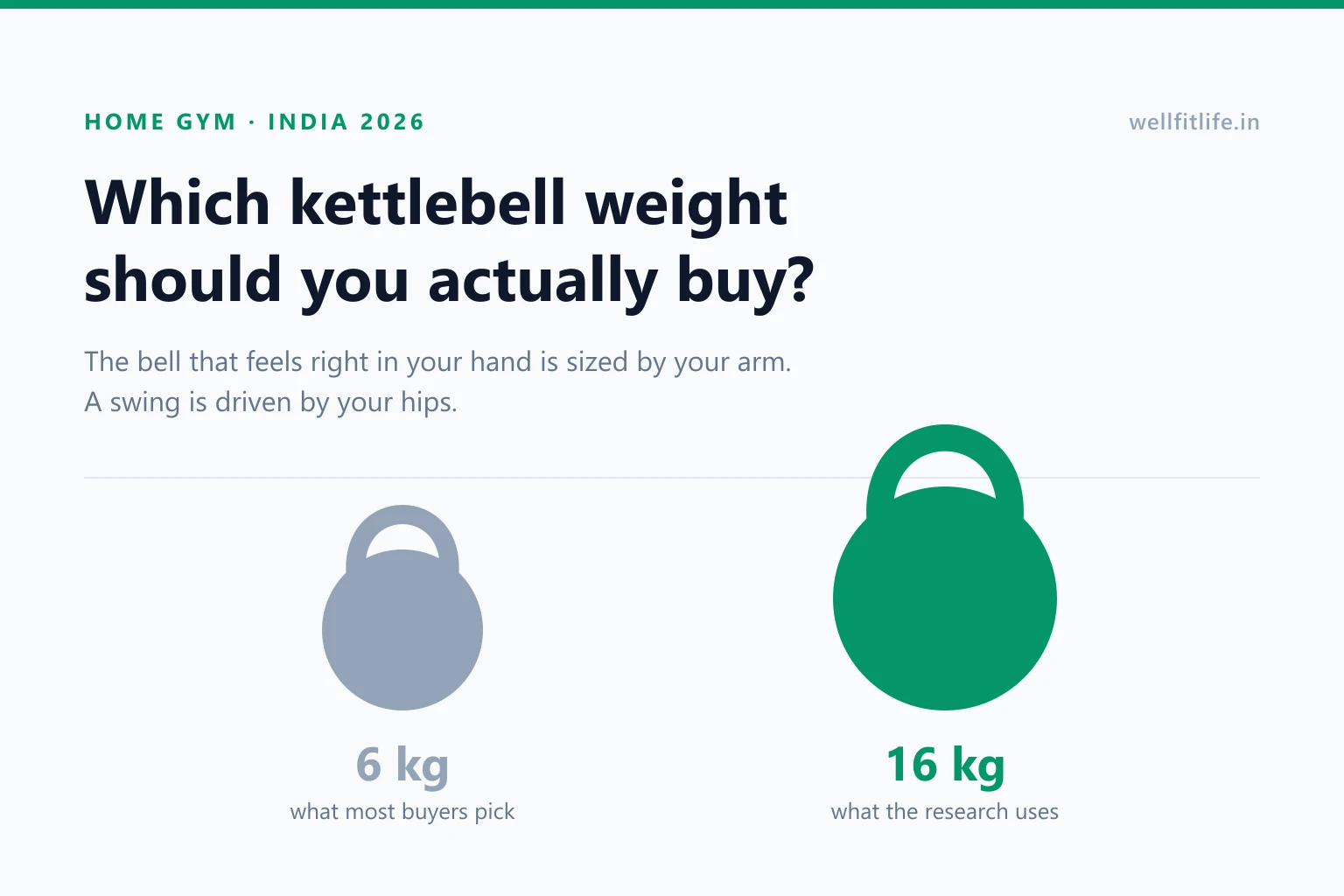
Best Kettlebells for Home Gym in India (2026): Which Weight to Buy
Almost every kettlebell sold in India is lighter than the ones the research is done with. The weight that feels right when you pick it up is roughly half the weight your hips need — and that single mistake is why most kettlebells end up under a bed.

18 min read
Amazon Great Indian Festival 2026: Home Gym Deals Worth Buying (and What to Skip)
The Great Indian Festival starts on 8 October 2026. The percentage off on a fitness listing is measured against MRP, which is a legal ceiling rather than a real price, so that number tells you very little. What tells you whether a deal is real is the price history and the bank offer. Here is the short list of home gym equipment worth buying in the sale, and how to check each deal before you pay.
15 min read
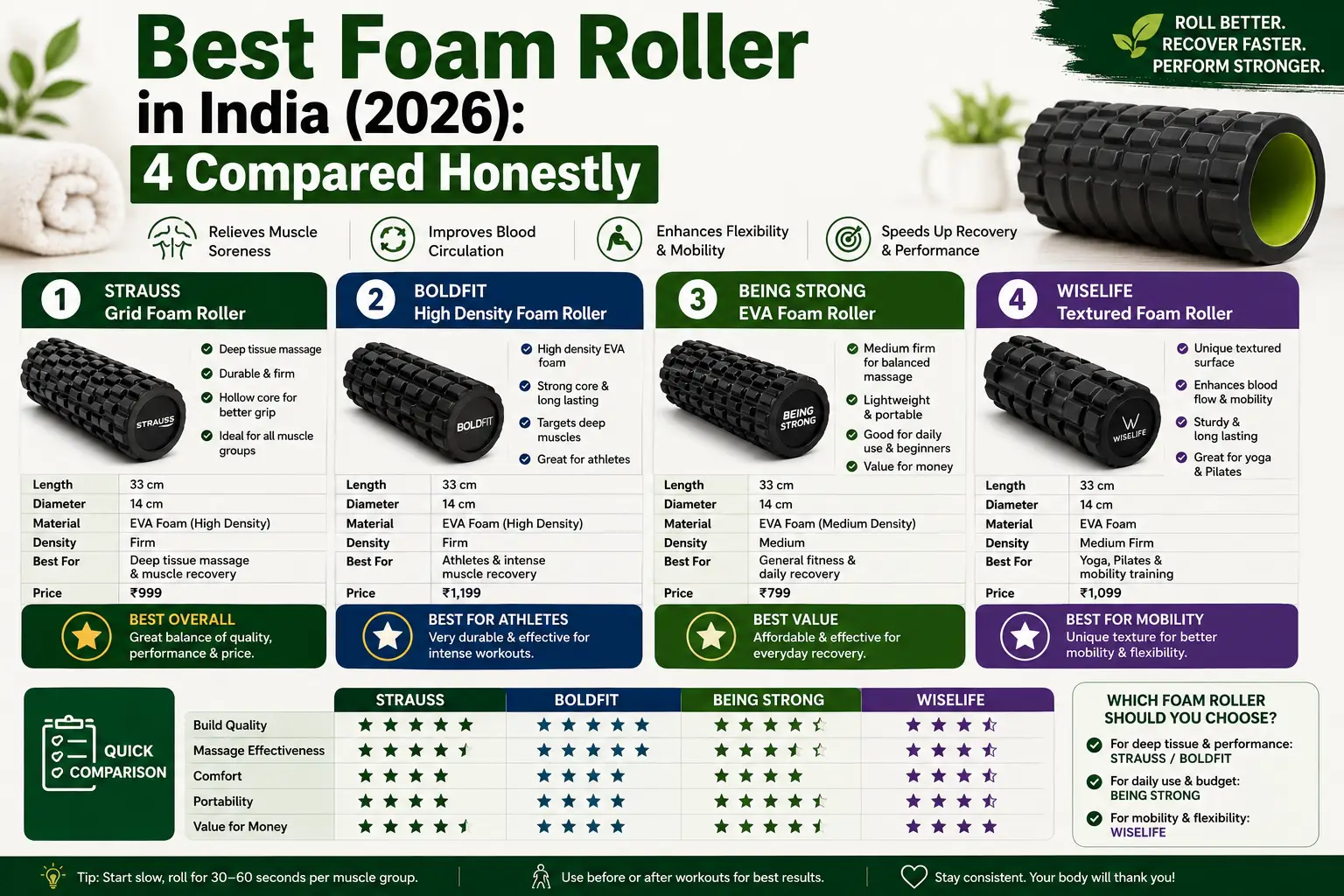
Best Foam Roller in India (2026): 4 Compared Honestly
Boldfit and Strauss foam rollers compared on density, size and rating data — plus what foam rolling actually does for sore muscles, and what it definitely does not.