10 Beginner Yoga Poses for Stress Relief & Flexibility
A beginner-friendly yoga guide with simple poses to reduce stress, improve flexibility, calm the mind and release body tension — step-by-step instructions included.

Medical Safety Note: This article is for general educational purposes only and is not a substitute for professional medical advice, diagnosis, or treatment. If you are pregnant, managing a condition like diabetes, PCOS, or thyroid disorder, or taking medication, please consult a qualified doctor or registered dietitian before changing your diet, supplements, or exercise routine.
Introduction
Modern life is fast — deadlines, screens, notifications, pressure, constant sitting. The body gets stiff, the shoulders hunch forward, the neck aches, and stress becomes a permanent companion. We rush through the day barely breathing properly, and then wonder why sleep doesn't come easily.
Yoga isn't just exercise — it's a complete system to relax the mind, open the body, correct posture, improve breathing, and restore balance. Unlike gym workouts that focus on muscle building, yoga focuses on flexibility, alignment, mindfulness and stress relief. It works on both the physical and mental layers.
You don't need to be flexible or experienced to start. You don't need expensive equipment or a studio membership. All you need is a yoga mat (or towel), comfortable clothes, and 15–20 minutes of your time. The poses below are beginner-friendly, safe, and highly effective for stress relief and flexibility improvement.
Whether you're an office worker dealing with back pain, a student stressed about exams, or someone just looking to improve mental clarity — these 10 yoga poses will help you feel calmer, lighter, and more grounded.
Why Yoga Works Better Than Just Stretching
Regular stretching helps with flexibility, but yoga goes deeper. Here's why:
🧠 Mindful Movement
Each pose is done with breath awareness, which activates the parasympathetic nervous system (rest & digest mode). This reduces cortisol levels naturally.
📖 Read Also:
Meditation for Beginners: A Practical Indian GuideIf the breath awareness in yoga appeals to you, a dedicated daily meditation practice builds the same calming effect off the mat — here's how Indian beginners can start.
🌬️ Controlled Breathing
Deep, slow breathing calms the mind, improves oxygen flow, and helps release physical tension stored in muscles.
💆 Releases Muscle Tension
Yoga targets tight areas like hips, lower back, shoulders, and hamstrings — common problem zones for people who sit all day.
🔄 Improves Posture
Regular practice corrects alignment issues, strengthens core muscles, and trains your body to maintain better posture naturally.
10 Beginner Yoga Poses — Step-by-Step Guide
These poses are simple, safe, and extremely effective. Practice them in the order listed for best results.
1. Mountain Pose (Tadasana) — Foundation Pose
How to do it:
-
Stand with feet hip-width apart, arms by your sides
-
Distribute weight evenly on both feet
-
Engage your thighs, pull belly in slightly, roll shoulders back
-
Breathe slowly and hold for 30–60 seconds
Benefits: Improves posture, builds body awareness, strengthens legs and core, calms the mind.
Beginner Tip: Close your eyes and focus on your breath. This simple pose is surprisingly powerful for grounding yourself.
2. Child's Pose (Balasana) — Instant Stress Relief
How to do it:
-
Kneel on the floor, sit back on your heels
-
Bend forward and rest your forehead on the mat
-
Extend arms forward or rest them by your sides
-
Breathe deeply and hold for 1–2 minutes
Benefits: Releases lower back tension, calms nervous system, stretches hips and thighs, perfect resting pose between flows.
Beginner Tip: If knees hurt, place a folded towel under them. This pose should feel deeply relaxing.
3. Cat-Cow Stretch (Marjaryasana-Bitilasana) — Spine Mobility
How to do it:
-
Get on all fours (hands under shoulders, knees under hips)
-
Cow: Inhale, arch your back, lift chest and tailbone, look up
-
Cat: Exhale, round your spine, tuck chin to chest, pull belly in
-
Repeat this flow 15–20 times smoothly
Benefits: Increases spine flexibility, relieves back pain, massages internal organs, great for desk workers with stiff backs.
Beginner Tip: Move slowly and sync movement with breath. Exhale on cat, inhale on cow.
4. Butterfly Pose (Baddha Konasana) — Hip Opener
How to do it:
-
Sit on the mat with legs extended
-
Bend knees and bring the soles of feet together
-
Hold your feet with both hands
-
Gently flap your knees up and down like butterfly wings for 30–60 seconds
Benefits: Opens tight hips, improves flexibility in inner thighs, reduces menstrual discomfort, calms the mind.
Beginner Tip: Don't force your knees down. Let gravity do the work. Sit on a cushion if hips are very tight.
5. Cobra Pose (Bhujangasana) — Back Strengthener
How to do it:
-
Lie face down on the mat, legs straight, tops of feet on the floor
-
Place palms flat under your shoulders
-
Inhale and gently lift your chest off the mat using back muscles (not arms)
-
Keep elbows slightly bent, shoulders relaxed
-
Hold for 20–30 seconds, then lower down slowly
Benefits: Strengthens spine, opens chest and lungs, reduces back stiffness, improves posture, boosts energy.
Beginner Tip: Don't over-arch. Keep the lift small and focus on lengthening the spine rather than pushing high.
6. Downward Facing Dog (Adho Mukha Svanasana) — Full Body Stretch
How to do it:
-
Start on all fours
-
Tuck toes under and lift hips up toward the ceiling
-
Straighten legs (knees can stay slightly bent if hamstrings are tight)
-
Press palms firmly into the mat, relax head between arms
-
Hold for 30–45 seconds, breathe deeply
Benefits: Stretches hamstrings, calves, shoulders, and spine. Boosts energy, improves circulation, strengthens arms and legs.
Beginner Tip: It's okay if your heels don't touch the floor. Focus on lengthening your spine and breathing steadily.
7. Seated Forward Bend (Paschimottanasana) — Anxiety Relief
How to do it:
-
Sit on the mat with legs extended straight in front
-
Inhale and lengthen your spine
-
Exhale and slowly bend forward from the hips (not lower back)
-
Reach for your feet, shins, or knees — wherever you can comfortably reach
-
Hold for 30–60 seconds, breathing deeply
Benefits: Calms the mind, reduces anxiety, stretches hamstrings and spine, improves digestion, relieves headaches.
Beginner Tip: Don't pull or force. Keep knees slightly bent if needed. Focus on lengthening forward, not pulling down.
8. Bridge Pose (Setu Bandhasana) — Posture Corrector
How to do it:
-
Lie on your back, bend knees, place feet flat on the floor hip-width apart
-
Keep arms by your sides, palms facing down
-
Press feet into the mat and lift hips upward
-
Keep thighs parallel, engage glutes
-
Hold for 20–30 seconds, then lower slowly
Benefits: Strengthens back and glutes, opens chest and shoulders, improves posture, reduces lower back pain.
Beginner Tip: Don't lift too high. Focus on keeping your spine in a smooth curve, not forcing an arch.
9. Tree Pose (Vrikshasana) — Balance & Focus
How to do it:
-
Stand tall in Mountain Pose
-
Shift weight to your left foot
-
Bend right knee and place right foot on inner left thigh (or calf, not knee)
-
Bring palms together in front of chest or raise arms overhead
-
Hold for 20–30 seconds, then switch sides
Benefits: Improves balance and concentration, strengthens legs and core, enhances mental focus and stability.
Beginner Tip: Fix your gaze on one point ahead. If balancing is hard, keep your toes on the floor for support.
10. Corpse Pose (Shavasana) — Deep Relaxation
How to do it:
-
Lie flat on your back, legs slightly apart, arms by your sides
-
Palms facing up, close your eyes
-
Let your entire body relax completely — release all tension
-
Breathe naturally and stay still for 3–5 minutes
Benefits: Deeply calms the nervous system, reduces stress and fatigue, improves sleep quality, integrates the practice.
Beginner Tip: This is the most important pose. Don't skip it. Let your body absorb all the benefits of the practice.
Weekly Practice Schedule for Beginners
You don't need to practice daily to see results. Start with 3–4 days per week and gradually increase. Here's a simple schedule:
← Swipe to compare →
| Day | Practice Focus | Duration |
|---|---|---|
| Monday | Tadasana + Cat-Cow + Cobra + Shavasana | 15 mins |
| Tuesday | Butterfly + Downward Dog + Child Pose + Shavasana | 15 mins |
| Wednesday | Full sequence (all 10 poses) slow flow | 25 mins |
| Thursday | Rest or gentle stretching | — |
| Friday | Forward Bend + Bridge + Tree Pose + Shavasana | 15 mins |
| Saturday | Combined flow — all 10 poses | 25 mins |
| Sunday | Shavasana + slow breathing practice | 10 mins |
Consistency matters more than intensity. Even 15 minutes daily is enough to see real changes.
Mental & Physical Health Benefits of Regular Yoga Practice
🧘♀️ Reduces Stress & Anxiety
Activates parasympathetic nervous system, lowers cortisol, calms racing thoughts.
😴 Improves Sleep Quality
Relaxes body and mind, making it easier to fall asleep and stay asleep longer.
🧍 Corrects Posture
Strengthens core, aligns spine, reduces slouching from desk work.
🤸 Increases Flexibility
Stretches tight muscles, improves range of motion in joints.
💪 Strengthens Core & Back
Builds functional strength without heavy weights or equipment.
📖 Read Also:
Pilates for Beginners in India: Benefits & How to Start at HomeWant more core-focused strength alongside this flexibility work? Pilates is a natural complement to yoga and can be started at home with no equipment.
🧠 Enhances Mental Clarity
Improves focus, concentration, and emotional regulation.
💼 Perfect for Office Workers
Relieves neck, shoulder, and lower back pain from prolonged sitting.
🌬️ Improves Breathing
Increases lung capacity, teaches proper diaphragmatic breathing.
Just 20 minutes daily can transform how your body and mind feel.
Common Mistakes Beginners Make (And How to Avoid Them)
❌ Holding Your Breath
Breathing is the most important part of yoga. If you hold your breath, you lose the stress-relief benefit. Always breathe slowly and deeply.
❌ Forcing Yourself Into Poses
Flexibility takes time. Forcing leads to injury. Work within your comfortable range and let progress happen naturally.
❌ Skipping Shavasana
Many beginners skip the final relaxation pose. This is when your body integrates all the benefits. Never skip it.
❌ Practicing on a Full Stomach
Always practice yoga on an empty stomach or at least 2 hours after eating. Morning practice works best.
❌ Comparing Yourself to Others
Yoga is personal. Don't compare your Day 1 with someone's Day 100. Focus on your own journey.
Conclusion
Yoga isn't about touching your toes or doing perfect poses — it's about the journey. It's about showing up for yourself, breathing consciously, and allowing your body to open up at its own pace. Every time you step onto the mat, you're choosing mental peace over stress, flexibility over stiffness, and presence over distraction.
Start with these 10 beginner-friendly poses. Practice them 3–4 times a week for just 15–20 minutes. Within 2–3 weeks, you'll notice your body feels lighter, your mind feels calmer, and your sleep improves. Within 2–3 months, you'll see visible improvements in flexibility, posture, and overall energy levels.
You don't need expensive classes or fancy equipment. All you need is a mat, comfortable clothes, and the willingness to breathe, stretch, and be present. The rest will follow naturally.
Give yourself time. Your body is learning, healing, and evolving — one breath at a time.
📖 You Might Also Like:
Frequently Asked Questions
Which yoga poses are best for stress relief for beginners?
The most effective stress-relieving yoga poses for beginners are Child's Pose (Balasana), Seated Forward Bend (Paschimottanasana), Corpse Pose (Savasana), and Cat-Cow stretch. These activate the parasympathetic nervous system, lowering cortisol and promoting calm.
How long should a beginner practice yoga each day?
Start with 15–20 minutes per day for the first two weeks, then gradually extend to 30–45 minutes. Even 10 minutes of consistent daily yoga is more effective than occasional long sessions. Regularity matters more than duration for beginners.
Is it okay to do yoga every day as a beginner?
Yes — gentle yoga can be done daily without risk of overtraining. Unlike weightlifting, yoga uses controlled movements that aid recovery. If you feel sore, switch to restorative poses like Savasana or gentle stretching instead of skipping the day entirely.
Do I need a yoga mat to start yoga at home?
A yoga mat is highly recommended for grip and cushioning on floor poses. A non-slip mat (4–6 mm thick) is ideal for beginners. Indian options like Boldfit or Slovic are affordable (INR 400–800) and available on Amazon or Flipkart.
📖 Read Also:
Best Yoga Mat in India (2026): 5 Mats Tested & RankedFull comparison of 5 popular mats on grip, thickness, and durability — including which thickness suits beginners and what to avoid on slippery tile floors.
📖 Read Also:
Surya Namaskar for Weight Loss: Complete Benefits GuideOnce these poses feel comfortable, Surya Namaskar strings several of them into one flowing sequence — a natural next step for fat loss and flexibility together.
Can yoga improve flexibility for complete beginners?
Absolutely — most adults see noticeable flexibility improvements within 4–6 weeks of regular yoga practice. Poses like Seated Forward Bend, Butterfly, and Downward Dog target common tight areas like hamstrings, hips, and shoulders that most Indians carry tension in.
Related Reading
Free Tools to Help You
Put this article into action — use our free calculators to get your personalized numbers.
Was this article helpful?
Want More Tips Like This?
Join 1,000+ readers getting weekly fitness, diet, and wellness tips + FREE meal plan
No spam, ever. Unsubscribe anytime.

About the Author: Ashwani
Fitness influencer and wellness writer helping Indians build healthier lifestyles.
Read more about us →Comments
Leave a Comment
Your email will not be published. Comments are reviewed before appearing.
You Might Also Like
Continue your wellness journey

26 min read
Monsoon Fitness India (2026): Home Workout & Diet Guide
Monsoon in India kills most fitness routines. Skipped gym days, muddy roads, low motivation, and seasonal infections derail months of progress. Here is your complete guide to stay fit, build immunity, and actually thrive during the Indian rainy season — workouts, diet, calorie data, and a 4-week progressive plan.
15 min read
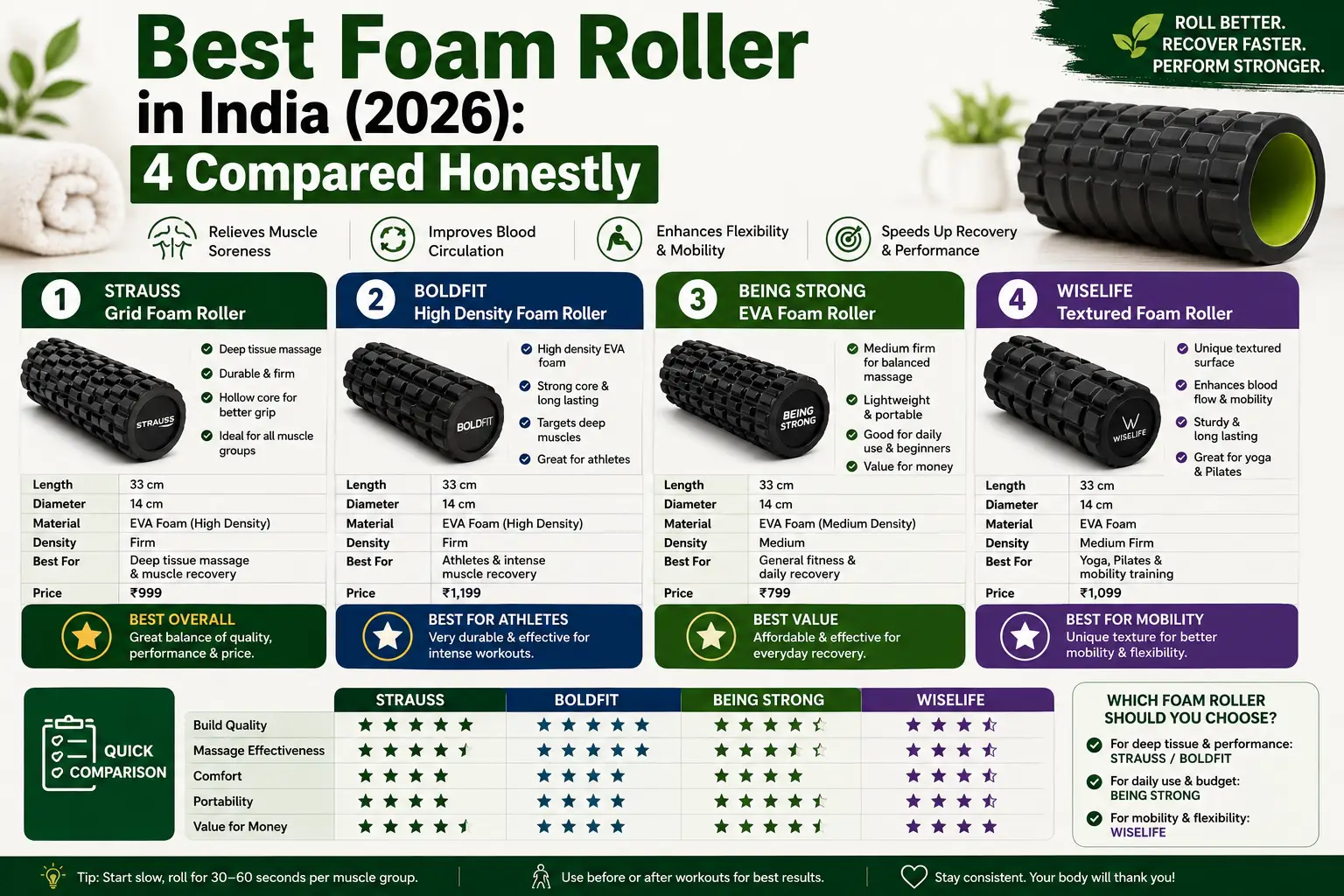
Best Foam Roller in India (2026): 4 Compared Honestly
Boldfit and Strauss foam rollers compared on density, size and rating data — plus what foam rolling actually does for sore muscles, and what it definitely does not.

17 min read
Best Gym Shoes in India (2026): 6 Compared Honestly
Most Indians buy a running shoe for the gym. Here is exactly when that is fine, when it costs you, and six options compared — from a ₹1,500 Campus to the Nike Metcon.