Mindful Eating & Portion Control: Lose Weight Without Strict Dieting
Learn how to lose weight naturally through mindful eating habits and portion control—without starving yourself or following extreme diets.

Medical Safety Note: This article is for general educational purposes only and is not a substitute for professional medical advice, diagnosis, or treatment. If you are pregnant, managing a condition like diabetes, PCOS, or thyroid disorder, or taking medication, please consult a qualified doctor or registered dietitian before changing your diet, supplements, or exercise routine.
Most Indian diet plans fail within 3 weeks. Not because of bad willpower — but because they are built on restriction, guilt, and rules that do not fit real life. You cannot maintain a plan that makes you dread mealtimes.
Mindful eating is the opposite approach. Instead of telling you what not to eat, it changes how you eat — and that shift alone is enough to reduce calorie intake by 15–20% without counting a single calorie or skipping a single meal.
This guide covers the science behind mindful eating, practical portion control techniques using Indian food, and the specific habits that make the biggest difference.
📖 Read Also:
Indian Diet Plan for Weight Loss: The Complete 2026 GuidePair these portion-control habits with the complete calorie targets and 7-day meal charts in our full Indian diet plan guide.
What is Mindful Eating?
Mindful eating is the practice of being fully present during meals — paying deliberate attention to hunger and fullness signals, tasting your food consciously, and eating without distraction.
It sounds simple. But most Indians eat in one of three ways that directly oppose mindful eating:
- Eating while watching TV or scrolling the phone — the most common. Distraction increases meal size by 20–40% because your brain does not register the sensory experience of eating, so fullness signals are delayed.
- Eating quickly — a meal eaten in 5 minutes does not give the brain time to process fullness. The satiety signal (triggered by hormones like CCK and leptin) takes 15–20 minutes to reach the brain after your stomach begins filling.
- Eating from stress or boredom — eating triggered by emotions rather than physical hunger, which is extremely common among office workers, students, and anyone under chronic pressure.
The Science: When you eat distracted or quickly, your brain's prefrontal cortex — responsible for rational decision-making — is partially disengaged. Your limbic system, which drives pleasure-seeking and habit responses, takes over. This is why you "wake up" halfway through a packet of biscuits without realising how much you ate.
Why Mindful Eating Works for Weight Loss (The Actual Mechanism)
Mindful eating produces weight loss through four specific mechanisms — not through restriction:
1. It activates the cephalic phase digestive response. When you eat slowly and attentively, your brain prepares the digestive system more effectively. Saliva production increases, stomach acid releases earlier, and enzyme activity improves. This means you digest more efficiently and feel satisfied with less food.
2. It reduces the speed at which you eat. Slower eating gives the hormonal satiety signal time to arrive before you have overeaten. People who eat quickly consume 70–100 more calories per meal than slow eaters — that adds up to a 700–1,000 calorie weekly surplus from speed alone.
3. It breaks the emotional eating cycle. Most overeating in India is not driven by physical hunger — it is triggered by boredom, stress, watching cricket, or social pressure at family gatherings. Mindful eating teaches you to identify the difference between physical hunger (gradual, feels like an empty stomach) and emotional hunger (sudden, craving-specific, often appears after a stressful event).
4. It improves meal satisfaction. When you taste your food fully rather than consuming it mechanically, you feel more satisfied with the same quantity. This is why people often feel unsatisfied after eating a meal while distracted — they ate the calories but missed the sensory experience.
The Mindful Eating vs Mindless Eating Comparison
← Swipe to compare →
| Factor | Mindful Eating | Mindless Eating |
|---|---|---|
| Where you eat | At a table, away from screens | In front of TV / phone |
| Speed | 15–20 minutes per meal | Under 10 minutes |
| Hunger check | Eat when hungry (4–5 on scale) | Eat out of habit or boredom |
| Fullness check | Stop at 80% full | Stop when plate is empty |
| Chewing | 15–20 chews per bite | Swallow after 4–5 chews |
| Food awareness | Notice taste, texture, smell | Barely notice what you are eating |
| Caloric intake | 15–20% less | Standard or excess |
Simple Mindful Eating Habits You Can Start Today
1. The No-Screen Rule During Meals
Put your phone face-down, turn the TV off, and eat at a table — not on the sofa or at your desk. This is the single highest-impact mindful eating habit.
Studies consistently show that distracted eating increases meal size by 20–40% and reduces meal satisfaction, leading to more snacking an hour later.
2. Chew Each Bite 15–20 Times
Most people chew 4–6 times before swallowing. Aim for 15–20 chews per bite, especially for dense foods like roti, paneer, or dal.
Chewing thoroughly: produces more saliva amylase (which begins starch digestion in the mouth), slows your eating pace automatically, and gives the stomach time to send fullness signals before you take the next bite.
3. Use a Smaller Plate
Switch from a large thali (30 cm) to a standard dinner plate (25–27 cm). Research published in the Journal of Consumer Research found that people serve 20–30% more food on larger plates and eat nearly all of it regardless of hunger.
This is one of the few portion control strategies that works passively — it requires no willpower in the moment.
4. Drink Water 10–15 Minutes Before Meals
Drinking 300–400 ml of water before a meal reduces initial hunger intensity, which leads to smaller first servings. A 2010 clinical trial found that pre-meal water drinking led to 13% fewer calories consumed at the meal.
5. Rate Your Hunger Before Eating
Use a simple 1–10 hunger scale before sitting down to eat:
- 1–3: Not hungry — do not eat
- 4–5: Moderately hungry — ideal time to eat
- 6–7: Quite hungry — eat soon
- 8–10: Very hungry — high risk of overeating
This simple check breaks the habit of eating by the clock or out of boredom rather than actual physical need.
6. Stop at 80% Full (Hara Hachi Bu)
This principle from Okinawa — "eat until 80% full" — is one of the most studied eating behaviours associated with healthy weight and longevity. The challenge is that most Indians were raised to finish everything on their plate.
Practical application: serve yourself slightly less than you think you want. Eat it fully. Wait 5 minutes. If you are still hungry, take a small second serving. Most of the time, you will not need it.
Portion Control: How Much Should You Actually Eat?
You do not need a food scale. Use your hand as a consistent, always-available measuring tool:
← Swipe to compare →
| Food Group | Portion Size | Example |
|---|---|---|
| Protein (dal, paneer, chicken, eggs) | Palm-sized (thickness included) | 1 katori dal or 1 egg + 50g paneer |
| Carbs (rice, roti, bread) | One closed fist | 1 cup cooked rice or 2 medium rotis |
| Vegetables | Two fists (raw) or one fist (cooked) | 1 bowl sabzi or salad |
| Healthy fats (ghee, nuts, avocado) | Thumb tip | 1 tsp ghee or 10–12 almonds |
| Fruit | One fist | 1 banana or 1 medium apple |
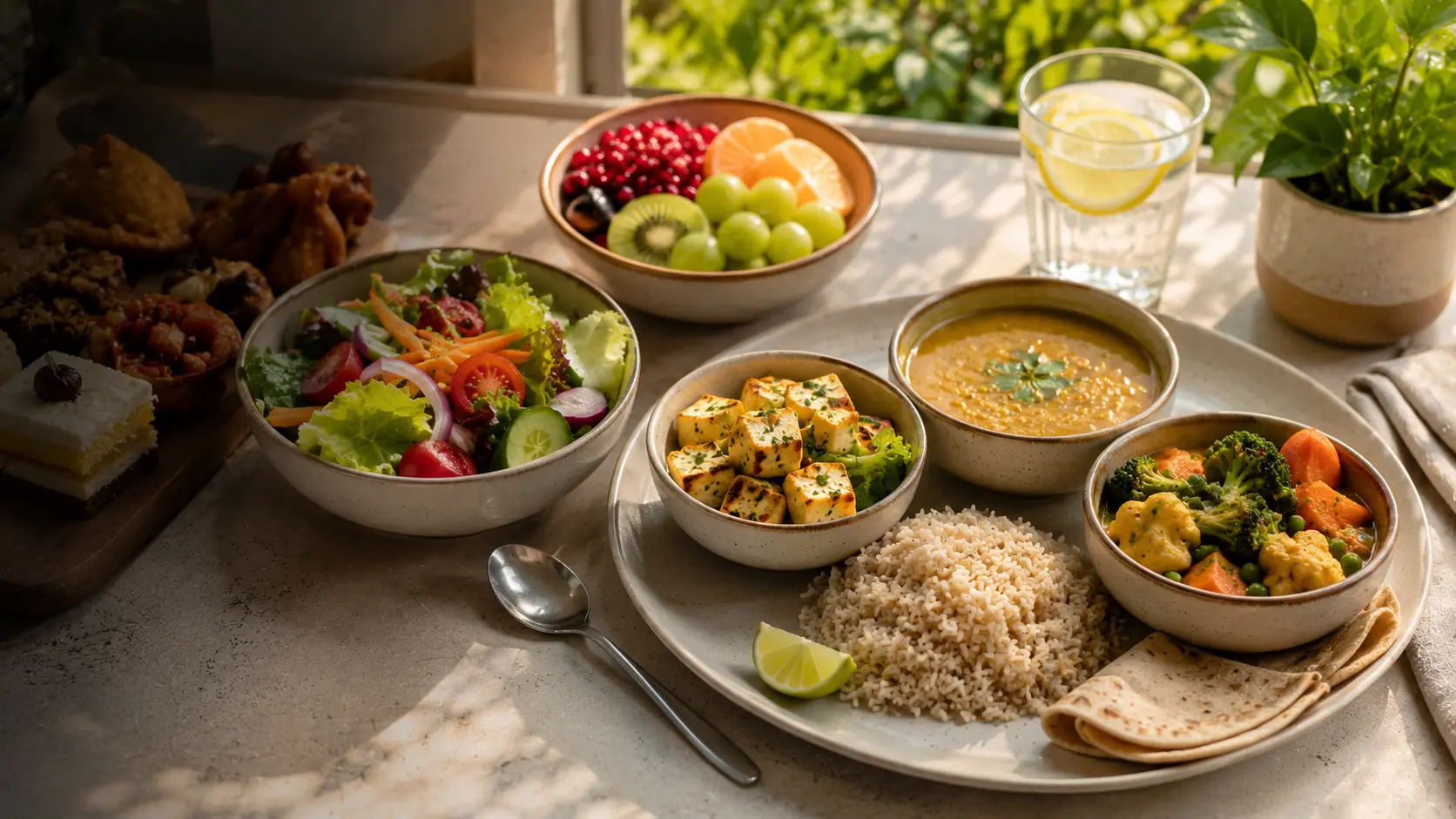
Indian meal guideline: A balanced plate should be roughly 50% vegetables and dal, 25% carbs (roti or rice), and 25% protein (paneer, legumes, eggs, or meat). This ratio naturally creates a calorie deficit without measuring anything.
Indian Meal Portion Control in Practice
Balanced Lunch or Dinner Plate
- 1–2 rotis (whole wheat) or 1 cup cooked rice
- 1 katori dal or rajma (protein base)
- 1 bowl cooked sabzi (vegetables)
- 1 small bowl curd or raita
- 1 tsp ghee or oil (healthy fat, enhances fat-soluble vitamin absorption)
Breakfast Options with Correct Portions
- Poha: 1.5 cups cooked + 2 tbsp peanuts for protein
- Moong dal chilla: 2 medium chillas + 1 tbsp curd
- Oats: 1 cup cooked (raw oats measure half) + banana + 5 walnuts
- Eggs: 2 whole eggs + 2 egg whites + 1 whole wheat toast
Smart Snack Portions
- Roasted chana: 30g handful
- Mixed nuts: 15–20g (10 almonds + 3 walnuts)
- Fruit: 1 medium piece or 1 cup cut fruit
- Makhana: 1 cup (25–30g)
Emotional Eating: The Hidden Driver of Weight Gain
Most Indians who struggle with weight are not overeating because they lack discipline — they are overeating because they are using food to manage emotions.
Common emotional eating triggers in the Indian context:
- Work stress or a difficult meeting → reach for biscuits or chai with snacks
- Watching cricket or a show in the evening → mindless munching on namkeen
- Family gatherings where refusing food is considered rude
- Boredom in the afternoon (the 3 PM slump)
- Celebrating news — good or bad — with food
How to distinguish emotional hunger from physical hunger:
← Swipe to compare →
| Physical Hunger | Emotional Hunger |
|---|---|
| Builds gradually over 30–60 minutes | Appears suddenly |
| Any food will satisfy it | Craves specific foods (sweet, salty) |
| Stops when full | Continues despite fullness |
| No guilt afterward | Often accompanied by guilt |
| Felt in the stomach | Felt in the mind |
When you notice emotional hunger, pause for 5 minutes before eating. Do something physical — drink water, take a short walk, call someone. In most cases, the urge passes or reduces significantly.
How to Avoid Overeating at Indian Social Events
Festivals, weddings, and family gatherings are where most Indian weight loss attempts are derailed. A realistic strategy:
- Eat a small protein snack before going — a boiled egg or handful of peanuts. Do not arrive hungry.
- Survey all the food before filling your plate — decide what you want most, rather than taking a little of everything and then going back multiple times
- Fill half your plate with salad or vegetables first, then add other dishes
- Choose one indulgence — either the biryani or the dessert, not both
- Slow down and taste everything you eat — you will feel satisfied faster
- Do not compensate the next day by skipping meals — just return to your regular routine
7-Day Mindful Eating Challenge
Try one new habit each day:
- Day 1: Eat all three meals without phone or TV
- Day 2: Chew each bite at least 15 times
- Day 3: Switch to a smaller plate for dinner
- Day 4: Drink 300 ml water 15 minutes before each meal
- Day 5: Rate your hunger (1–10) before eating — only eat if 5+
- Day 6: Stop eating when 80% full — leave some food on the plate
- Day 7: Identify one emotional eating moment — notice it, pause, and drink water instead
After 7 days: most people report less bloating, better energy after meals, and reduced snacking without any deliberate food restriction.
Frequently Asked Questions
What is mindful eating and how does it help with weight loss?
Mindful eating is the practice of eating with full attention — noticing hunger and fullness cues, eating slowly, and eliminating distractions like phones and TV during meals. It reduces calorie intake by 15–20% without restriction because it allows your brain's satiety signals (which take 15–20 minutes to register) to catch up before you overeat. Research consistently shows it reduces emotional eating and improves meal satisfaction with smaller quantities.
How can I control portion sizes with Indian food?
Practical portion control for Indian meals: use a 25–27 cm dinner plate instead of a large thali, serve sabzi first to fill more of the plate before adding rice or roti, use the hand-portion method (palm for protein, fist for carbs, two fists for vegetables), and eat from individual servings rather than from shared serving bowls at the table. These changes require no willpower in the moment — they work through environment design.
Can mindful eating alone help me lose weight without dieting?
Research shows mindful eating consistently reduces calorie intake by 10–20% without calorie counting. For people who significantly overeat due to distraction, emotional triggers, and fast eating speed, mindful eating alone can produce meaningful weight loss. For most people, it works best combined with a general awareness of healthy food choices — not strict dieting, but some attention to food quality.
How long does it take to see results from mindful eating?
Many people notice reduced bloating and better digestion within 1–2 weeks of slowing down and chewing food thoroughly. Weight loss from mindful eating typically begins after 3–6 weeks as new eating habits reduce overall calorie intake. It is a slower approach than aggressive calorie restriction but produces more sustainable long-term habits — because you are changing how you eat, not just what you eat.
What is the right plate size for portion control in India?
The ideal plate diameter for portion control is 25–27 cm (a standard side plate or a slightly smaller thali). Research consistently shows that larger plates lead to serving 20–30% more food unconsciously — and people eat nearly all of what they serve themselves regardless of hunger. Switching plate size is one of the most effective low-effort portion control strategies available.
Related Reading
Free Tools to Help You
Put this article into action — use our free calculators to get your personalized numbers.
Was this article helpful?
Want More Tips Like This?
Join 1,000+ readers getting weekly fitness, diet, and wellness tips + FREE meal plan
No spam, ever. Unsubscribe anytime.

About the Author: Ashwani
Fitness influencer and wellness writer helping Indians build healthier lifestyles.
Read more about us →Comments
Leave a Comment
Your email will not be published. Comments are reviewed before appearing.
You Might Also Like
Continue your wellness journey

24 min read
1200 Calorie Indian Diet Plan (2026): 7-Day Veg & Non-Veg Meal Plan for Weight Loss
Complete 1200 calorie Indian diet plan for weight loss — non-veg and veg breakfast options with exact calories, 7-day meal plans, Indian food calorie chart, and safe diet guidelines.
33 min read
Indian Diet Plan for Weight Loss: The Complete 2026 Guide
Most Indians gain weight not from indulgence but from not knowing their portions. This complete Indian diet plan covers calorie targets, 7-day meal charts, 1200 and 1500 calorie plans, vegetarian options, and the 10 mistakes keeping you stuck — updated June 2026.

14 min read
Indian Festive Eating: Enjoy Diwali & Navratri Without Weight Gain
Diwali sweets, Navratri fasting, Holi bhaang, Eid biryani — Indian festivals are built around food. Most people gain 2–4 kg every festive season and spend months trying to undo it. This guide shows you how to genuinely enjoy every festival without the guilt or the weight gain.