The Healthy Indian Meal Plate: Build the Perfect Fat Loss Plate Every Time
Stop guessing what to eat. The Indian meal plate method tells you exactly how much protein, carbs, and vegetables to put on your plate — with real Indian food examples for breakfast, lunch, and dinner.

Medical Safety Note: This article is for general educational purposes only and is not a substitute for professional medical advice, diagnosis, or treatment. If you are pregnant, managing a condition like diabetes, PCOS, or thyroid disorder, or taking medication, please consult a qualified doctor or registered dietitian before changing your diet, supplements, or exercise routine.
Introduction
Indian meals are delicious — but most plates are either too carb-heavy (3 rotis + rice combo), or low in protein and vegetables, which makes it easy to overeat and still feel hungry an hour later.
Good news? You don't need complicated diet charts. Just a balanced meal plate formula that works for fat loss, fitness, muscle tone and long-term health — without quitting Indian food.
Healthy eating is not about eating less. It's about eating right proportions.
📖 Read Also:
Indian Diet Plan for Weight Loss: The Complete 2026 GuideFor the complete diet plan built around these exact portion principles — calorie targets, 7-day charts, and common mistakes — see our full guide.
📖 Read Also:
Free Ideal Weight CalculatorNot sure how much you should actually weigh? Get a realistic target range before you start planning your plate.
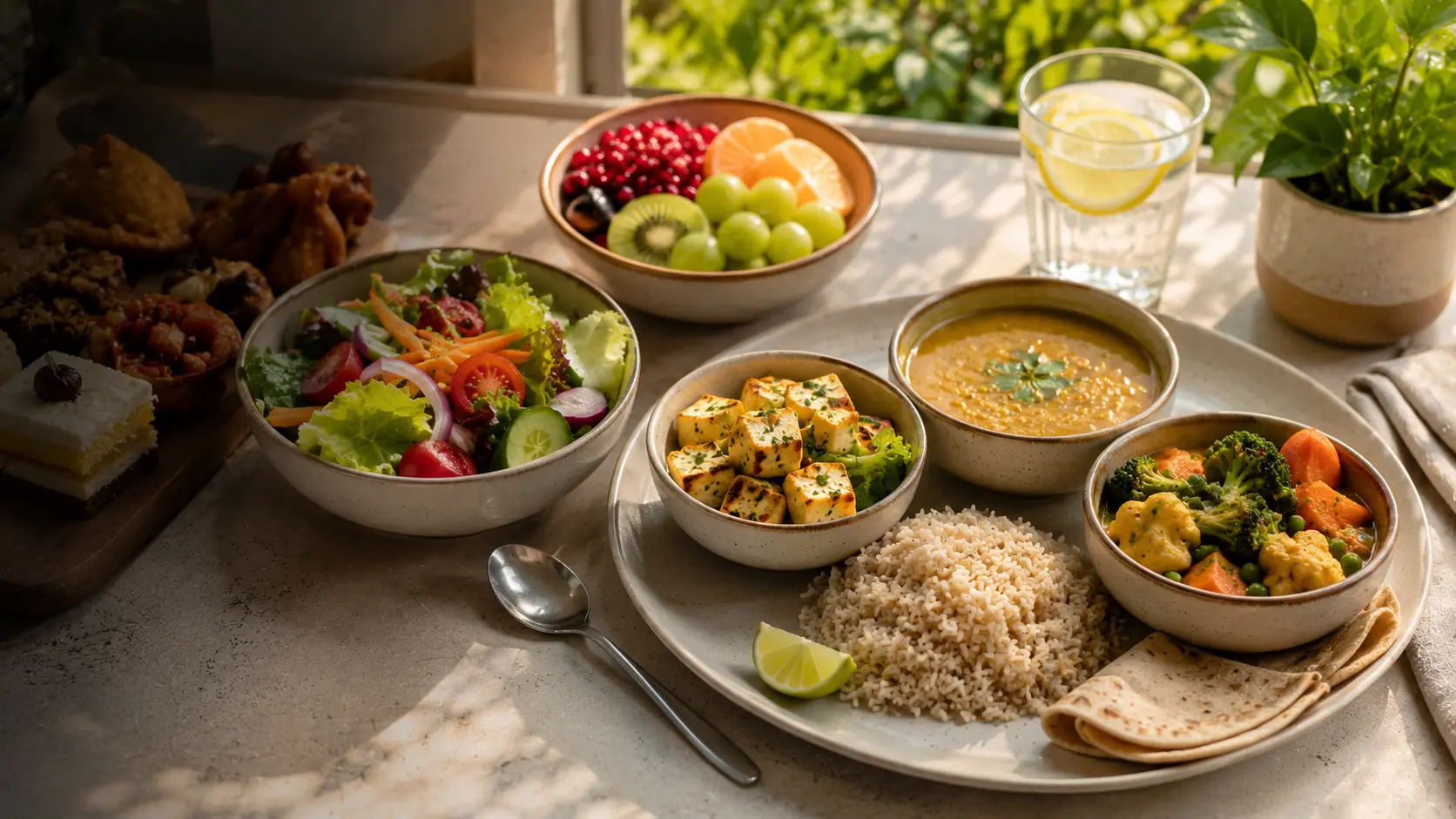
Ideal Indian Fat-Loss Meal Plate Structure
Your plate should look like this:
🥗
50% Vegetables & Salad
🍛
25% Protein Source
🍚
25% Whole Carbs
This single formula improves:
-
✔ Weight loss
-
✔ Digestion
-
✔ Cravings control
-
✔ Satiety & energy
Breaking Down the Plate (Simple & Practical)
🥗 50% Vegetables (Fibre Zone)
Why?
-
Fibre improves digestion & fullness
-
Low calories, high nutrients
-
Controls hunger and overeating
Examples:
-
Cucumber, tomato, carrot
-
Lauki, tinda, bhindi, beans
-
Cabbage, spinach, broccoli
Raw salad before main meal = hunger under control.
🍛 25% Protein Zone
This is the portion most Indian plates are short on.
Veg options:
-
Paneer
-
Dal, Rajma, Chana
-
Soya chunks/tofu
-
Curd/Greek yogurt
-
Sprouts
Goal: 1 palm-size protein per meal
For a daily number: roughly 1–1.2 g of protein per kg of body weight if you don't lift, 1.6–2 g if you do strength training. Our protein calculator gives you yours, and the protein guide shows how to reach it on Indian food.
If you consistently miss that portion — travel days, no time to cook — a scoop of plant protein closes the gap, though it should stay the exception rather than the plan.
🍚 25% Carb Zone
Carbs are not the enemy. They're your main energy source; Indian plates just tend to carry far too much of them relative to protein and vegetables.
Portion: 1–2 rotis or ½–1 katori rice per meal, not both in the same meal.
Better picks:
-
Whole wheat atta roti, or jowar, bajra or ragi roti
-
Brown rice, or a smaller portion of white rice
-
Oats, poha, dalia
-
Sweet potato
Reduce, don't eliminate: maida (naan, white bread, biscuits), sugary drinks, packaged namkeen.
Cut the portion before you cut a food you love.
🧈 Fats: One Thumb per Meal
Fat isn't the problem either: you need some in each meal to absorb vitamins A, D, E and K. It's just very calorie-dense (1 tbsp oil ≈ 120 calories), so it's the easiest part of the plate to overdo.
-
Ghee: 1–2 tsp a day in total
-
Cold-pressed mustard or groundnut oil for cooking, measured with a spoon, not poured
-
Nuts and seeds: a small handful
Reduce: vanaspati/dalda and deep-fried food.
Example Meal Plate Templates
Breakfast Plate Examples
← Swipe to compare →
| Protein | Carbs | Veg/Fruit |
|---|---|---|
| Moong dal cheela | 1 roti/poha portion | Cucumber/tomato |
| Oats + milk | 1 fruit | Nuts/seeds |
| Besan cheela + curd | 1 toast | Small salad |
| Paneer sandwich | Multigrain bread | Apple |
📖 Read Also:
Healthy Indian Breakfast Recipes for Weight Loss (Under 300 Calories)Want ready-made recipes that already follow this breakfast plate structure? These options are all built around the same protein-plus-fibre formula, each under 300 calories.
Lunch Plate Examples
Plate 1 (Simple Home Lunch)
🥗 Salad + Sabzi 🍛 Dal/Rajma 🍚 1–2 Rotis
Plate 2 (Rice Lovers)
🥗 Salad + Veg Curry 🍚 Rice (small bowl) 🍛 Paneer/Sprouts/Curd
Plate 3 (Office Tiffin)
🥗 Stir fry sabzi 🍛 Dal 🍚 Roti 2 small
Dinner Plate Examples
Prefer light meals:
-
Khichdi + Salad
-
Veg Soup + Paneer
-
Soya sabzi + 1 roti
-
Oats bowl + stir fry
Avoid heavy greasy dinners.
Same Indian Food, Rebalanced
← Swipe to compare →
| Meal | Rebalanced ✅ | Instead of ❌ |
|---|---|---|
| Breakfast | 2 eggs scrambled + 1 roti + cucumber salad | 3 rotis with tea and biscuits |
| Lunch | 1 katori rice + 1 katori dal + 1 katori sabzi + salad | 2 katori rice + sabzi only |
| Dinner | 2 rotis + paneer sabzi + curd + salad | 3 rotis + aloo sabzi, no protein |
Smart Portion Control Trick
Use your hands:
✋ Protein = 1 palm
🖐 Veggies = 2 handfuls
🤏 Fats = 1 thumb
👐 Carbs = 1 cupped hand
Science-level control — without weighing food.
The same portion logic applies between meals too — if cravings hit mid-afternoon or in the evening, reach for something planned rather than whatever's closest.
📖 Read Also:
20 Healthy Indian Snacks for Office & Evening CravingsSnacking between meals doesn't have to break your plate balance — this list includes under-150-calorie Indian picks.
Weekly Meal Rotation Blueprint
Alternate like this:
Mon — Roti + Dal
Tue — Rice + Paneer
Wed — Roti + Soya
Thu — Khichdi + Salad
Fri — Dal + Rice
Sat — Upma/Poha (protein boosted)
Sun — Mix bowl + Soup dinner
Balanced, enjoyable, sustainable.
Mistakes People Make
-
❌ Roti + Rice in one meal daily
-
❌ No protein in breakfast
-
❌ Heavy dinner late night
-
❌ Overeating because plate is big
-
❌ Only focusing on calories, ignoring balance
Fix = structured plate system.
Conclusion
A healthy body doesn't need a complicated diet — it needs a smart plate. Follow the 50-25-25 rule, add protein in each meal, eat colourful vegetables, choose whole carbs, and maintain mindful eating habits. Fat loss becomes natural when nutrition is balanced.
Applying the Blueprint to Eating Out
The 50-25-25 plate rule doesn't only apply at home. Here's how to apply it when eating at restaurants, dhabas, or ordering office food:
At a North Indian Restaurant
Order: Dal makhani (protein) + 1–2 tandoori roti (carbs) + raita + any vegetable side. Skip butter naan and extra rice. Ask for extra salad (usually free). Avoid paneer butter masala as main protein — too high in fat.
At South Indian Restaurant
Order: Idli or plain dosa (2 pieces, not masala dosa) + sambar (protein + fibre) + coconut chutney in moderation. Skip uttapam and rava items. Sambhar is underrated — it has lentils, vegetables, and tamarind — almost a perfect balanced component.
At a Dhaba
Order: Dal tadka (or dal fry) + 2 plain roti + any sabzi. Request: less oil in cooking if possible. Skip white butter additions. Dal at dhabas has good protein content — it's the oil that's the problem, not the dal itself.
Ordering food delivery (Swiggy/Zomato)
Best choices: Grilled items, tandoori, dal-chawal combos, curd rice, salads. Avoid: Biryanis (high fat + carb), butter-heavy curries, fried starters. Use the "less oil / no butter" instruction in order notes — many restaurants honour it.
At Weddings and Festivals
Diwali, Navratri, Eid and wedding season don't have to undo a month of good plates. Eat a protein-rich meal before you go, so you don't arrive starving. Pick dry snacks over fried ones (roasted nuts over namkeen and pakoras). One mithai is fine; six is the problem. And go back to your normal plate the next day: one day doesn't matter, a week of "it's the season" does.
Calorie Estimates for Common Indian Meal Plates
Understanding approximate calories helps you stay in a deficit without obsessive counting:
← Swipe to compare →
| Meal | Approx Calories | Protein | Rating |
|---|---|---|---|
| Dal + 2 roti + sabzi + salad | ~420–450 kcal | ~15–17g | Excellent |
| Paneer curry + 1 roti + curd | 400–480 kcal | 20–25g | Great |
| Rajma-chawal (small portions) | 380–450 kcal | 16–20g | Good |
| 3 rotis + rice + sabzi (no protein source) | 550–680 kcal | ~15–17g | Avoid: most calories, least protein per calorie |
| Butter chicken + naan × 2 | ~880–980 kcal | ~45–50g | Occasional |
Portions assumed: medium rotis (30 g atta) without ghee, 1 katori (150 ml) dal or curry, 1 cup (150 g) cooked rice, 1 tsp oil per sabzi, restaurant naan ~90 g each. Figures from IFCT 2017 and USDA FoodData Central; treat them as close estimates.
Special Plate Adaptations for Different Goals
For Fat Loss
Increase vegetables to 60%, reduce carbs to 15%, keep protein at 25%.
Plate your food in the kitchen instead of serving from bowls on the table. Eat salad before the main meal. Stop at 80% full.
For Muscle Gain
Increase protein to 35%, carbs to 35%, reduce vegetables to 30%.
Add paneer, eggs, or curd to every meal, and make the meal after training a protein-rich one.
If You Have a Medical Condition
If you have diabetes, PCOS, a thyroid condition or any other medical condition, take this plate to your doctor or a registered dietitian before changing how you eat. They may change the carb share for you.
Frequently Asked Questions
Q: Can I follow this plate model as a vegetarian?
Absolutely. The 50-25-25 model works perfectly for vegetarians. Protein sources: paneer, curd, dal, rajma, chana, soya chunks, tofu, sprouts, and eggs (if ovo-vegetarian). The key is being intentional about including a protein source in every meal — many vegetarians rely too heavily on carbs by default.
Q: Does this meal plate work for weight gain as well?
Yes, with modifications. For healthy weight gain, increase portion sizes, add a healthy fat component (ghee, nuts, avocado), and have an additional snack meal. The plate balance principle still applies — just larger quantities. Focus on gaining weight through protein-rich foods to ensure it's mostly muscle, not fat.
Q: How many rotis is considered too many?
Context matters: activity level, size of the roti, and what else is on the plate. For a sedentary person trying to lose fat: 1–2 medium rotis per meal is sufficient. For an active person or someone doing physical labour: 2–3 is fine. The issue is when rotis plus rice appear together in the same meal daily.
Q: Is it okay to skip carbs entirely at dinner?
It can be effective for fat loss. A dinner of sabzi + dal + curd + salad (no roti or rice) is nutritionally complete and keeps nighttime calories lower. However, those who are very active or underweight should keep some complex carbs at dinner. Listen to hunger — never go to bed starving, as that disturbs sleep.
Q: What about ghee — should it be on the plate?
Ghee in moderation is fine and even beneficial. 1 tsp ghee on roti or dal adds flavour and helps you absorb fat-soluble vitamins. The problem is when ghee is used in tablespoon quantities multiple times daily. For fat loss, limit to 1–2 tsp per day total across all meals.
Q: Does meal timing matter?
For most people, how much you eat across the day matters far more than when. Timing helps in a few specific cases: a carb-containing snack 60–90 minutes before training can help performance, and a protein-rich meal after training supports recovery. See our pre-workout foods and post-workout meal guides.
Q: Is it bad to eat curd at night?
No evidence says curd at night causes weight gain. It's an easy protein add-on at any meal, dinner included.
Q: Can I eat as much fruit as I want?
Whole fruit is a good snack, but it still has calories: one medium banana is roughly 100. Two or three servings of whole fruit a day fit easily on this plate. Five or six bananas a day "because it's healthy" adds up fast, and juice doesn't fit at all, because the fibre is gone.
What is a balanced Indian meal plate?
A balanced Indian meal plate should have roughly: 50% non-starchy vegetables (salad, sabzi), 25% protein (dal, paneer, eggs, chicken), and 25% complex carbohydrates (rice, roti, or millet). This ratio ensures adequate macronutrients, fibre, and micronutrients without excessive calories.
Related Reading
Free Tools to Help You
Put this article into action — use our free calculators to get your personalized numbers.
Was this article helpful?
Want More Tips Like This?
Join 1,000+ readers getting weekly fitness, diet, and wellness tips + FREE meal plan
No spam, ever. Unsubscribe anytime.

About the Author: Ashwani
Fitness influencer and wellness writer helping Indians build healthier lifestyles.
Read more about us →Comments
Leave a Comment
Your email will not be published. Comments are reviewed before appearing.
You Might Also Like
Continue your wellness journey

27 min read
1200 Calorie Indian Diet Plan (2026): 7-Day Veg & Non-Veg Meal Plan for Weight Loss
Complete 1200 calorie Indian diet plan for weight loss — non-veg and veg breakfast options with exact calories, 7-day meal plans, Indian food calorie chart, and safe diet guidelines.
36 min read
Indian Diet Plan for Weight Loss: The Complete 2026 Guide
Most Indians gain weight not from indulgence but from not knowing their portions. This complete Indian diet plan covers calorie targets, 7-day meal charts, 1200 and 1500 calorie plans, vegetarian options, and the 10 mistakes keeping you stuck.

11 min read
Millet Diet Plan for Weight Loss: Ragi, Jowar & Bajra Complete Guide
Millets are India's original superfoods — ancient grains that are higher in protein and fibre than rice, lower on the glycaemic index, and far better for weight loss. Here is everything you need to know and a complete diet plan to start using them.