Virat Kohli Diet Plan 2026: Full Vegetarian Chart
Virat Kohli has been vegetarian since 2018 — and his performance has only improved since. Here is what he has said he eats, plus a complete Kohli-style Indian vegetarian meal plan — match-day meals, pre-match timing and post-match recovery foods included.

Medical Safety Note: This article is for general educational purposes only and is not a substitute for professional medical advice, diagnosis, or treatment. If you are pregnant, managing a condition like diabetes, PCOS, or thyroid disorder, or taking medication, please consult a qualified doctor or registered dietitian before changing your diet, supplements, or exercise routine.
Affiliate Disclosure: As an Amazon Associate I earn from qualifying purchases. This post contains affiliate links. If you buy through them, we may earn a small commission at no extra cost to you — this never affects our recommendations. We only suggest products we believe in. Read our full affiliate disclosure.
In 2018, Virat Kohli made a decision that confused a lot of people.
At the peak of his career — ranked the best batsman in the world, playing across all three formats at an intensity few cricketers have matched — he overhauled his diet. He cut out meat. He restructured everything he ate around plant-based foods and eggs. Some people called it a risk. A few sports nutritionists publicly questioned whether it would affect his stamina and muscle maintenance.
What followed was some of the most dominant batting of his career.
This article is about that diet — the actual meals, the match-day nutrition strategy, the pre-match timing, the post-match recovery protocol, and what Indian vegetarians can learn from how one of the world's fittest cricketers fuels his body.
Related: Vegetarian protein sources in India · Best yoga mats in India · Best walking pads in India
Is Virat Kohli Vegetarian?
Yes — Virat Kohli describes himself as vegetarian, not vegan. In June 2021 he put it plainly on X: "I never claimed to be vegan. Always maintained I'm vegetarian." (Virat Kohli on X, 1 June 2021). He had said much the same two years earlier: in October 2019, after watching the Netflix documentary Game Changers, he tweeted that he had never felt better in his life than since turning vegetarian (Gulf News).
Does Virat Kohli Eat Eggs?
Yes, by his own account. In an Instagram Q&A in late May 2021, days before the team left for England on 2 June, Kohli listed eggs among the foods he eats daily (Sportskeeda). That is what prompted the vegan clarification above (Sportskeeda).
The idea that he is vegan traces back to 2018, when sources close to the Times of India were quoted saying he had given up meat, eggs and dairy (Sportskeeda). His own 2021 statements contradict the eggs part. Dairy is less clear: a 2021 report says he described himself as off dairy and meat in a 2019 interview (Vegan First), and he has not publicly confirmed whether he eats dairy since then. We have not found any public statement from Kohli on his diet after 2021, so his 2021 account — vegetarian, not vegan, eggs included — is the most recent first-hand one.
Why Virat Kohli Went Vegetarian
Before the meal plan, the context matters — because understanding why he changed his diet explains how he structured it.
In 2018, Kohli was diagnosed with cervical spine issues and elevated uric acid levels. His doctors advised dietary changes. High uric acid is directly linked to purine-rich foods — red meat, organ meats, and certain seafood are the primary sources.
Rather than making partial changes, Kohli made a complete dietary overhaul. He cut out meat entirely, shifted to plant-based proteins, and structured his eating around anti-inflammatory foods that would support both his cervical condition and his athletic performance.
The results were not merely that his health improved. His body composition changed noticeably — leaner, more defined, with maintained explosive power. His on-field intensity in the years following 2018 was arguably the highest of his career.
Kohli is vegetarian, not vegan, and eats eggs per his own 2021 statement; whether he eats dairy has not been publicly confirmed since 2019. Both answers at the top of this guide are sourced. The meal plan below is a Kohli-style plan for readers, and the dairy in it (paneer, curd, haldi doodh) is a suggestion for you, not a confirmed part of his diet.
The Core Philosophy Behind Kohli's Diet
Most athletes eat to perform. Kohli eats to recover.
This is a subtle but important distinction. His nutritional approach is built around three priorities, in this order:
1. Reducing inflammation — His cervical condition made this non-negotiable. Anti-inflammatory foods (turmeric, ginger, leafy greens, nuts) are present at every meal. The practical consequence: athletes with chronic low-grade inflammation recover slower between matches, accumulate fatigue across a season, and lose sleep quality progressively. Kohli's team reportedly tracked inflammation markers as a routine performance variable.
2. Sustained energy without spikes — Cricket demands sustained focus and physical output across 6-8 hour match days. Foods that cause blood sugar spikes and crashes — refined sugar, white bread, processed snacks — are completely eliminated. When blood sugar crashes mid-innings, it shows as poor shot selection and slowed reaction time — two things Kohli has famously refused to compromise.
3. Protein for muscle maintenance — At 36, maintaining lean muscle mass requires deliberate protein intake across every meal. Kohli sources this primarily from eggs, dal, legumes, and occasionally supplements. Without this, the body begins cannibalising muscle during sustained exercise — a particular risk for vegetarian athletes who tend to underestimate their protein needs.
Everything else — taste preferences, meal variety, social eating — is secondary to these three priorities.
A Kohli-Style Vegetarian Day (Based on What Virat Kohli Has Said Publicly)
This is a Kohli-style daily meal plan for readers, built around what he has said about his diet — vegetarian, eggs, no meat — and the known principles of high-performance vegetarian sports nutrition. It is not his exact diet. Some foods here, notably dairy such as paneer, curd and haldi doodh, are included as options for you and are not confirmed parts of his own diet.
A note on sourcing: Kohli's team has never published an official meal plan. No celebrity athlete's diet plan is fully public. What follows is the most accurate reconstruction available based on his public statements — treat quantities as evidence-based estimates, not exact prescriptions.
Pre-Dawn (4:45–5:00 AM)
On waking:
- Warm water with lemon (300ml)
- 8–10 soaked almonds (soaked overnight, skin removed)
- Occasionally: 2–3 soaked walnuts
The lemon water serves two purposes — hydration after overnight fast and mild alkalisation, which Kohli's team emphasises for uric acid management. Soaked almonds have better nutrient bioavailability than raw almonds; the soaking removes phytic acid, which inhibits mineral absorption.
Post-Yoga / Pre-Gym (5:45 AM)
Light pre-workout fuel:
- 1 medium banana OR 3–4 medjool dates
- Sometimes: a small bowl of soaked overnight oats
This meal is timed precisely — consumed 20–30 minutes before gym work begins. The goal is rapidly available carbohydrates for energy without digestive burden during training. Banana and dates both deliver fast-acting natural sugars with potassium for muscle function.
Post-Workout Breakfast (8:15–9:00 AM)
This is the most protein-dense meal of Kohli's day, consumed within 45 minutes of completing his gym session when muscle protein synthesis is highest.
Typical breakfast:
- 3 whole eggs (boiled or as an omelette) — 18g protein
- 1 cup spinach and paneer salad — 8g protein
- Fresh paneer cubes (80–100g)
- Spinach, tomato, cucumber
- Black pepper, lemon, olive oil dressing
- Fresh papaya or banana — 1 serving
- Green tea (no sugar)
Total protein at breakfast: approximately 26–30g
The spinach-paneer combination is nutritionally strategic, not accidental. Spinach provides iron and folate; paneer provides casein protein and calcium. The vitamin C from tomato and lemon increases iron absorption from spinach by up to 67% — a combination sports nutritionists deliberately engineer.
On high-training days or before a demanding net session, a protein shake can bridge the gap when whole food isn't enough. More on this after the full daily plan below.
📖 Read Also:
Paneer vs Chicken for Muscle Building — 2026 India Price and Protein BreakdownThis plan's breakfast uses paneer as a slow-release casein protein. But how does it compare to chicken for muscle building? Complete 2026 price breakdown, protein science, and exact verdict by meal and goal.
Lunch (1:00–1:30 PM)
Lunch is Kohli's largest meal — the nutritional anchor of his day, consumed well before any afternoon training or match.
Typical lunch:
- Brown rice (150g cooked) OR 2 whole wheat rotis
- 1 large serving of dal (toor or moong) — primary protein source
- 1 serving of sabzi (seasonal vegetables, lightly cooked in olive oil)
- Curd (100g) — probiotic gut health
- Small green salad with lemon dressing
Total protein at lunch: approximately 28–35g
The brown rice versus roti choice depends on the training block. Brown rice is preferred pre-match (higher glycogen storage capacity). Rotis are preferred on lighter training days or during recovery phases.
Curd is a consistent feature of this plan — daily probiotic intake through dahi or chaas supports gut health regardless of match schedule.
📖 Read Also:
High Protein Vegetarian Diet Plan — 7-Day Chart for IndiansKohli's vegetarian approach centres on hitting 130g+ protein through plant foods. This 7-day plan shows exactly how to do it — with protein counts per meal, grocery list, and soya chunk recipes.
Evening Snack (4:30–5:00 PM)
- Mixed nuts: almonds (10), walnuts (5), cashews (4–5)
- Coconut water (250ml) or fresh lime water with pink salt
- Occasionally: 1 seasonal fruit
The coconut water serves as a natural electrolyte replenishment — particularly important on humid match days or after an afternoon fielding session. Hydration and electrolyte balance are well-documented priorities during IPL's April-May summer schedule, when players can lose 2–3 litres through sweat in a single match.
Dinner (7:30–8:00 PM)
Dinner is deliberately lighter than lunch — keeping the evening meal smaller is a principle backed by sports nutrition research on sleep quality and overnight recovery. Heavy evening meals impair sleep quality and slow overnight recovery.
Typical dinner:
- 1–2 whole wheat rotis
- Dal (different variety from lunch — dietary diversity)
- Green leafy vegetable sabzi (palak, methi, or seasonal greens)
- No heavy curries, no cream-based gravies
- Warm water or herbal tea
Total protein at dinner: approximately 20–25g
The absence of heavy masalas and cream gravies at dinner is intentional — these foods are harder to digest and can disrupt sleep, which Kohli treats as a non-negotiable performance variable.
When Whole Food Isn't Enough — Supplementing the Plan
On heavy training days, travel days, or back-to-back match schedules, hitting 130–160g of protein through whole food alone is genuinely difficult — even with eggs, dal, and paneer at every meal. This is where a clean whey protein becomes a practical bridge, not a shortcut. If you are choosing one, our ranking of whey protein brands in India compares them on protein per scoop.
If you follow this style of eating and need to close a protein gap on demanding days, this is the most relevant option:
AS-IT-IS Nutrition ATOM Whey Protein — 1kg
27g protein per scoop, zero fillers, third-party lab tested. The clean post-workout option for vegetarians — pairs with egg and paneer meals when you need extra protein on heavy training days.
Check Price on Amazon📖 Read Also:
Whey Protein Guide for Indian Beginners — Types, Brands and When to TakeThe complete guide to whey protein in India — concentrate vs isolate, how much to take, when to take it, and honest comparisons of MuscleBlaze, AS-IT-IS and MyProtein. Clean supplements for vegetarian athletes.
Virat Kohli Match-Day Diet: What a Kohli-Style Plan Changes
A non-match day and a match day have meaningfully different nutritional requirements. On match days, a Kohli-style plan adjusts for sustained energy output, mental focus, and mid-match recovery.
Pre-Match Meal (3–4 Hours Before)
This is the most strategically important meal of a match day. Kohli's pre-match eating window is 3–4 hours before the first ball — allowing full digestion without residual heaviness.
Pre-match meal (T20/ODI afternoon match):
- Brown rice (200g cooked) — primary carbohydrate source
- Moong dal (light, easy to digest)
- Steamed vegetables (minimal spice)
- 2 whole eggs or a small paneer portion
- No raw salad (harder to digest under match pressure)
- No curd or dairy in large quantities (can cause mild bloating in some)
The emphasis is on easily digestible, carbohydrate-rich foods that will sustain energy through the match without causing digestive discomfort. This is why the meal is simpler and lower in fibre than his usual lunch.
📖 Read Also:
Pre-Workout Foods for Indians — What to Eat 1-2 Hours Before TrainingKohli's pre-match meal follows the same science as any pre-workout meal — easily digestible carbs, moderate protein, low fibre. Here are the best Indian food options for energy and performance before any training session.
During the Match — Kohli's Dressing Room Nutrition
Between innings, drinks breaks, and during fielding sessions, Kohli maintains energy through:
- Banana — the most common between-innings food across all professional cricket teams. Fast carbohydrates, potassium, easy to eat quickly.
- Coconut water — natural electrolytes, particularly important in IPL's April-May heat.
- Glucose tablets or energy gels — on particularly demanding match days (day-night Tests, back-to-back match schedules).
- Consistent water intake — Kohli is visibly one of the most consistently hydrating players on the field.
Post-Match Recovery Meal (Within 1–2 Hours)
This is where Kohli's approach diverges most noticeably from average gym-goers — post-match recovery nutrition is taken as seriously as the match preparation itself.
Post-match priority 1: Carbohydrate replenishment Muscle glycogen (energy stored in muscles) is significantly depleted during a high-intensity innings or a full day of fielding. The first priority is replenishment.
- White rice (not brown — faster glycogen replenishment post-match)
- Sweet potato if available
- Banana or dates
Post-match priority 2: Protein for muscle repair
- Eggs (2–3 whole) or paneer (150g+)
- Dal as a secondary protein source
- Occasionally a protein shake if whole food isn't immediately available
Post-match priority 3: Anti-inflammatory foods
- Haldi doodh (turmeric milk) before sleep
- Ginger in any form — tea or raw with warm water
- Tart cherry juice (used by his team during international tours for recovery)
White rice post-match is deliberate and correct nutrition science. Brown rice's higher fibre content slows digestion — beneficial at other times, counterproductive when rapid glycogen replenishment is the priority. Professional sports nutritionists recommend fast-digesting carbohydrates in the 30-minute post-exercise window.
What Virat Kohli Completely Avoids
This list has remained consistent since 2018 — these are not occasional exceptions. They are permanently eliminated.
← Swipe to compare →
| Food Category | Specific Examples | Why Eliminated |
|---|---|---|
| Meat | Mutton, Chicken, Fish | Uric acid triggers, inflammatory — eliminated (see note above) |
| Fried foods | Samosa, pakoda, bhatura | Inflammatory, slow digestion |
| Refined sugar | Cold drinks, mithai, packaged juice | Blood sugar spikes, energy crashes |
| Processed snacks | Chips, biscuits, namkeen | Ultra-processed, nutritional void |
| Heavy masala gravies | Butter paneer, shahi korma | Hard to digest, poor for recovery |
| Alcohol | All forms | Dehydration, disrupts sleep, inflammatory |
| White bread | Maida-based items | High glycemic, inflammatory |
The elimination of refined sugar deserves emphasis. Kohli has spoken about this in multiple interviews — he describes it as one of the most significant changes he made, and one of the hardest in the first few months. The physical and energy difference, he has said, was noticeable within weeks.
The Supplement Stack Supporting Kohli's Vegetarian Diet
Kohli's team has never published his exact supplementation protocol, and Kohli has not publicly endorsed any specific supplement brand. What follows is based on his stated nutritional approach, the exercise demands he places on his body, and standard sports nutrition practice for high-performance vegetarian athletes at his level.
Disclaimer: The supplements listed below are not confirmed as Kohli's personal choices. They are the supplements most relevant for any vegetarian athlete with similar training demands — recommended on their own merits, not as Kohli endorsements.
The likely stack, in order of relevance:
High probability (widely used at his level):
- Creatine monohydrate — the most researched performance supplement in sports science, standard across almost all elite athletic programmes regardless of diet. Particularly important for vegetarian athletes who have lower baseline muscle creatine stores. If you want to add it to your own routine, our guide to the best creatine in India compares the main brands on lab testing.
- Vitamin D3 + K2 — extremely common deficiency in India, critical for muscle function and testosterone production.
- Vitamin B12 — the one nutrient a long-term Indian vegetarian diet reliably runs short on, since it occurs almost exclusively in animal products. Along with vitamin D, it is one of the two gaps actually worth testing for; our multivitamin comparison covers which Indian labels cover them properly and which do not.
- Omega-3 (algae-based) — vegetarian alternative to fish oil; anti-inflammatory, joint health.
Moderate probability:
- Whey or plant protein — on high-demand training days. If dairy is off the table entirely, or whey causes bloating, plant proteins solve the same problem differently — at a real cost in amino acid completeness that is worth understanding first.
- Magnesium — sleep quality and muscle recovery; common at elite level.
AS-IT-IS Creatine Monohydrate — 500g
The supplement Kohli's training demands most closely aligns with. 5g daily improves explosive power, faster recovery, and muscle maintenance — particularly relevant for vegetarian athletes with lower baseline creatine stores. 100 servings, third-party tested, zero fillers.
Check Price on Amazon📖 Read Also:
Best Supplements for Indian Beginners — Complete Guide 2026Minimal supplementation — whey and basics — is all this plan needs. This guide covers exactly which supplements Indian beginners actually need, which are overhyped, and the best Indian brands at each price point.
📖 Read Also:
ON Gold Standard vs MuscleBlaze Biozyme Whey — Which is Better for Indians?If whey protein is on your list, this head-to-head settles the two most popular options in India — protein per rupee, digestion, lab-tested claims, and which one vegetarian lifters should pick.
Can Indian Vegetarians Actually Train Like Kohli?
This is the practical question — and the honest answer is: more easily than you might think.
The barriers to Kohli-level nutrition are not the foods. Dal, paneer, eggs, brown rice, almonds, curd — these are available at every Indian kirana store and market. The barriers are:
1. Protein quantity Most Indians eat 40–60g of protein daily. Kohli's intake is estimated at 140–160g. Bridging this gap requires deliberate stacking — eggs at breakfast, soy chunks at lunch, paneer at dinner, curd throughout the day. Peanut butter on toast or in a banana shake is an easy extra top-up for vegetarians — our peanut butter comparison shows which Indian brands skip the added sugar.
2. Meal timing Eating every 3–4 hours, never skipping breakfast, keeping dinner light and early. This is a habits change, not a food change.
3. Eliminating the obvious culprits Sugar, fried food, heavy gravies, late-night eating. These eliminations produce results independently of everything else — many people notice significant changes within 3–4 weeks of removing just these.
4. Hydration consistency 3+ litres of water daily. Coconut water on training days. No cold drinks ever.
A Realistic Indian Version
If you work a 9-6 job and train 4-5 days/week:

6:30 AM: Warm water + almonds
7:00 AM: Pre-workout banana or dates
7:30–8:15 AM: Workout
8:30 AM: Eggs (3) + paneer bhurji + green tea
           → 30g protein

1:00 PM: Dal + brown rice/roti + sabzi + curd
           → 30g protein

4:30 PM: Mixed nuts + coconut water
           → 8g protein

8:00 PM: Light dal + roti + vegetable sabzi
           → 20g protein

Before bed: Haldi doodh (warm)

Total: ~88g protein — not 160g, but
3x more than the average Indian intake.
Progress over perfection.
📖 Read Also:
Indian Diet Plan for Weight Loss — The Complete 2026 GuideIf Kohli's principles appeal to you — clean food, high protein, no processed junk — this complete Indian diet guide shows how to apply the same approach for weight loss. 1200 and 1500 calorie plans, 7-day chart, and regional adaptations.
The Indian Foods Behind a Virat Kohli-Style Diet
One thing gets consistently missed in Western coverage of Kohli's diet: the Indian foods behind a plan like this are not exotic or expensive. They are the same foods that have been in Indian kitchens for generations — just used deliberately and without the additions that reduce their nutritional value.
Dal is one of the most protein-dense affordable foods in the world — 14–18g of protein per cooked bowl, complete amino acid profile when combined with rice, available across India for ₹80–120 per kg.
Paneer is an excellent casein protein — slow-digesting, anti-catabolic, particularly valuable before sleep for overnight muscle recovery. Made at home, it costs ₹150–180 per kg — comparable to chicken.
Curd and chaas provide probiotics that most Indian athletes are not getting in adequate quantities. Gut health directly influences immunity, inflammation levels, and nutrient absorption — all of which affect athletic performance.
Turmeric (haldi) — the curcumin in turmeric is one of the most well-studied natural anti-inflammatory compounds. Haldi doodh before sleep is not just cultural habit; turmeric's anti-inflammatory effect is backed by research showing reduced exercise-induced muscle inflammation.
These foods cost a fraction of imported supplements. They have been optimised over centuries for the Indian body and climate. They are what this plan is built on — and what any Indian athlete or fitness enthusiast can build theirs on.
Frequently Asked Questions
When did Virat Kohli become vegetarian?
Kohli transitioned to a vegetarian diet in 2018, following medical advice related to a cervical spine condition and elevated uric acid levels. His diet is now built around plant proteins and eggs, with no meat. He is not vegan — in 2021 he said he had never claimed to be, and had always maintained he was vegetarian. Whether he eats dairy has not been publicly confirmed since a 2019 interview in which he reportedly said he was off dairy and meat.
What does Virat Kohli eat before a match?
Kohli's pre-match meal is consumed 3–4 hours before the first ball. It typically includes brown rice, moong dal, steamed vegetables, and 2 eggs. The emphasis is on easily digestible, carbohydrate-rich foods that will sustain energy without causing digestive discomfort during play.
Does Virat Kohli drink protein shakes?
Yes — on high-intensity training days and as part of post-match recovery when whole food is not immediately accessible. His primary protein sources are whole foods such as eggs and dal, with shakes as a supplement when needed.
What does Virat Kohli eat after a match?
Post-match, the priority is rapid carbohydrate replenishment (white rice or banana) followed by protein (eggs) and anti-inflammatory foods.
How many meals does Virat Kohli eat per day?
Approximately 5 meals: early morning (pre-yoga), post-workout breakfast, lunch, afternoon snack, and dinner. He does not skip meals and maintains consistent meal timing even during touring schedules.
Is Kohli's vegetarian diet actually better for athletic performance?
Not inherently better than omnivorous eating for everyone — but Kohli's results suggest a well-planned vegetarian diet is completely sufficient for elite athletic performance. The key is deliberate protein stacking, consistent meal timing, and eliminating the inflammatory, processed foods that degrade performance regardless of diet type.
Can I build muscle eating like Virat Kohli?
Yes — a Kohli-style plan like the one above provides adequate protein (approximately 130–160g daily) for muscle maintenance and growth. Its combination of eggs, paneer, dal, soy, and curd provides complete amino acid profiles across the day. You would need to scale quantities to your own calorie needs, but the food selection translates directly for any Indian aiming to build or maintain muscle.
What Indian foods does Virat Kohli eat regularly?
Dal (various types), moong dal specifically pre-match, brown rice, whole wheat rotis, eggs, spinach, seasonal vegetables, almonds, walnuts, coconut water, and green tea. These are the consistent staples of his diet — nothing exotic or imported.
What Indian Vegetarians Can Take From Kohli's Diet
Three things that make the most practical difference, in order of impact:
1. Add protein to every single meal. Not just dinner. Eggs at breakfast, dal at lunch, paneer at dinner, nuts as snacks. Protein deficiency is the most common nutritional gap in Indian vegetarian athletes.
2. Eliminate refined sugar completely, even for 30 days. This single change — not the addition of any supplement or superfood — produces the most noticeable results in energy, body composition, and recovery. Kohli considers this his most impactful dietary change.
3. Eat lighter at dinner. Heavy evening meals impair sleep, slow overnight recovery, and accumulate as fat more readily than meals eaten earlier in the day. Kohli's dinner is consistently the smallest and simplest meal — this is not coincidence.
Kohli did not build his fitness with exotic supplements or a personal chef's elaborate cuisine. He built it with a disciplined version of ordinary Indian food, taken seriously, timed deliberately, and kept consistent over years.
The foods are already in your kitchen. The difference is in how deliberately you use them.
Kohli isn't an anomaly. He's proof of what Indian food, taken seriously, can build. The question isn't whether the diet works — it's whether you're willing to use it with the same intentionality he does.
The specific foods differ by sport and culture, but the underlying discipline is the same wherever you look at elite athletes. Cristiano Ronaldo, for instance, eats almost the opposite diet — fish, chicken, and six structured meals a day — yet the consistency principle behind it is identical to Kohli's approach.
📖 Read Also:
Cristiano Ronaldo's Fitness Routine at 41 (2026): Training Split, Diet Plan and Recovery SecretsA look at how a non-vegetarian elite athlete structures diet and recovery with the same relentless consistency Kohli applies to his vegetarian approach.
Try this first: Track your protein intake honestly for just 7 days using any free app. Most people discover they're eating 40–60g daily — less than half of what their body actually needs. That single realisation is where the change begins.
If you found this breakdown useful, the next step is understanding how Kohli structures the rest of his day around this diet — his training schedule, sleep routine, and how it all fits together.
📖 Read Also:
Virat Kohli's 4:45 AM Daily Routine — Complete Time Table and Workout PlanThe complete breakdown of Kohli's daily schedule — from yoga at 5 AM to sleep at 10:30 PM. His full workout plan, training structure, and a beginner-adapted version for working Indians.
📖 Read Also:
Gym Diet Plan for Beginners (Indian Veg + Non-Veg)The exact Indian diet to build muscle — calorie targets, protein sources, 7-day veg and non-veg meal plans, and a weekly grocery list.
Free Tools to Help You
Put this article into action — use our free calculators to get your personalized numbers.
Was this article helpful?
Want More Tips Like This?
Join 1,000+ readers getting weekly fitness, diet, and wellness tips + FREE meal plan
No spam, ever. Unsubscribe anytime.

About the Author: Ashwani
Fitness enthusiast and wellness writer. I research and write about sports nutrition, Indian diet strategies, and evidence-based health habits — making expert knowledge accessible for everyday Indians.
Read more about us →Comments
Leave a Comment
Your email will not be published. Comments are reviewed before appearing.
You Might Also Like
Continue your wellness journey
34 min read
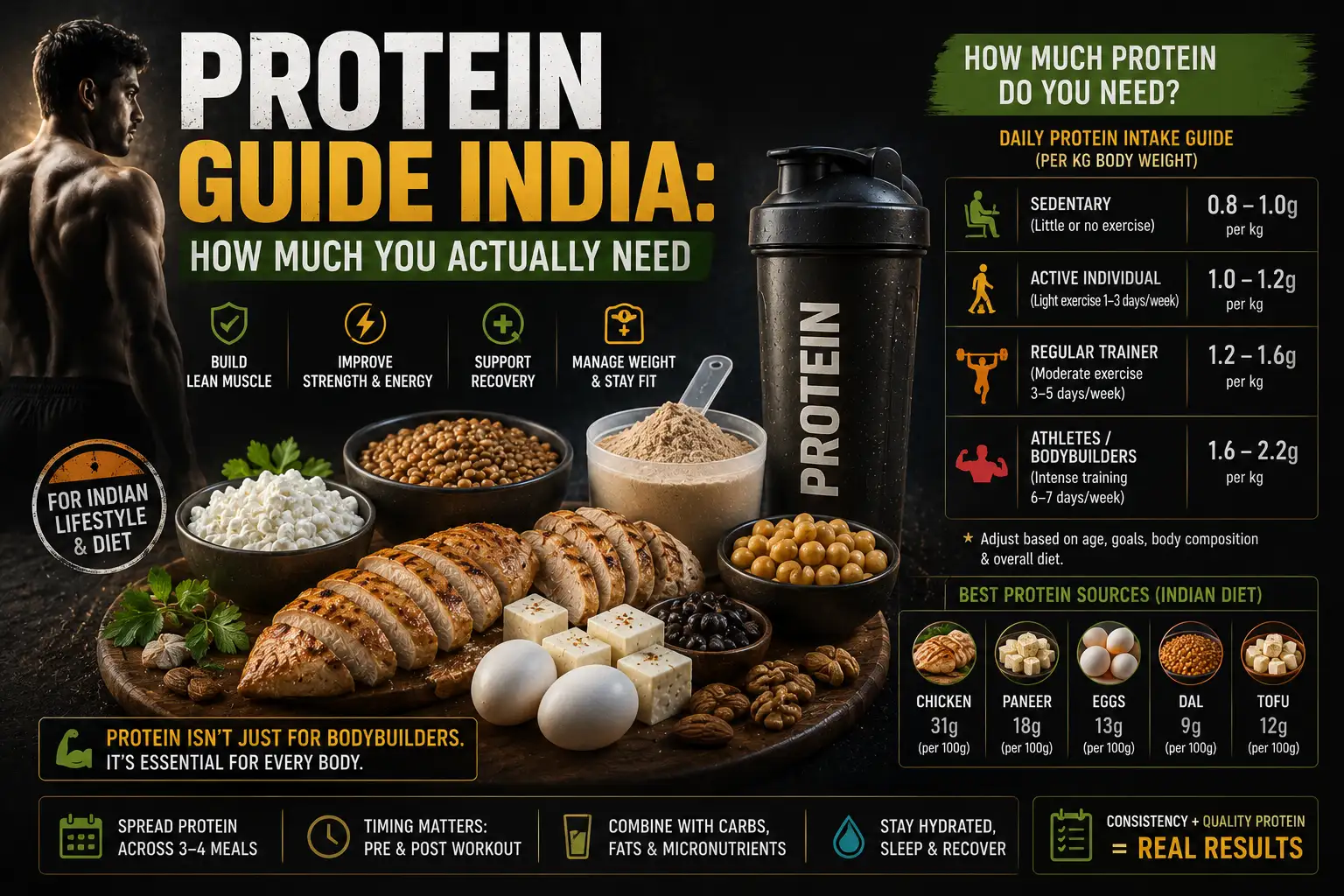
Protein Guide India: How Much You Actually Need
ICMR says 0.83g per kg. Sports science says 1.6g. Both are right — for different people. Here is how much protein you actually need, the cheapest ways to hit it on an Indian diet, and whether you need powder at all.

18 min read
Virat Kohli Daily Routine 2026: 4:45 AM Time Table
Virat Kohli wakes at 4:45 AM, does 45 minutes of yoga before gym, eats eggs and paneer salad for breakfast, and has slept 8 hours every night since 2018. His complete time table, vegetarian diet plan, workout structure, and a 4-day adapted version for working Indians.

12 min read
Cristiano Ronaldo's Fitness Routine at 41 (2026)
At 41, Cristiano Ronaldo trains 5-6 days a week, eats six clean meals a day, and sleeps in 90-minute cycles instead of one long block. His full training split, diet, recovery routine, and the principles you can actually apply at home in India.