Virat Kohli Daily Routine 2026: 4:45 AM Time Table
Virat Kohli wakes at 4:45 AM, does 45 minutes of yoga before gym, eats eggs and paneer salad for breakfast, and has slept 8 hours every night since 2018. His complete time table, vegetarian diet plan, workout structure, and a 4-day adapted version for working Indians.

Medical Safety Note: This article is for general educational purposes only and is not a substitute for professional medical advice, diagnosis, or treatment. If you are pregnant, managing a condition like diabetes, PCOS, or thyroid disorder, or taking medication, please consult a qualified doctor or registered dietitian before changing your diet, supplements, or exercise routine.
Affiliate Disclosure: As an Amazon Associate I earn from qualifying purchases. This post contains affiliate links. If you buy through them, we may earn a small commission at no extra cost to you — this never affects our recommendations. We only suggest products we believe in. Read our full affiliate disclosure.
Virat Kohli is 36 years old, plays one of the most physically demanding sports on earth, and is still widely considered the fittest cricketer in the world.
His batting records are well documented. But his transformation from a self-described snack-loving youngster into a peak-performance athlete is arguably his most remarkable achievement — and it did not happen by accident.
This is the complete breakdown of his daily routine, time table, workout structure, diet plan, and recovery habits — plus a realistic version Indians can actually start this week.
Virat Kohli Daily Routine Time Table (IPL 2026)
This is the most searched question about Kohli's fitness — and the answer reveals why he operates at a level most players cannot sustain into their mid-30s.
A note on sourcing: Kohli's team has never published an official minute-by-minute schedule. This time table is reconstructed from his own public interviews, reporting by Indian sports journalists who cover him closely, and the known principles of elite athlete training and recovery — treat specific timings as evidence-based estimates, not a confirmed personal schedule.
← Swipe to compare →
| Time | Activity |
|---|---|
| 4:45–5:00 AM | Wake up |
| 5:00–5:45 AM | Yoga and mobility session (45 minutes) |
| 5:45–6:00 AM | Warm water with lemon, light hydration |
| 6:00–7:30 AM | Gym session — strength and conditioning |
| 7:30–8:15 AM | Post-workout recovery (stretching, cold shower) |
| 8:15–9:00 AM | Breakfast — high protein, clean carbs |
| 9:30–10:00 AM | Travel to ground / team meetings |
| 10:00 AM–1:00 PM | Cricket practice — batting, fielding drills, net sessions |
| 1:00–2:00 PM | Lunch + rest |
| 2:00–3:30 PM | Rest / recovery protocol |
| 4:00–5:30 PM | Match preparation or evening fielding session |
| 7:30–8:00 PM | Dinner — light, early |
| 9:00–9:30 PM | Wind-down routine — reading, no screens |
| 10:00–10:30 PM | Sleep (targeting 8 full hours) |
During non-match days in IPL, the afternoon block is replaced with extended gym work or skill drills. On match days, afternoon rest is prioritised to preserve energy for evening performance.
The Turning Point: How Kohli Built This Discipline
Kohli's fitness journey was not gradual — it was a conscious, deliberate decision. After India's 2012 tour of Australia, where he struggled both on and off the pitch, he made a complete lifestyle overhaul. The junk food, the late nights, and the casual approach to conditioning were replaced with a performance-first philosophy.
The results were visible within a year. His running between wickets sharpened noticeably. His ability to sustain energy over long innings improved dramatically. And what followed was a ripple effect across the Indian cricket team — fitness standards that were optional became mandatory under his captaincy.
The most important takeaway from Kohli's story: He was not always fit. He built it — through deliberate habit change. Fitness is a system, not a genetic advantage.
Virat Kohli Workout Plan & Routine — Full Breakdown
Kohli follows a 5-day training week with two active rest days. His total training time on a full day can reach 4–5 hours — but this includes cricket skill work. His gym sessions specifically are 60–90 minutes, structured into four phases.
Virat Kohli Morning Routine — First 3 Hours
Before the gym, before cricket, before anything — Kohli's morning follows a non-negotiable sequence that has stayed consistent for years. The discipline of this morning block is what separates his fitness baseline from that of his peers.
Phase 1: Yoga and Mobility (5:00–5:45 AM)
Every day begins with yoga — this is Kohli's most consistent and non-negotiable habit. He has spoken about starting yoga practice around 2018, and it has become foundational to how he manages his body at 36.
Benefits yoga provides for him:
- Mobility and joint health for movements like diving, bending, and sprinting
- Cortisol reduction — critical for focus and recovery
- Injury prevention through flexible connective tissue
- Mental clarity before a high-pressure training day
📖 Read Also:
Surya Namaskar for Weight Loss — Calories Burned and 4-Week PlanKohli starts every session with yoga and mobility. Surya Namaskar is the most accessible version for Indians — 12 rounds burns 120 calories and works every major muscle group. Full guide with a 4-week progression plan.
Phase 2: Gym Warm-Up (6:00–6:15 AM)
- 5–10 minutes light cardio (cycling, treadmill)
- Dynamic stretching: arm circles, leg swings, hip rotations
- Foam rolling: quads, hamstrings, thoracic spine
- Glute and core activation before heavier compound work
Phase 3: Strength Training (6:15–7:00 AM — 40–50 Minutes)
Kohli's strength work is built around compound movements first, isolation exercises second — the correct priority for athletic performance. The goal is lean, functional muscle — not size. One detail most beginners skip: deadlifts and squats are exactly the lifts where a soft running-shoe midsole works against you, since part of your force goes into compressing foam instead of into the floor — which is why training shoes and running shoes are not interchangeable once the barbell gets heavy.
Compound lifts in his routine:
← Swipe to compare →
| Exercise | Primary Muscles | Athletic Benefit |
|---|---|---|
| Deadlifts | Lower back, hamstrings, glutes | Power transfer in batting strokes |
| Squats | Quads, glutes, core | Running speed and explosive movement |
| Lunges | Legs, glutes, balance | Agility and directional change on the field |
| Bench Press | Chest, shoulders, triceps | Upper body strength for batting |
| Pull-Ups | Back, biceps, core | Fielding strength and posture |
| Overhead Press | Shoulders, core | Throwing power in the outfield |
| Bent-Over Row | Back, biceps | Counterbalance to pressing movements |
Core and isolation work:
- Planks, Russian twists, hanging leg raises (core)
- Bicep curls, tricep extensions, lateral raises (muscle balance)
- Calf raises (ankle and knee joint stability)
Most gym beginners do this in reverse — starting with isolation exercises (curls, extensions) and treating compound lifts as secondary. Kohli's approach is correct: compound lifts build athletic strength and burn more calories per set. Isolation corrects imbalances. Use compound movements as your foundation.
Phase 4: HIIT and Conditioning (7:00–7:25 AM — 20–25 Minutes)
This is what allows Kohli to sprint for quick singles in the 40th over of a T20 with the same urgency as the first over.
- Sprint intervals: 20–30 metre bursts, full recovery between sets
- Battle ropes: 20 seconds maximum effort, 40 seconds rest — 6–8 rounds
- Agility ladders: Footwork patterns that directly transfer to fielding
- Box jumps: Explosive power development
- Cycling intervals: Lower-impact option during high-volume training blocks
Battle ropes, agility ladders and box jumps are gym equipment most people reading this will not have at home. The practical substitute for the resistance and activation work in this phase is a loop band set — banded lateral walks, glute activation and shoulder work cover the same movement patterns in a 2x2 ft space.
Boldfit Resistance Bands Mini Loop Set (Pack of 5)
The home substitute for the activation and conditioning work in this phase. Five resistance levels let you scale from warm-up glute activation to genuine strength work — lateral walks, banded squats, and shoulder external rotations in the space of a yoga mat.
Check Price on Amazon📖 Read Also:
Home Workout Plan for Indians — Complete Beginner Guide 2026Kohli's HIIT and conditioning principles adapted for a home setting — no gym required. Full 4-week beginner plan with resistance band and bodyweight exercises.
Phase 5: Recovery (7:25–7:50 AM — 15–20 Minutes)
Kohli has credited recovery as seriously as training itself:
- Static stretching for all major muscle groups
- Cold showers (reportedly ice baths during intensive touring periods)
- Specialist physio sessions during IPL and international tours
- 8 hours of sleep — non-negotiable
How Kohli Eats — The Short Version
Kohli's food philosophy fits in one line: food is fuel, not entertainment. He has said he can eat the same meals for months without getting bored, because he treats eating as a performance decision rather than a pleasure one.
In 2018 he moved to a largely vegetarian diet on medical advice, after a cervical spine problem and high uric acid levels. What he eats now is built on plant proteins, whole grains and clean cooking — and what he has removed matters as much: no fried food, no added sugar, no alcohol.
That is the part this routine needs you to know. The full picture — every meal with its timing, how the plan changes on match days, the supplements behind it, and what an Indian vegetarian can realistically copy without an athlete's budget — is a subject of its own, and we have covered it properly:
📖 Read Also:
Virat Kohli's Vegetarian Diet Plan (2026): What He Actually Eats in a DayThe complete daily menu with timings, his match-day changes, the foods he has cut entirely, and an honest look at what a working Indian vegetarian can adapt from it.
One thing worth carrying into either article: Kohli trains four to five hours a day, so his portions are far bigger than an office worker needs. Copy the composition of his meals — never the quantities.
Virat Kohli's 5 Core Fitness Principles
Beyond the specific exercises and meals, Kohli operates on principles that explain his results — and these apply to anyone.
1. Consistency Over Intensity
Kohli trains whether in form or out of form, during IPL or the off-season. The discipline does not switch on for tournaments and off for breaks. This consistency is why his fitness remains a baseline, not a peak he has to reach.
2. Train for Performance, Not Appearance
His workouts are designed to make him faster, stronger, and more enduring on the field. The visible physique is a by-product — not the goal. This shift in objective changes how you design a programme entirely.
3. Sleep Is a Training Variable
The 8-hour sleep rule is a performance strategy, not a wellness suggestion. Growth hormone — which drives muscle repair and fat metabolism — is primarily released during deep sleep. Compromising sleep compromises the result of every session. Kohli has a sports science team measuring this; everyone else is guessing, which is the one honest argument for wearing a tracker that logs sleep stages — with clear eyes about what a wrist sensor can and cannot actually measure.
4. Hydration as a Non-Negotiable
Kohli is known for consistent hydration throughout the day, particularly around training and match windows. Even mild dehydration (2% body water loss) measurably impairs strength, endurance, and cognitive function.
5. Mental Fitness Alongside Physical
Kohli has increasingly spoken about meditation, mindfulness, and mental health management — particularly the psychological demands of high-pressure cricket at the top level. He treats physical and mental fitness as connected, not separate systems.
Kohli's Fitness vs Average Indian Adult
← Swipe to compare →
| Factor | Virat Kohli | Average Indian Adult | The Gap |
|---|---|---|---|
| Daily training | 4–5 hours | 0–30 minutes | Large |
| Weekly gym sessions | 5 days | 0–2 days | Large |
| Protein per day | ~150–180g (estimate) | 40–60g | Critical |
| Sleep | 8 hours (strict) | 5–6 hours | Significant |
| Junk food | Eliminated | Several servings/day | Large |
| Morning routine | 4:45 AM yoga + gym | Varied or none | Large |
The gap is large — but every gap has a starting point. Improving any two of these variables consistently will produce visible results within 8–12 weeks.
A Beginner-Friendly Version of Kohli's Routine
You cannot replicate a professional athlete's programme — and you should not try. Here is a scaled version of Kohli's principles that any Indian working adult can start this week.
Beginner Daily Routine (Work Around a 9-to-6 Job)
← Swipe to compare →
| Time | Activity |
|---|---|
| 6:00 AM | Wake up |
| 6:15–6:30 AM | 5 rounds Surya Namaskar (warm-up + yoga combined) |
| 6:30–7:15 AM | Workout (see weekly plan below) |
| 7:15–7:30 AM | Cold shower, get ready |
| 8:00 AM | High-protein breakfast |
| 1:00 PM | Balanced lunch (protein + complex carbs + vegetables) |
| 5:00 PM | Light snack (nuts or fruit) |
| 8:00 PM | Light dinner, early |
| 10:00–10:30 PM | Sleep |
Beginner 4-Day Weekly Workout Plan
← Swipe to compare →
| Day | Session | Duration |
|---|---|---|
| Monday | Strength — Lower body (squats, lunges, deadlifts with light weight) | 45 min |
| Wednesday | Cardio + Core (cycling or jogging + planks, crunches) | 40 min |
| Friday | Strength — Upper body (push-ups, dumbbell rows, shoulder press) | 45 min |
| Saturday | HIIT Light (10-second sprints, jumping jacks, rest intervals) | 30 min |
| Tue / Thu / Sun | Active rest — walking, Surya Namaskar, stretching | 20–30 min |
Beginner Diet Adjustments (Indian Food)
You do not need to eat exactly like Kohli to eat significantly better. Three immediate shifts:
- Replace one fried snack daily with a handful of mixed nuts or a boiled egg
- Switch white rice to brown rice or millets for at least one meal per day
- Add one serving of dal or paneer per meal to ensure 20–25g protein at lunch and dinner
📖 Read Also:
Gym Diet Plan for Indian Beginners — What to Eat on Training DaysApplying Kohli's diet principles to a beginner Indian gym routine — pre-workout meals, post-workout nutrition, protein targets by bodyweight, and a sample week of meals designed around a 9-to-6 job.
Equipment to Start Training Like Kohli at Home
If a gym membership is not practical right now, these two items cover 80% of what this beginner routine needs:
Boldfit Resistance Bands Mini Loop Set (Pack of 5)
Kohli's conditioning work includes banded exercises for glutes, hips, and shoulders. This 5-band set covers the full resistance range for home HIIT, warm-up activation, and bodyweight strength work.
Check Price on Amazon📖 Read Also:
Best Resistance Bands in India 2026 — Tested and ReviewedResistance bands are the most practical home gym investment — covering warm-up, conditioning, and strength work. We tested 7 bands across price ranges. Full comparison with Amazon prices.
📖 Read Also:
10 Gym Essentials Every Indian Beginner Actually Needs (2026)Want the complete home-training checklist beyond bands? Gym belt, gloves, mat, gym bag, and more — honest reviews of what's actually worth buying and what to skip.
Once bodyweight squats and lunges stop being enough — usually a few weeks in — the beginner plan above calls for "light weight" on lower-body days and dumbbell rows on upper-body days. A pair of adjustable dumbbells covers both without a rack:
📖 Read Also:
Best Adjustable Dumbbells in India (2026) — 5 ComparedSpin-lock vs dial explained, and the weight-range trap that wastes most first-time purchases — for when bodyweight and bands stop being enough.
AS-IT-IS Creatine Monohydrate — 500g
The single most research-backed supplement for strength and conditioning — exactly the kind of output Kohli's training demands. 5g daily, no loading phase needed. Roughly 100 servings per 500 g tub at 5 g a day.
Check Price on Amazon📖 Read Also:
Creatine Guide for Indian Beginners — Everything You Need to KnowCreatine is the most researched supplement in sports science. How it works, how to take it, which Indian brand to buy, and exactly what results to expect. Myths debunked.
📖 Read Also:
ON Gold Standard vs MuscleBlaze Biozyme Whey — Which is Better for Indians?Athletes at Kohli's level rely on quality whey protein for recovery. We compared India's two most popular whey proteins head-to-head — protein per rupee, absorption, lab reports, and a clear verdict.
📖 Read Also:
Whey Protein vs Creatine: Which Should You Buy First?On a limited budget and can only start with one of the two supplements above? Here's the honest decision framework — with real cost breakdowns for Indian buyers.
📖 Read Also:
How to Build Muscle on an Indian Diet — Complete 2026 GuideThe complete Indian diet and training guide for muscle building — exact protein targets by bodyweight, vegetarian and non-veg meal plans, 7-day diet chart, and beginner supplement stack.
📖 Read Also:
Virat Kohli Vegetarian Diet Plan 2026: What He Eats Before and After a MatchVirat Kohli's exact vegetarian diet plan 2026 — what he eats before a match, after a match, and every day. Full Indian meal plan, match-day nutrition, and what changed when he went vegetarian in 2018.
📖 Read Also:
Cristiano Ronaldo's Fitness Routine at 41 (2026)How does Kohli's routine compare to football's fittest 41-year-old? Ronaldo's real training split, six-meal diet, and polyphasic sleep, broken down.
Frequently Asked Questions
What Time Does Virat Kohli Wake Up?
Kohli wakes up between 4:45 and 5:00 AM on training days. He begins with a 45-minute yoga session, followed by gym work. During matches, timings adjust around the match schedule, but the morning routine discipline remains consistent.
Is Virat Kohli Vegetarian?
Yes. Kohli switched to a largely vegetarian diet in 2018 on medical advice for his cervical spine condition and high uric acid levels. His diet is now built around plant proteins — dal, lentils, paneer, legumes — with eggs still included. He does not follow a fully vegan diet.
What Does Virat Kohli Eat in a Day?
A typical Kohli day includes: warm lemon water and soaked almonds (morning), post-yoga banana or dates, boiled eggs or omelette with spinach-paneer salad for breakfast, brown rice or roti with dal and sabzi for lunch, nuts and coconut water as a snack, and light dal-roti with greens for dinner.
How Many Hours Does Virat Kohli Practice and Train in a Day?
Total training time including cricket skill work is 4–5 hours on full training days. His gym session specifically is 60–90 minutes, structured around strength, conditioning, and mobility. Net practice and fielding drills add another 2–3 hours on cricket practice days.
Can a Beginner Follow Virat Kohli's Workout?
Not directly — the loads, volumes, and session lengths require years of base-building. Start with bodyweight versions (bodyweight squats, push-ups, lunges), shorter HIIT intervals, and lighter resistance. The principles — compound-first, consistency, recovery-priority — translate directly even when the intensity does not.
What Protein Sources Does Kohli Use as a Vegetarian?
Primary sources: dal, rajma, lobia, various lentils, paneer, curd, and tofu. Protein shakes on high-training days. All of these are accessible and affordable across India.
How Did Kohli's Fitness Standards Change the Indian Cricket Team?
Kohli introduced Yo-Yo test fitness standards during his captaincy — players who could not meet benchmarks were dropped from selection regardless of their batting or bowling performance. This represented a fundamental cultural shift in Indian cricket whose effects are still visible in how current players approach conditioning.
What Changed in Virat Kohli's Fitness in 2018?
2018 was the year Kohli made two major changes: he switched to a largely vegetarian diet on medical advice for his cervical spine condition and high uric acid levels, and he committed fully to yoga as a daily practice. These two shifts — combined with his already disciplined training — took his fitness from excellent to exceptional. His body composition, recovery speed, and on-field endurance all improved noticeably from the 2018-19 season onward.
How Many Hours Does Virat Kohli Sleep?
Kohli targets 8 full hours of sleep every night, which he treats as a non-negotiable performance variable rather than a lifestyle preference. Growth hormone — which drives muscle repair and fat metabolism — is primarily released during deep sleep. He has spoken about prioritising sleep even during intense touring schedules and IPL campaigns.
Free Tools to Help You
Put this article into action — use our free calculators to get your personalized numbers.
Was this article helpful?
Want More Tips Like This?
Join 1,000+ readers getting weekly fitness, diet, and wellness tips + FREE meal plan
No spam, ever. Unsubscribe anytime.

About the Author: Ashwani
Fitness enthusiast and wellness writer. I research and write about workouts, Indian diet strategies, and evidence-based health habits — so you can make practical changes without expensive gym memberships.
Read more about us →Comments
Leave a Comment
Your email will not be published. Comments are reviewed before appearing.
You Might Also Like
Continue your wellness journey

12 min read
Cristiano Ronaldo's Fitness Routine at 41 (2026)
At 41, Cristiano Ronaldo trains 5-6 days a week, eats six clean meals a day, and sleeps in 90-minute cycles instead of one long block. His full training split, diet, recovery routine, and the principles you can actually apply at home in India.
16 min read
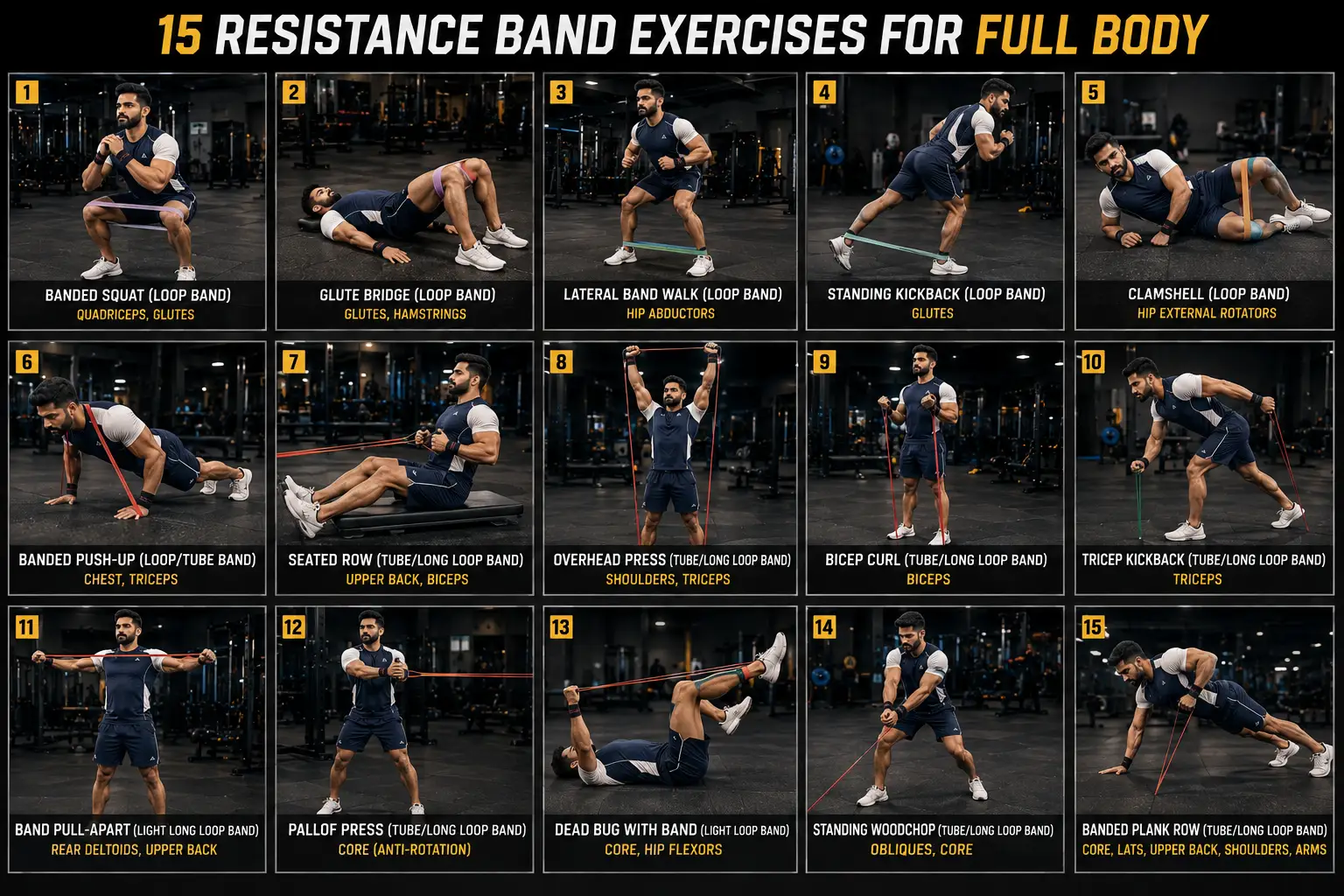
15 Resistance Band Exercises for Full Body
A complete full-body resistance band workout you can do in the space of a yoga mat — 15 exercises with form cues, sets and reps, and a 30-minute routine built for Indian homes with no bench, no rack and no door anchor.

21 min read
Virat Kohli Diet Plan 2026: Full Vegetarian Chart
Virat Kohli has been largely vegetarian since 2018 — and his performance has only improved since. Here is his exact match-day diet, pre-match meal timing, post-match recovery foods, and the complete Indian vegetarian meal plan behind one of cricket's fittest athletes.