Monsoon Fitness India (2026): Home Workout & Diet Guide
Monsoon in India kills most fitness routines. Skipped gym days, muddy roads, low motivation, and seasonal infections derail months of progress. Here is your complete guide to stay fit, build immunity, and actually thrive during the Indian rainy season — workouts, diet, calorie data, and a 4-week progressive plan.

Medical Safety Note: This article is for general educational purposes only and is not a substitute for professional medical advice, diagnosis, or treatment. If you are pregnant, managing a condition like diabetes, PCOS, or thyroid disorder, or taking medication, please consult a qualified doctor or registered dietitian before changing your diet, supplements, or exercise routine.
Affiliate Disclosure: As an Amazon Associate I earn from qualifying purchases. This post contains affiliate links. If you buy through them, we may earn a small commission at no extra cost to you — this never affects our recommendations. We only suggest products we believe in. Read our full affiliate disclosure.
June to September in India means one thing for fitness: disruption.
The early morning run you built your habit around? Flooded streets. The gym cycle? Halted for days by continuous rain. The motivation that carried you through summer? Washed away by grey skies and cosy chai moments.
Monsoon is the most common reason Indians lose their fitness momentum mid-year — and then spend October trying to rebuild what they had in May.
But here is the truth most fitness guides miss: monsoon is not the enemy of fitness. Your dependence on specific conditions is.
With the right plan — home workouts, smarter nutrition, and a realistic approach to the season — monsoon can be one of the most productive fitness periods of the year. The cool temperatures make training more comfortable than summer heat. The forced indoors removes the "I'll go to the park" procrastination. The season practically creates a reason to build habits that do not depend on weather.
This is your complete monsoon fitness guide for India — workouts, diet, immunity, calorie data, and everything competitors leave out.
Why Monsoon Disrupts Indian Fitness Routines
Understanding why monsoon kills routines helps you counter each barrier deliberately.
Physical barriers:
- Outdoor running and cycling become impractical — waterlogged roads, flooding, slipping hazards
- Gym commutes take significantly longer; people skip entirely rather than arrive late
- High humidity makes exercise feel harder than it is — sweat does not evaporate efficiently, so your body's cooling mechanism is compromised. At 85–90% humidity (typical in Mumbai, Chennai, Kolkata during peak monsoon), your perceived exertion at the same pace is 20–30% higher than dry conditions
- Darker mornings shift the wake-up motivation threshold
Health barriers:
- Seasonal infections (viral fever, throat infections, stomach bugs) are far more common June–September
- Waterborne diseases require dietary caution that disrupts normal eating patterns
- Fungal skin and foot infections are more likely — relevant for gym users sharing equipment and mats
Psychological barriers:
- Reduced sunlight decreases serotonin and Vitamin D synthesis — motivation genuinely dips, not just willpower
- Comfort eating habits increase (chai, pakoda, hot snacks) — calorie intake drifts upward without awareness
- The "I'll restart when monsoon ends" mental trap — which becomes "I'll restart in the new year" by November
Knowing these barriers is step one. Designing around them deliberately is step two.
The Monsoon Fitness Mindset Shift
Stop treating monsoon as a pause. Treat it as a different chapter — one with different tools.
Outdoor runners and cyclists: This is your strength training season. Build the muscle base you always skipped during running months. Three months of consistent bodyweight or resistance training will make you a faster, more resilient runner when October arrives.
Gym-goers: This is your chance to build a home workout habit that does not depend on travel. Every time you complete a home session despite bad weather, you are building the meta-skill of training regardless of conditions.
People restarting: Monsoon's cool temperatures actually make exercise more comfortable than Indian summer heat. If you start now, by October you will have three months of consistency built — the strongest foundation you can enter the festive season with.
The non-negotiable principle: Missing two weeks completely is far more damaging to your fitness than doing lighter workouts consistently for two months. The habit of daily movement matters more than the intensity of any individual session.
Best Time to Exercise During Monsoon in India
This is one of the most searched monsoon fitness questions — and most guides ignore it completely.
The humidity pattern during monsoon changes significantly across the day. Training at the wrong time makes exercise feel unnecessarily hard and increases dehydration and fungal infection risk.
← Swipe to compare →
| Time of Day | Typical Humidity | Temperature | Best For | Caution |
|---|---|---|---|---|
| 5:30–7:00 AM | 80–95% (peak) | Cool | Yoga, stretching, light walk | Highest humidity — avoid HIIT |
| 7:00–9:00 AM | 75–85% | Mild warm | Moderate home workout | Mosquitoes active — keep windows closed |
| 10:00 AM–12:00 PM | 65–75% | Warmer | Strength training, HIIT | Avoid if fever or viral symptoms |
| 4:00–6:00 PM | 70–80% | Cooling | Best window for intense cardio | Mosquitoes peak at dusk — spray repellent |
| 7:00–9:00 PM | 75–85% | Cool | Strength, yoga, stretching | Avoid heavy cardio close to sleep |
Verdict for most Indians: The 4:00–6:00 PM window is the best time for intense monsoon workouts — humidity drops mid-afternoon, temperatures cool without being cold, and daylight remains. If you work full-time and this is not realistic, the 10:00 AM–12:00 PM window on weekends is your best substitute.
Morning yoga practitioners: Keep your practice. Just avoid high-intensity cardio before 8 AM when humidity peaks — your body works significantly harder at the same effort level.
Train indoors with a fan directed at you during monsoon sessions. Even a mild breeze artificially improves sweat evaporation and reduces perceived exertion by 10–15%, making the same workout feel noticeably easier.
Calorie Burn: Monsoon Home Workouts vs Outdoor Running
The single biggest concern most people have about switching to home workouts during monsoon: "Will I burn enough calories?"
The answer — based on calorie expenditure data for a 70kg Indian adult — is a clear yes.
← Swipe to compare →
| Activity | Duration | Calories Burned (70kg) | Equivalent to |
|---|---|---|---|
| Outdoor running (moderate) | 30 min | 280–320 cal | — |
| HIIT home workout | 30 min | 300–400 cal | Better than running |
| Skipping rope (continuous) | 15 min | 200–250 cal | 25 min of running |
| Stair climbing (continuous) | 20 min | 180–240 cal | 20 min of running |
| Bodyweight circuit (moderate) | 40 min | 250–320 cal | Equivalent to running |
| Dance / Zumba | 30 min | 200–280 cal | Slightly below running |
| Yoga (power/vinyasa) | 45 min | 180–250 cal | Below running, but builds strength |
| Brisk walking (indoors/mall) | 45 min | 180–220 cal | Below running |
Source: MET-based calculations, ACSM guidelines; individual variation ±15%
Key insight: A 30-minute HIIT home session burns more calories than 30 minutes of moderate outdoor running — and can be done in 6 feet of floor space. The limitation of home workouts is not calorie burn. It is perceived effort, boredom, and motivation — all of which are solvable with the right structure.
Monsoon Home Workout Plan: 4 Weeks Progressive
This plan requires zero equipment, minimal space (6 feet × 4 feet), and is structured progressively across 4 weeks. Each week builds on the previous — do not skip ahead.
Boldfit Yoga Mat — 6mm Anti-Slip, Extra Large (183cm × 61cm)
The only equipment you need for this entire 4-week plan. Anti-slip surface works on marble, tile, and wooden floors — all common in Indian homes. Moisture-resistant and easy to wipe clean after monsoon-season workouts.
Week 1 — Foundation (20–25 minutes, 4 days/week)
Warm-up first (5 minutes — mandatory): Arm circles 30 sec → neck rolls 30 sec → hip circles 30 sec → high knees (slow) 60 sec → leg swings 30 sec each side. Skipping warm-up in humid conditions increases injury risk — joints are less responsive in high-humidity environments.
Rest 60 seconds between exercises.
← Swipe to compare →
| Exercise | Sets | Reps | Beginner Modification |
|---|---|---|---|
| Bodyweight squats | 3 | 15 | Sit-to-stand from chair |
| Wall push-ups or knee push-ups | 3 | 12 | Wall push-ups |
| Standing crunches | 3 | 20 | Seated crunches |
| Glute bridges | 3 | 15 | Single leg on floor |
| Jumping jacks | 3 | 30 sec | Step jacks (low impact) |
| Child's pose hold | 1 | 60 sec | — |
Cool-down (3 minutes): Standing quad stretch → standing calf stretch → seated hamstring stretch → lying spinal twist each side.
Week 2 — Build (25–30 minutes, 4 days/week)
← Swipe to compare →
| Exercise | Sets | Reps | Beginner Modification |
|---|---|---|---|
| Jump squats | 3 | 12 | Regular squats ×20 |
| Full push-ups | 3 | 10–12 | Incline push-ups on sofa |
| Reverse lunges | 3 | 10 per leg | Slow reverse lunge |
| Plank hold | 3 | 30–45 sec | Knee plank |
| Mountain climbers | 3 | 30 sec | Slow mountain climbers |
| Superman holds | 3 | 12 | — |
Week 3 — Intensify (30–35 minutes, 5 days/week)
← Swipe to compare →
| Exercise | Sets | Reps | Modification |
|---|---|---|---|
| Bulgarian split squats (chair) | 3 | 10/leg | Reverse lunge ×12 |
| Decline push-ups (feet on sofa) | 3 | 10 | Standard push-ups |
| Jump lunges | 3 | 8/leg | Slow reverse lunges |
| Hollow body hold | 3 | 20–30 sec | Dead bug ×10 |
| Burpees | 3 | 8 | Step-out burpees |
| Side plank | 3 | 20–30 sec/side | Knee side plank |
Week 4 — Peak (35–40 minutes, 5 days/week)
AMRAP format — 30-minute timer. Complete as many rounds as possible of:
- 10 push-ups
- 15 squats
- 10 reverse lunges per leg
- 45-second plank
- 10 burpees
Track your rounds. This becomes your benchmark. In October, run the same test — the improvement will be measurable.
Add resistance bands from Week 3 onwards to significantly increase the challenge without any additional space. A set of loop bands around the thighs during squats and glute bridges nearly doubles their effectiveness for glute and hip development. See our best resistance bands for home workout India for the exact bands that fit this programme.
Indoor Cardio Options for Monsoon — With Calorie Data
When you cannot run outside, here are genuine cardio alternatives with realistic calorie burn numbers.
Two of these need no equipment at all. If you would rather solve the problem once instead of every monsoon, a walking pad is the equipment answer — it folds under a bed and keeps your step count from collapsing through both monsoon and the winter AQI months. It is a ₹10,000–20,000 decision though, so read the options below first and only buy if the free ones genuinely do not fit your home.
1. Stair Climbing — Best Monsoon Cardio for Most Indians
If your building or house has stairs, this is the single most accessible and effective monsoon cardio option. No equipment, no space, no YouTube required.
Calorie burn: 180–240 calories per 20 minutes (70kg person). Stair climbing engages large lower-body muscles simultaneously — calves, quads, glutes, hamstrings — producing higher metabolic demand than flat-surface walking at the same duration.
Structured stair workout:
- Steady climbing: 5 minutes continuous up-down
- Two steps at a time: 3 minutes (higher glute and hamstring demand)
- Rest 1–2 minutes
- Repeat 2–3 times total
Progression: Once steady-state feels easy, add stair sprints — 30 seconds maximum effort up, walk down, repeat 8–10 times.
2. Skipping Rope — Highest Calorie Burn Per Square Foot
A jump rope costs ₹200–500 and provides some of the best calorie burn available in a home setting.
Calorie burn: 200–250 calories per 15 minutes continuous (70kg person) — equivalent to 25 minutes of moderate running.
For beginners: 30 seconds on, 30 seconds rest, 10 rounds. Progress to 1-minute intervals, then 2-minute continuous sets.
For intermediate: Try double-unders (rope passes twice per jump) — these burn approximately 3× the calories of standard skipping per minute.
Boldfit Skipping Rope with Counter — Adjustable Steel Wire
Best-value jump rope in India for home cardio. Steel wire (not plastic) means consistent rotation at speed. Built-in jump counter. Adjustable length fits all heights. Handles with anti-slip grip — important in sweaty monsoon conditions.
3. HIIT in a Small Space
30 minutes of HIIT burns 300–400 calories — more than moderate outdoor running. The structure matters: work intervals 20–40 seconds, rest intervals 10–20 seconds, total 20–30 minutes with warm-up and cool-down.
Sample 20-minute HIIT (no equipment):
- High knees × 40 sec, rest 20 sec
- Push-ups × 40 sec, rest 20 sec
- Jump squats × 40 sec, rest 20 sec
- Mountain climbers × 40 sec, rest 20 sec
- Burpees × 40 sec, rest 20 sec
- Rest 90 seconds. Repeat 3 rounds.
For a fully structured plan, see our HIIT workout for beginners at home.
4. Yoga — Underrated for Calorie Burn and Strength
Monsoon is genuinely the best season for yoga in India — the ambient cool, the rain sounds, the natural stillness of the season create conditions that make concentration easier.
Calorie burn: 180–250 calories per 45 minutes (power/vinyasa yoga). Restorative yoga burns less, but significantly reduces cortisol — the stress hormone most responsible for belly fat accumulation.
Practical starting point: Our Surya Namaskar weight loss guide is the highest-return yoga routine for fitness — 12 rounds of Surya Namaskar burns approximately 150–200 calories and takes under 20 minutes.
5. Dance Fitness
Bollywood dance workouts and Zumba burn 200–280 calories per 30 minutes and require no equipment. The psychological benefit is significant — it does not feel like exercise, which makes it far more sustainable for people who struggle with workout motivation in monsoon. Our Zumba for beginners guide is a practical starting point.
Monsoon Workout for Weight Loss — Does It Work?
This is asked frequently — and deserves a direct answer.
Yes, you can lose fat effectively with monsoon home workouts. Fat loss is driven by a calorie deficit — burning more than you consume. The training modality (home vs gym, indoor vs outdoor) is secondary to this fundamental principle.
What changes in monsoon for weight loss:
In your favour:
- Cool temperatures reduce perceived exertion — you can train longer at the same effort
- Reduced social eating (fewer outings, restaurants) can lower calorie intake naturally
- More time at home = more opportunity for meal prep and controlled eating
Against you:
- Comfort food cravings increase — chai, pakodas, hot snacks add calories invisibly
- Reduced activity in daily life (no commute walking, fewer outdoor errands) lowers your TDEE
- Lower Vitamin D reduces metabolic rate modestly and worsens mood — both hurt fat loss
Net result: With deliberate diet management and consistent home workouts, monsoon weight loss is not just possible — many people find it easier than summer because the discomfort of heat is removed.
For the exact calorie targets and meal plan that supports home workout fat loss, see our 1200 calorie Indian diet plan and calorie deficit guide.
Monsoon Diet: What to Eat, What to Avoid
Monsoon brings specific nutritional considerations that most fitness guides ignore.
Foods to Prioritise in Monsoon
Immunity-building foods — critical during peak infection season:
← Swipe to compare →
| Food | Active Compound | How to Use | Daily Dose |
|---|---|---|---|
| Haldi (turmeric) | Curcumin — anti-inflammatory | Haldi doodh every evening | ½ tsp in warm milk |
| Adrak (ginger) | Gingerols — antimicrobial | Tea, cooking, raw with honey | 2–3g fresh daily |
| Lehsun (garlic) | Allicin — antiviral | Crushed in dal, tadka | 2–3 raw cloves or heavily cooked |
| Amla | Vitamin C — 600mg per 100g (20× lemon) | Fresh, chutney, or powder | 1 fresh amla or 1 tsp powder |
| Tulsi | Eugenol — respiratory immunity | Tea, add to regular chai | 5–8 leaves or ¼ tsp dried |
| Curd / chaas | Lactobacillus — gut immunity | Room temperature, not ice cold | 200–300ml daily |
Warming, easy-to-digest foods:
- Khichdi, dal chawal, moong soup — light on the gut, which is more vulnerable in monsoon
- Vegetable soups and light stews
- Ginger-lemon tea (especially in the morning before exercise)
Foods to Limit or Avoid in Monsoon
← Swipe to compare →
| Food | Reason | Alternative |
|---|---|---|
| Raw salads and cut fruit from outside | Peak contamination risk — gut infections spike | Wash and cut at home only |
| Leafy greens (spinach, palak, methi) raw | High insect and contamination risk | Steam or cook thoroughly |
| Street food, chaat, pani puri | Peak season for typhoid, cholera, hepatitis A | Home-cooked versions |
| Cold drinks and ice | Ice hygiene unreliable in monsoon | Room temperature water or warm drinks |
| Deep-fried snacks | Oil quality degrades faster in humidity; excess calorie intake | Air-fryer versions, roasted alternatives |
| Raw sprouts | High E. coli risk in humid conditions | Cooked sprouts or skip during peak monsoon |
Waterborne diseases spike sharply in India during June–September. Be strict about water hygiene — drink only filtered or boiled water, avoid ice outside home, and be cautious about food from roadside vendors. A bout of typhoid or acute gastroenteritis sets your fitness back far more than two months of lighter home workouts.
Calorie Management in Monsoon
The natural drift during monsoon is toward more calorie-dense comfort foods. This is not willpower failure — it is a biological response to cool, grey conditions (your body genuinely prefers warm, calorie-dense food in cold, wet weather). Work with it, not against it.
Practical swaps that preserve the comfort without the calories:
← Swipe to compare →
| Craving | Typical Version | Smarter Version | Calorie Saving |
|---|---|---|---|
| Chai + biscuits | 2 cups + 4 biscuits | Ginger-tulsi tea + 10 roasted chana | Save ~150 cal |
| Pakodas | Deep-fried, 5 pieces | Air-fryer or shallow-fried, same | Save ~200 cal |
| Bhutta (corn) | Butter + salt | Lemon + chilli | Save ~100 cal |
| Hot chocolate | Full-cream milk + sugar | Low-fat milk, less sugar | Save ~120 cal |
| Maggi / instant noodles | Full packet + butter | Half packet + egg + vegetables | Better macros |
Monsoon Immunity Supplement Protocol
Beyond food, these three supplements have clear evidence for monsoon-season immunity:
Vitamin D3 + K2 — Most Important
India has one of the world's highest rates of Vitamin D deficiency — estimated at 70–80% of the urban population in some studies. Monsoon significantly worsens this because sunlight exposure drops to near zero for weeks at a time.
Low Vitamin D directly impacts:
- Immune function (Vitamin D receptors are present on immune cells)
- Muscle strength and recovery
- Mood and motivation (Vitamin D modulates serotonin synthesis)
- Testosterone production
Dosage: 1,000–2,000 IU D3 daily during monsoon months. Get a blood test (25-OH Vitamin D) before supplementing if possible — deficiency is confirmed below 20 ng/mL. For people with confirmed deficiency, a doctor may prescribe 60,000 IU weekly for 8 weeks.
For a complete breakdown of how Vitamin D affects fitness and weight loss in India, see our Vitamin D deficiency and weight loss guide.
Zinc — Underused but Effective
Zinc is directly involved in immune cell production and function. Most Indians get adequate zinc through diet (dal, nuts, seeds, meat), but it is worth monitoring during high-infection months.
Food sources: Pumpkin seeds (30g = 4mg zinc), cashews, chickpeas, eggs. If dietary intake is low, a 10–15mg zinc supplement daily during monsoon is well-evidenced.
Vitamin C — From Food First, Supplement Second
India has exceptional natural Vitamin C sources — amla being the most potent (600mg per 100g, compared to 50mg per 100g in oranges). Prioritise amla, guava, and lemon daily before considering supplements. If supplementing, 500–1,000 mg of Vitamin C daily is safe and well-evidenced for immune support.
City-Specific Monsoon Fitness Considerations
Monsoon is not uniform across India. Your strategy should match your city's specific pattern.
← Swipe to compare →
| City | Monsoon Pattern | Peak Months | Specific Challenge | Best Adaptation |
|---|---|---|---|---|
| Mumbai | Heavy, near-continuous | June–September | 4 months of flooding; worst commute disruption | Full home workout setup essential; stair climbing in building |
| Delhi | Intermittent, humid | July–August | Humidity spike more than rain; mosquito risk | 4–6 PM window; HIIT at home on heavy rain days |
| Bangalore | Mild, evening showers | June–September | Coolest monsoon; outdoor mostly possible | Shorter indoor plan needed; evening runs still viable |
| Chennai | Northeast monsoon (later) | October–December | Peak comes when rest of India is finishing | Plan for October–November instead of June–September |
| Kolkata | Heavy rain + humidity | June–September | Extreme humidity (85–95%); heat+humidity combo | Morning yoga only; afternoon HIIT indoors with fan |
| Hyderabad | Moderate | July–September | Flash floods but not continuous | Mix of indoor and outdoor possible |
| Pune | Moderate to heavy | June–September | Cool and pleasant; good for indoor training | 4-week home plan + occasional outdoor walks |
Chennai note: If you are in Chennai or coastal Tamil Nadu, your monsoon fitness planning should shift to October–December (northeast monsoon season) rather than June–September when the rest of India is at peak rain.
Monsoon-Specific Health Issues That Affect Training
Fungal Infections
High humidity makes fungal skin infections (ringworm, jock itch, athlete's foot) significantly more common — especially for gym users and people who sweat heavily during home workouts.
Prevention protocol:
- Dry completely after shower, especially between toes, skin folds, and groin
- Wear moisture-wicking synthetic fabric during workouts — cotton retains sweat and creates fungal conditions
- Change out of workout clothes within 30 minutes of finishing
- Clean yoga mat after every session with an antifungal spray or diluted neem solution
- If redness, itching, or circular rash appears — consult a pharmacist or doctor immediately. Untreated fungal infections spread rapidly in monsoon conditions.
Joint Pain in Monsoon
Barometric pressure changes during monsoon genuinely affect joint pain — this is not psychosomatic. The pressure drop before and during heavy rain causes tissues around joints to expand slightly, increasing pressure on pain-sensitive nerve endings.
Management:
- On high-pain days: yoga, seated exercises, or upper-body-only workouts instead of jumping or running
- Warm the joints thoroughly before training — 5-minute warm-up is mandatory, not optional
- Consider a neoprene knee or wrist sleeve if specific joints flare regularly in monsoon
- Do not train through acute joint pain — but do not use chronic discomfort as a reason to stop completely. Low-impact movement is better than rest for most joint conditions.
Vitamin D Deficiency (Covered in Supplement Section)
Fatigue, muscle weakness, and mood issues during monsoon are frequently misattributed to "monsoon blues" when the actual cause is worsening Vitamin D deficiency. See the supplement section above.
Staying Motivated During Monsoon: Practical Psychology
1. Set process goals, not outcome goals
Instead of "lose 5 kg by October," set "complete 40 home workouts between July and September." Outcome goals (weight, body fat) are influenced by dozens of factors you cannot control. Process goals (showing up) are 100% within your control and create the behaviour that produces the outcome anyway.
2. Build a dedicated workout corner
Even a small corner with a mat and a skipping rope creates a physical trigger. Walking past it — especially on a grey monsoon morning — makes you more likely to start than having to clear furniture and prepare the space each time. The friction of setup is often the difference between exercising and not.
3. The two-minute rule
Commit only to starting — two minutes of movement. On days when motivation is zero, this removes the psychological weight of "a full workout." In practice, 80% of the time you will continue past two minutes once you have started. The remaining 20% — ten minutes of stretching still counts.
4. Accountability: one person, one check-in
WhatsApp check-ins with one person are more effective than group challenges for consistency. Tell one person what you are going to do today. Report back. The social commitment shifts the default from skip to show up.
5. Use the rain as an asset
Many people find rain genuinely calming for yoga, stretching, and meditation. The sound of rain is a productivity trigger for focus and flow states for a significant portion of the population. Lean into it — a 30-minute yoga or stretching session in a quiet room with rain sounds is worth more for your long-term fitness than a grudging, distracted gym session.
Frequently Asked Questions
Is it safe to exercise during fever or viral infection in monsoon?
No — rest is the correct response to fever. Exercising with a fever accelerates dehydration, increases viral replication risk, and significantly delays recovery. Wait until you have been completely fever-free for 48 hours before returning to movement. Resume at 50% of your usual intensity for the first 2–3 sessions, then rebuild gradually. Returning too fast after illness is a common cause of a second infection in the same season.
How do I stay fit during monsoon without a gym?
The 4-week progressive home workout plan in this article is your complete answer. It covers strength, cardio, and flexibility — all in 6 feet of floor space, zero equipment required (though a mat and skipping rope help significantly). Pair it with the indoor cardio options section for variety.
Can I lose fat effectively with only home workouts during monsoon?
Yes — fat loss is primarily driven by calorie deficit. Home workouts, particularly HIIT and stair climbing, maintain calorie burn comparable to gym sessions. The cooler monsoon temperatures actually make sustained effort more comfortable than summer. Many people achieve their best fat loss during monsoon precisely because reduced social commitments mean more meal control.
What is the best exercise during monsoon in India?
HIIT home workouts burn the most calories per minute (300–400 per 30-minute session). Stair climbing is the most accessible. Yoga offers the best combination of stress reduction, strength, and flexibility for the season. Skipping rope provides the highest calorie burn per square foot of space. The best exercise is the one you will do consistently — choose based on your preference and available space.
My knees hurt when it rains. Should I skip workouts?
Barometric pressure changes genuinely trigger joint pain for many people. Do not train through acute pain. Choose low-impact alternatives on high-pain days: swimming (if available), seated upper body exercises, yoga, or stretching. Avoid high-impact movements (jumping, running, burpees) and substitute lower-impact versions — regular squats instead of jump squats, step jacks instead of jumping jacks. If knee pain is consistent and worsening through monsoon, consult an orthopaedist.
How do I avoid overeating pakodas and comfort food in monsoon?
The craving for hot, savoury food in monsoon is biological — your body prefers warm, calorie-dense food in cool, wet conditions. Work with it, not against it. Make pakodas at home in an air-fryer (60–70% calorie reduction), keep roasted chana and makhana accessible as default snacks, and plan meals ahead of time. See the calorie management section of this guide for specific swap suggestions.
Should I change my diet specifically for monsoon?
Yes — briefly. Reduce raw vegetables and outside food (contamination risk), increase immunity foods (turmeric, garlic, amla, ginger, tulsi daily), be strict about water hygiene, and monitor comfort food calorie creep. The fundamental principles of healthy eating remain the same — the execution adapts to the season.
How many calories can I burn with monsoon home workouts?
HIIT: 300–400 calories per 30 minutes. Skipping rope: 200–250 calories per 15 minutes. Stair climbing: 180–240 calories per 20 minutes. Bodyweight circuit: 250–320 calories per 40 minutes. All figures for a 70kg adult — lighter individuals burn somewhat less, heavier individuals somewhat more. See the full calorie comparison table earlier in this article.
Does monsoon affect muscle gain progress?
Monsoon affects muscle gain primarily through two channels: potential Vitamin D deficiency (which reduces testosterone and muscle recovery) and reduced training intensity if you skip sessions due to weather. Neither is unavoidable. Supplement Vitamin D, follow the home workout plan consistently, and hit your protein and calorie targets — muscle gain continues normally. See our muscle gain diet plan for Indian men for the dietary component.
Conclusion
Monsoon is the season that separates people building a genuine fitness lifestyle from those chasing short-term results.
If your routine depends on perfect conditions — ideal weather, gym access, uninterrupted schedule — it will break every monsoon, every time life gets demanding. The goal of monsoon fitness is not to maintain peak performance. It is to maintain the habit, keep moving, protect your immunity, and arrive in October with your momentum intact — or stronger.
What to take from this guide:
- Train between 4–6 PM for best humidity-to-performance ratio
- HIIT and skipping rope match or exceed outdoor running in calorie burn
- The 4-week progressive plan requires no equipment and no gym
- Supplement Vitamin D3 throughout monsoon months — low D is the hidden enemy of motivation and recovery
- Boost immunity daily: haldi, adrak, amla, lehsun, tulsi
- Control comfort food with smarter swaps, not restriction
- One accountability partner beats every group challenge
- Missing two weeks hurts more than doing lighter sessions for two months
Stay consistent, stay healthy, and let monsoon be your season of discipline.
📖 Read Also:
5 Best Resistance Bands for Home Workout in India (2026)Add equipment to your monsoon home workout from Week 3 onwards. Tested picks under ₹500 that fit every exercise in the 4-week plan above.
📖 Read Also:
Surya Namaskar for Weight Loss — Complete GuideThe single best yoga routine for monsoon fitness — 12 rounds burns 150–200 calories in under 20 minutes. Step-by-step guide for beginners.
📖 Read Also:
Vitamin D Deficiency and Weight Loss in IndiaThe hidden reason your fitness stalls during monsoon — how Vitamin D deficiency affects fat loss, muscle gain, and motivation.
Free Tools to Help You
Put this article into action — use our free calculators to get your personalized numbers.
Was this article helpful?
Want More Tips Like This?
Join 1,000+ readers getting weekly fitness, diet, and wellness tips + FREE meal plan
No spam, ever. Unsubscribe anytime.

About the Author: Ashwani
Fitness influencer and wellness writer helping Indians build healthier lifestyles.
Read more about us →Comments
Leave a Comment
Your email will not be published. Comments are reviewed before appearing.
You Might Also Like
Continue your wellness journey
26 min read
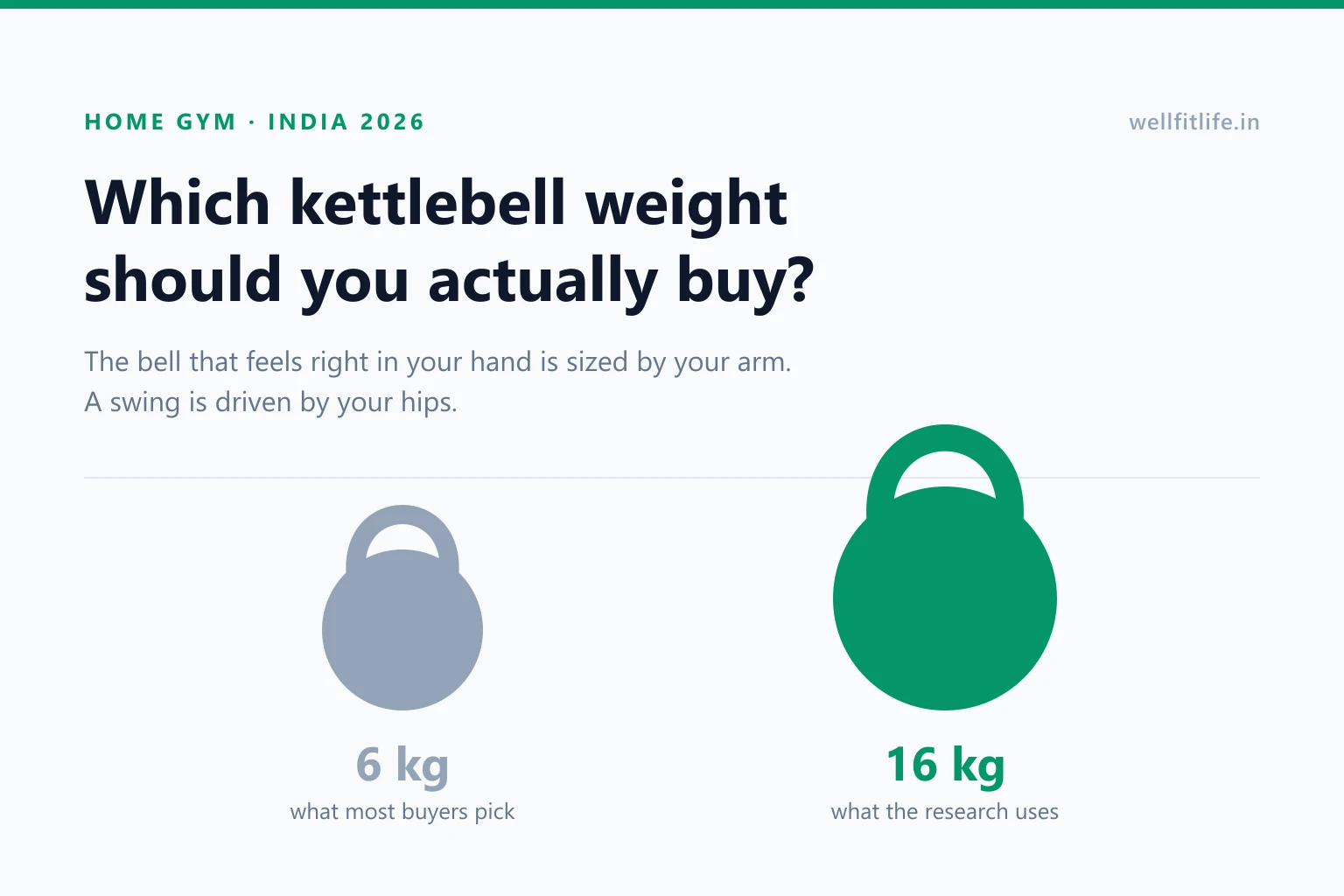
Best Kettlebells for Home Gym in India (2026): Which Weight to Buy
Almost every kettlebell sold in India is lighter than the ones the research is done with. The weight that feels right when you pick it up is roughly half the weight your hips need — and that single mistake is why most kettlebells end up under a bed.

15 min read
Best Foam Roller in India (2026): 4 Compared Honestly
Boldfit and Strauss foam rollers compared on density, size and rating data — plus what foam rolling actually does for sore muscles, and what it definitely does not.

18 min read
Amazon Great Indian Festival 2026: Home Gym Deals Worth Buying (and What to Skip)
The Great Indian Festival starts on 8 October 2026. The percentage off on a fitness listing is measured against MRP, which is a legal ceiling rather than a real price, so that number tells you very little. What tells you whether a deal is real is the price history and the bank offer. Here is the short list of home gym equipment worth buying in the sale, and how to check each deal before you pay.