Zumba for Beginners in India: Complete Guide to Getting Started at Home
Discover how to start Zumba at home with zero experience. This complete beginner guide covers basic moves, weekly schedule, what to wear, what to eat, and everything you need to know to dance your way to fitness in India.

Medical Safety Note: This article is for general educational purposes only and is not a substitute for professional medical advice, diagnosis, or treatment. If you are pregnant, managing a condition like diabetes, PCOS, or thyroid disorder, or taking medication, please consult a qualified doctor or registered dietitian before changing your diet, supplements, or exercise routine.
Why Zumba is Taking India by Storm
Walk through any residential colony in Pune, Jaipur, Lucknow, or Bhopal on a weekend morning and you will likely hear Latin beats spilling out of a community hall or a rooftop terrace. Zumba — the dance-based fitness program that originated in Colombia — has found an enthusiastic home in India, and for very good reason.
Across tier-2 and tier-3 cities, where access to premium gyms is limited and the social stigma around women lifting weights still lingers, Zumba fills a beautiful gap. It is joyful, it does not feel like punishment, it is affordable, and it requires absolutely no prior dance or fitness experience.
Beyond its accessibility, Zumba solves one of the biggest problems in Indian fitness culture: consistency. People quit workouts because they are boring or feel like a chore. When your workout is essentially a dance party, you actually look forward to it.
This guide is for absolute beginners in India who want to start Zumba at home — covering basic moves, weekly schedule, what to wear, and what to eat.
What is Zumba?
Zumba is a fitness program built around Latin-inspired dance choreography set to high-energy music. It blends elements of salsa, merengue, cumbia, reggaeton, soca, and even Bollywood dance — making it genuinely enjoyable rather than mechanical.
The origin story: In the mid-1990s, Colombian dancer Alberto "Beto" Perez forgot his regular aerobics music for a class he was teaching. He grabbed his personal Latin music cassettes and improvised a dance workout on the spot. That energy became Zumba — now practiced by over 15 million people in 180 countries.
How a session works: Warm-up songs at moderate pace → peak-intensity dance segments alternating fast and slow rhythms → cool-down. You simply mirror the instructor. No memorization required — continuous movement is what makes it effective.
Zumba variations:
- Zumba Fitness — standard adult class, most widely available
- Zumba Gold — modified for older adults or those with joint issues
- Aqua Zumba — done in a swimming pool, very joint-friendly
- Zumba Toning — uses light weighted maracas for muscle engagement
- Strong by Zumba — music-driven HIIT, much more intense
For beginners, start with standard Zumba Fitness.
Zumba is not about dancing perfectly. It is about moving continuously to music. No prior dance experience is needed. Instructors always say: "If you mess up the steps, just keep moving — that's the workout!"
Benefits of Zumba — Calorie Burn & More
How Much Does Zumba Actually Burn?
← Swipe to compare →
| Body Weight | 30 Minutes | 45 Minutes | 60 Minutes |
|---|---|---|---|
| 50–55 kg | 200–240 kcal | 300–360 kcal | 400–480 kcal |
| 60–65 kg | 240–290 kcal | 360–430 kcal | 480–580 kcal |
| 70–75 kg | 280–340 kcal | 420–500 kcal | 560–680 kcal |
| 80–85 kg | 320–390 kcal | 480–580 kcal | 640–780 kcal |
| 90+ kg | 360–440 kcal | 540–650 kcal | 720–880 kcal |
Other Key Benefits
- Full-body cardio — keeps heart rate elevated, improves cardiovascular endurance
- Mental health — dancing to music triggers dopamine release; cortisol drops noticeably after sessions
- Coordination — moving hips, arms, and feet in different patterns improves overall body awareness
- Social connection — especially valuable for women managing households with limited social interaction
- Low joint impact — rhythmic, flowing movements are kinder to knees and hips than running
Combine Zumba with a dedicated HIIT workout routine on alternate days for excellent weekly fat-loss results.
Zumba vs Other Workouts: Which is Right for You?
← Swipe to compare →
| Factor | Zumba | Running | HIIT | Yoga |
|---|---|---|---|---|
| Fun Factor | Very High | Moderate | Low–Moderate | Moderate |
| Calorie Burn (60 min) | 400–700 kcal | 400–600 kcal | 500–800 kcal | 200–400 kcal |
| Joint Impact | Low–Medium | High | Medium–High | Very Low |
| Equipment Needed | None | Good shoes | None | Yoga mat |
| Beginner Friendly | Excellent | Good | Moderate | Excellent |
| Mental Health Benefit | Very High | High | Moderate | Very High |
Zumba is the best choice if you want long-term sustainability because you actually enjoy it. An enjoyable workout done 5 days a week beats an intense workout done once a week.
Zumba and yoga make a perfect pair — Zumba for cardio and calorie burn, yoga for recovery, flexibility, and mental clarity.
If high-energy dance cardio isn't for you every day, Pilates is worth exploring as a low-impact alternative that builds core strength and complements the cardio benefits of Zumba.
How to Start Zumba at Home
Space Requirements
Clear a 2m x 2m area (roughly 6.5 x 6.5 feet). Remove loose rugs and furniture. If your floor is slippery marble or tile, place a yoga mat underneath for traction.
Equipment Checklist
← Swipe to compare →
| Item | Required? | Budget Option (India) |
|---|---|---|
| Athletic shoes with ankle support | Essential | Rs. 800–2,000 (Sparx, Campus, Fila) |
| Comfortable stretchable clothing | Essential | Track pants + fitted t-shirt |
| Water bottle | Essential | Any reusable bottle |
| Yoga mat or non-slip mat | Recommended | Rs. 400–800 |
| Bluetooth speaker | Optional | Rs. 500–1,500 |
📖 Read Also:
10 Gym Essentials Every Indian Beginner NeedsBeyond the basics above, this list covers the next round of gear worth owning once Zumba becomes a regular part of your routine.
Best YouTube Channels for Beginners
- Zumba with Jessica — beginner-friendly, slower pace, clear instructions
- Dance With Me India — Indian instructor, Bollywood-fusion Zumba
- Zumba Fitness (Official Channel) — full-length classes with certified instructors
- BollyX — Bollywood dance fitness, India-specific music
- Growwithjo — beginner and low-impact dance fitness
Always start with videos labeled "beginner," "low impact," or "slow Zumba."
Bookmark 3–4 different beginner Zumba videos so you have variety ready. Rotating between instructors keeps the experience fresh and prevents boredom — the number one reason people quit.
8 Basic Zumba Moves for Beginners
1. Merengue March
Stand with feet hip-width apart. Step right foot to the right, bring left foot to meet it. Step left, bring right foot to meet it. Add a slight hip sway as you march. Keep knees soft. This is your baseline rhythm — everything else builds from here.
2. Salsa Step
Step right foot forward slightly, shift weight onto it, bring it back. Then left foot forward, shift weight, bring back. The motion is quick-quick-slow. Your hips naturally follow the weight shift — let them.
Common mistake: Steps too large. Keep it small and controlled.
3. Cumbia Step
Step right foot to the right while sliding your left foot behind it. Then step left while sliding right foot behind. Creates a characteristic diagonal traveling pattern — it should feel like gliding sideways.
4. Reggaeton Bounce
Stand with feet shoulder-width apart. Bend knees slightly and pulse them in time with the bass. Your hips naturally drop and rise with each pulse. Add arm rolls as you get comfortable.
Modification: If knees are sensitive, reduce the bend and make it a gentle weight shift.
5. Cha-Cha Step
Quick three-step: right-left-right (cha-cha-cha), then left-right-left. Start slowly and build speed with the music.
Tip: Count out loud at first — "1-2, cha-cha-cha" — the rhythm locks in fast.
6. Hip Roll
Stand with feet hip-width apart, knees soft. Slowly roll hips in a horizontal circle — right, back, left, forward. Keep upper body relatively still. Reverse direction after 4 counts. Builds core strength and improves spinal mobility.
7. Grapevine
Step right foot to the right, cross left foot behind the right, step right again, tap left foot next to right. Reverse on the left side. Add arm extensions to the side for full effect.
8. Mambo Step
Step right foot forward, shift weight forward, step back, shift weight back. Repeat on left. Has a characteristic bounce — ribcage lifts slightly on the forward step.
Never skip your warm-up. 5 minutes of gentle marching in place, arm circles, hip circles, and ankle rotations prepares your joints and prevents muscle strains. Most beginners get injured by jumping straight into energetic dancing.
Weekly Zumba Schedule for Beginners
Month 1 — Building the Foundation
← Swipe to compare →
| Day | Session | Duration | Intensity |
|---|---|---|---|
| Monday | Beginner Zumba | 25–30 min | Low–Moderate |
| Tuesday | Rest or light walk | 20 min | Very Low |
| Wednesday | Beginner Zumba | 25–30 min | Low–Moderate |
| Thursday | Gentle yoga | 20–25 min | Low |
| Friday | Beginner Zumba | 30 min | Moderate |
| Saturday | Rest | — | — |
| Sunday | Optional fun session | 20 min | Low |
Month 2 — Building Endurance
← Swipe to compare →
| Day | Session | Duration | Intensity |
|---|---|---|---|
| Monday | Zumba | 40 min | Moderate |
| Tuesday | Rest or yoga | 20 min | Low |
| Wednesday | Zumba | 40 min | Moderate |
| Thursday | HIIT or strength | 25 min | Moderate |
| Friday | Zumba | 45 min | Moderate–High |
| Saturday | Rest | — | — |
| Sunday | Zumba (fun session) | 30 min | Low–Moderate |
Month 3 — Full Routine
← Swipe to compare →
| Day | Session | Duration | Intensity |
|---|---|---|---|
| Monday | Zumba | 45 min | Moderate–High |
| Tuesday | HIIT or strength | 30 min | High |
| Wednesday | Zumba | 45 min | Moderate |
| Thursday | Yoga / active recovery | 30 min | Low |
| Friday | Zumba | 50–60 min | High |
| Saturday | Long walk | 30–40 min | Low |
| Sunday | Rest | — | — |
Consistency beats intensity every single time. Three honest Zumba sessions per week for 3 months will transform your fitness more than seven brutal sessions for two weeks followed by quitting.
What to Wear and What to Eat
What to Wear
- Footwear (most important): Athletic shoes with lateral support — cross-training or dance sneakers. Do not do Zumba barefoot on hard floors
- Clothing: Leggings or track pants with a fitted t-shirt or sports top. Avoid loose dupattas that can get tangled in footwork
- For women: A good sports bra is important — lateral dance movements are high-impact and require proper support
What to Eat
Before Zumba (morning session):
- 30–45 min before: 1 banana + chai or black coffee
- Or: 2 soaked dates + small handful of roasted chana
Before Zumba (evening session):
- 1–2 hours before: light snack — idli, upma, or poha
- 30 min before: 1 banana or small handful of nuts if hungry
After Zumba:
← Swipe to compare →
| Timing | Best Post-Workout Foods |
|---|---|
| Within 30 min | Buttermilk (chaas) + 2–3 whole grain biscuits |
| Within 1 hour | Dal + rice or roti + sabzi — balanced meal |
| Hydration | Coconut water, plain water, or nimbu pani (no sugar) |
| Avoid | Deep-fried snacks, sugary mithai, cold drinks |
Drink 200–250 ml of water every 15 minutes during your session — especially in Indian summers. Read our guide on how much water to drink for weight loss for full hydration details.
7 Common Beginner Mistakes to Avoid
1. Trying to perfect every move from day one
Zumba is not a dance recital. If you stop to "figure out" a step, you break your rhythm. Keep moving even if your version looks different. Precision comes with repetition over weeks.
2. Skipping warm-up and cool-down
Both are non-negotiable. Warm-up (5 min) lubricates joints. Cool-down (5 min) brings heart rate down safely and reduces next-day soreness.
3. Choosing videos that are too advanced
The most common reason beginners quit. Always start with videos explicitly labeled for beginners. Graduate to intermediate content only after 4–6 weeks.
4. Exercising through joint pain
Muscle burn and breathlessness are normal. Sharp pain in knee, ankle, or hip is not. Stop immediately if you feel joint pain.
5. Expecting instant results and quitting too soon
Visible changes take 4–6 weeks minimum. Internal improvements — better stamina, mood, sleep — start within 1–2 weeks. Trust the process.
6. Doing Zumba on an empty stomach
For beginners, exercising completely fasted can cause dizziness and nausea during energetic sessions. Have a small snack 30 minutes before if you feel weak.
7. Ignoring rest days
Your muscles repair and grow stronger during rest. Two rest days per week are part of your training, not an absence from it.
If you have pre-existing health conditions — high blood pressure, heart issues, diabetes, or orthopedic problems — consult your doctor before starting Zumba or any new exercise program.
FAQ: Zumba for Beginners in India
1. I have zero dancing experience. Can I still do Zumba?
Absolutely. Zumba was specifically designed to be accessible to non-dancers. The moves are simple, repetitive patterns — not complex choreography. Within 2–3 sessions, you will start to recognise the basic steps. Thousands of people with zero dance background have made Zumba their primary workout.
2. Will Zumba alone help me lose weight?
Zumba is effective for weight loss when combined with a reasonable diet. Three to four 45-minute sessions per week can burn 1,200–2,000 extra calories — creating the deficit needed for fat loss when supported by healthy eating. Exercise alone without dietary awareness rarely produces significant weight loss.
3. How long before I see results?
- Week 1–2: Better sleep, improved mood, more energy
- Week 3–4: Noticeable improvement in stamina, less breathlessness
- Week 6–8: Visible body composition changes for many people
- Month 3+: Significant improvements in cardiovascular fitness and weight management
4. Is Zumba safe during menstruation?
For most women, light to moderate Zumba during menstruation is completely safe and can help reduce cramping by improving blood circulation. If you have severe cramping or heavy flow, take 1–2 days off and resume when comfortable.
5. Can Zumba replace my morning walk?
Zumba provides significantly more cardiovascular intensity than a casual morning walk. On Zumba days, a separate walk is not necessary. However, walking offers unique benefits — low joint stress, outdoor vitamin D, meditative quality — that Zumba does not fully replace. Ideally, do Zumba 3–4 days and walk on the others.
Your First Step Starts Today
Zumba asks nothing of you except a willingness to move and the courage to start imperfectly. You do not need a dance background, expensive gym membership, or perfect outfit.
You need a small clear space, a phone playing music, and the decision to press play.
Start with a 25-minute beginner video today. Follow along however you can. Laugh when you miss a step. Keep moving regardless. Come back tomorrow.
Fitness is not about perfection — it is about showing up consistently for yourself. Zumba makes that showing up genuinely fun. That is the most powerful thing any workout can offer.
Free Tools to Help You
Put this article into action — use our free calculators to get your personalized numbers.
Was this article helpful?
Want More Tips Like This?
Join 1,000+ readers getting weekly fitness, diet, and wellness tips + FREE meal plan
No spam, ever. Unsubscribe anytime.

About the Author: Ashwani
Fitness influencer and wellness writer helping Indians build healthier lifestyles.
Read more about us →Comments
Leave a Comment
Your email will not be published. Comments are reviewed before appearing.
You Might Also Like
Continue your wellness journey

20 min read
Home Gym Under ₹5000 in India (2026): What to Buy
You do not need a ₹50,000 setup or a gym membership to get fit at home. This guide builds a complete, functional home gym for under ₹5000 — prioritised by impact, with trusted Indian brands, available on Amazon.in and Flipkart, suited to Indian apartments and budgets. Updated June 2026.
26 min read
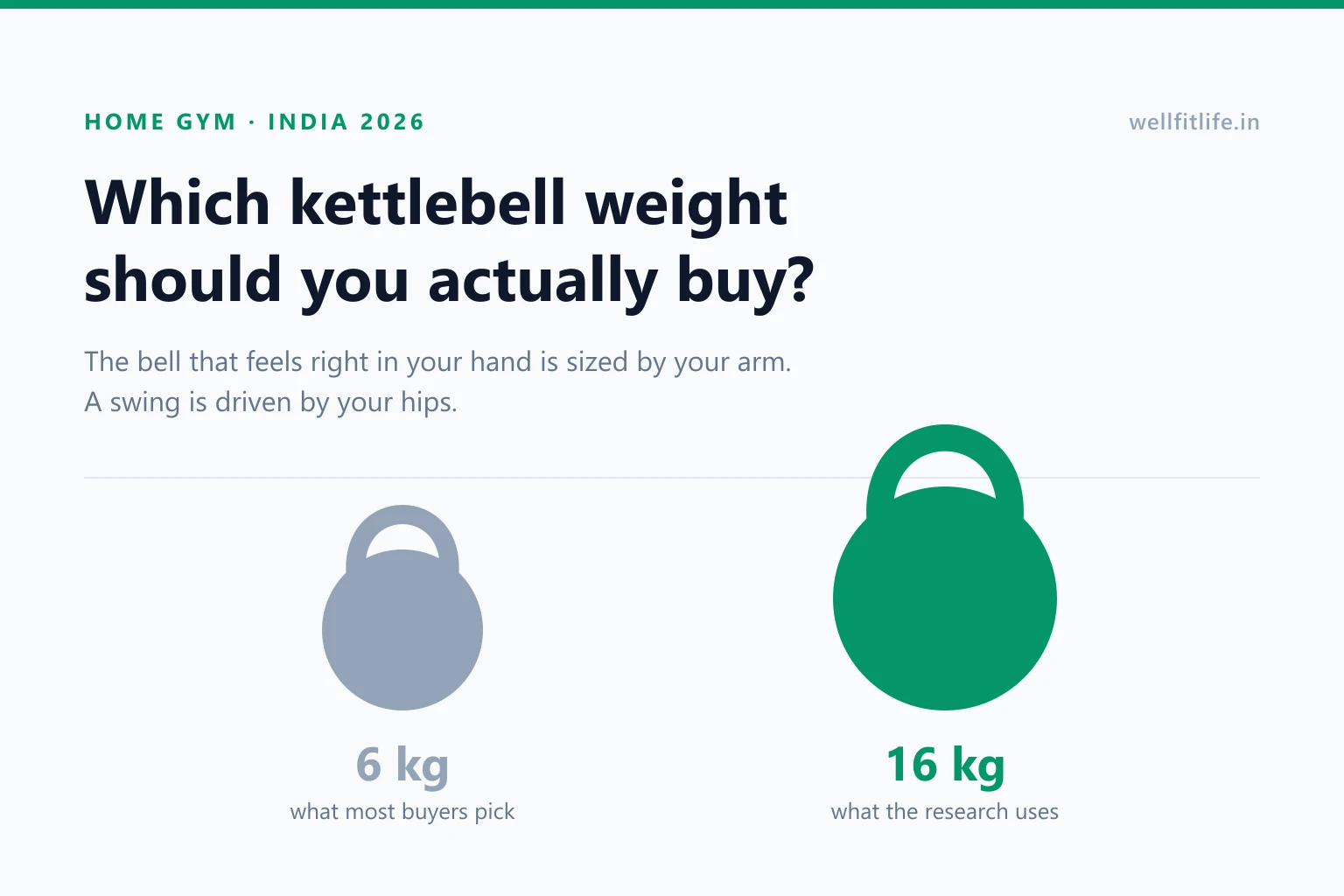
Best Kettlebells for Home Gym in India (2026): Which Weight to Buy
Almost every kettlebell sold in India is lighter than the ones the research is done with. The weight that feels right when you pick it up is roughly half the weight your hips need — and that single mistake is why most kettlebells end up under a bed.
15 min read
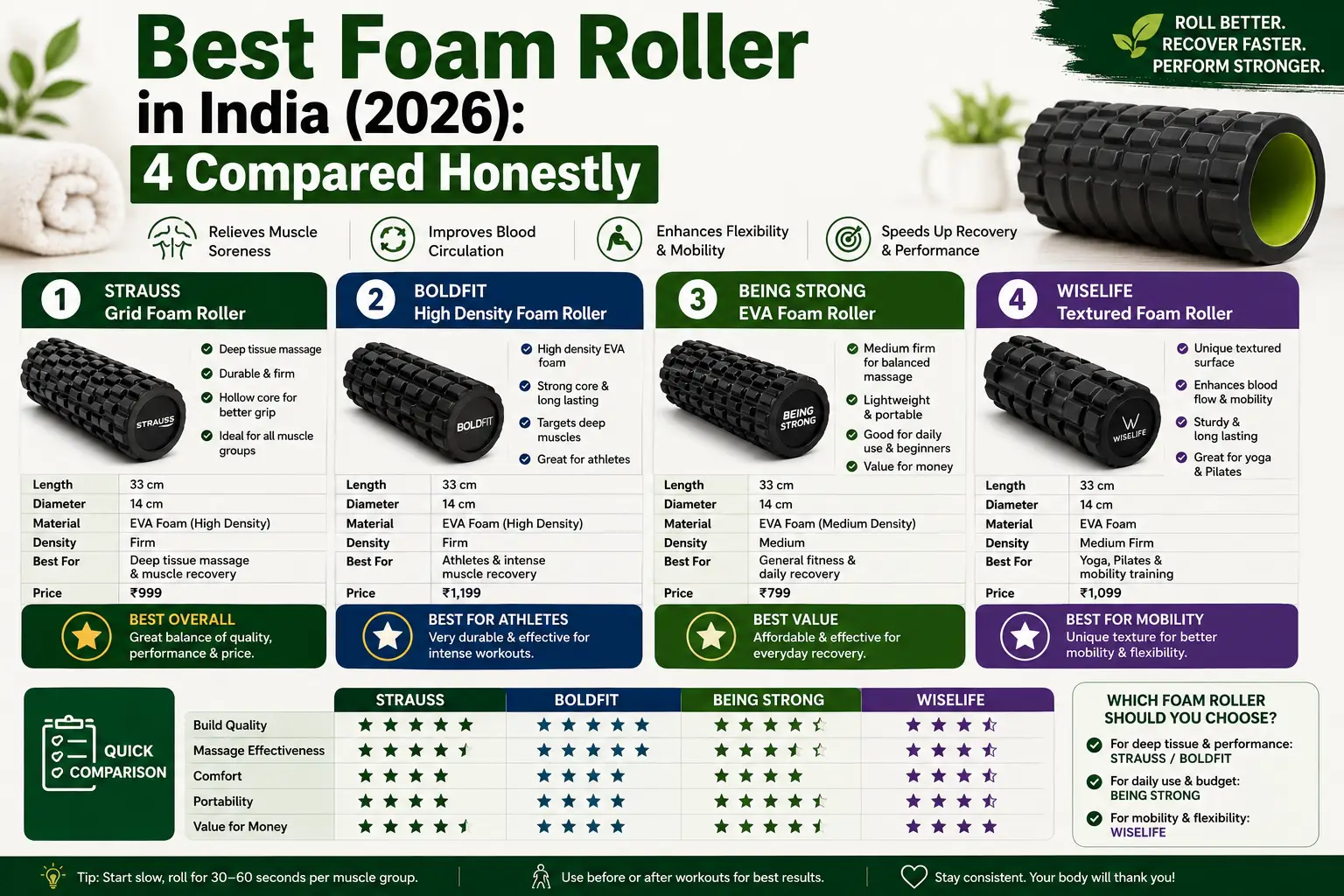
Best Foam Roller in India (2026): 4 Compared Honestly
Boldfit and Strauss foam rollers compared on density, size and rating data — plus what foam rolling actually does for sore muscles, and what it definitely does not.