Top 20 Protein-Rich Vegetarian Foods in India (Affordable + Easy to Add Daily)
A complete list of vegetarian protein sources in India with benefits, quantity guide, meal uses, and simple ways to include them daily for muscle gain and weight loss.

Medical Safety Note: This article is for general educational purposes only and is not a substitute for professional medical advice, diagnosis, or treatment. If you are pregnant, managing a condition like diabetes, PCOS, or thyroid disorder, or taking medication, please consult a qualified doctor or registered dietitian before changing your diet, supplements, or exercise routine.
Introduction
Protein is one of the most misunderstood nutrients in India. Many people believe they can build strength, lose weight, or stay healthy without protein — and then wonder why they feel tired, weak, or unable to gain/lose weight properly.
The truth is protein is essential for muscle repair, metabolism, hair and skin health, immunity, and fat loss. Yet Indian diets are often carb-heavy (roti, rice, snacks) and low in protein — especially for vegetarians.
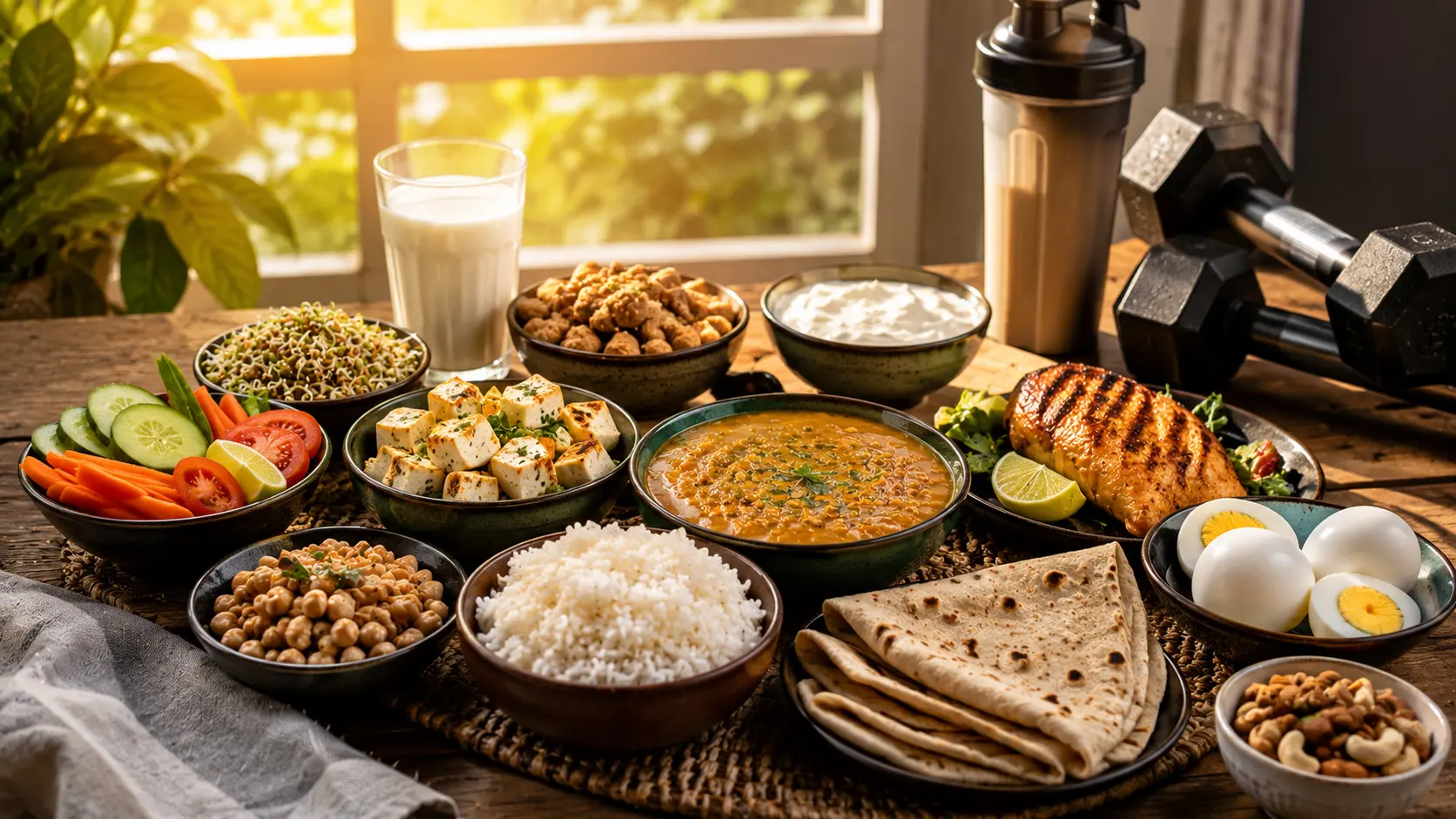
In this guide, you'll discover 20 affordable, high-protein vegetarian foods easily available in Indian stores, along with grams per serving, usage ideas, and best combinations to improve daily protein intake naturally. If you also eat eggs, chicken, or fish and want the complete picture across veg and non-veg sources, see our full list of the best protein foods for Indians.
No supplements required.
Just real food — Indian kitchen friendly.
Why Protein Matters (Simple Explanation)
Protein helps in:
-
✔ Muscle building & strength
-
✔ Fat loss & metabolism boost
-
✔ Recovery after workouts
-
✔ Skin, hair & nails health
-
✔ Hormone + immune function
Daily requirement:
0.8g to 1.6g protein per kg bodyweight
Example: 60kg person needs 48–95g daily
Beginners can start in the lower range, athletes need more.
Top 20 Protein Sources for Vegetarians in India
1. Moong Dal (Green Gram)
Protein: ~24g per 100g raw
-
Easy to cook, gentle on digestion
-
Best for khichdi, dal, moong chilla
💡 Quick Tip: Soak overnight for better absorption.
2. Chana Dal
Protein: ~21g per 100g
-
Great energy source
-
Works in dal fry, salad, chilla
3. Rajma (Kidney Beans)
Protein: ~23g per 100g
-
Rich in iron and fibre
-
Slow-digestion → keeps you full longer
💡 Pressure cook well to avoid bloating.
4. Chole (Chickpeas)
Protein: ~19g per 100g
-
Perfect for veg protein meal bowls
-
Roast for evening snack
5. Paneer
Protein: 14–18g per 100g
-
Fast protein option for vegetarians
-
Best for muscle-building meals
💡 Have grilled paneer or paneer bhurji.
6. Toned Milk
Protein: ~3.2g per 100ml
-
Add with oats or smoothies
-
Prefer low sugar/unsweetened
7. Curd (Dahi)
Protein: ~11g per 250g bowl
-
Probiotic benefits
-
Great post-meal food
💡 Use homemade curd for best quality.
8. Greek Yogurt
Protein: ~10g per 100g
-
Thick, creamy, high protein
-
Perfect snack bowl with fruit
9. Soya Chunks
Protein: ~52g per 100g raw (very high)
-
Muscle gain + fat loss friendly
-
Add to pulao, curry, or cutlet
💡 Soak before cooking.
10. Tofu
Protein: ~15g per 100g
-
Plant-based paneer alternative
-
Good for lactose intolerant people
11. Peanuts
Protein: ~25g per 100g
-
Best cheap protein in India
-
Add into chikki, salad, chutney
12. Peanut Butter (Natural)
Protein: ~7–8g per 2 tbsp
- Great bread/banana combo breakfast
💡 Avoid sugar-loaded commercial brands.
13. Almonds
Protein: ~6g per 10 pieces
- High in vitamin E, healthy fats
💡 Soak overnight for better digestion.
14. Walnuts
Protein: ~4g per 28g
- Brain & heart healthy food
15. Oats
Protein: ~12–13g per 100g
- Great in breakfast with milk/yogurt
16. Quinoa
Protein: ~14g per 100g
-
Complete protein source (rare for plants)
-
Pricey but great weekly option
17. Dal + Rice Combo
Complete protein when combined
-
Dal + Rice
-
Roti + Sabzi + Curd
-
Beans + Grains
💡 Balanced amino profile.
18. Sprouts
Easy digestible protein
- Great as morning bowl with veggies
19. Chia Seeds
Protein: ~17g per 100g
-
High omega-3 + fibre
-
Mix with curd or overnight oats
20. Flax Seeds
Mild protein but great fat-burning support
- Best used with smoothies or chilla batter
Sample Daily Meal Plan (Protein Focused)
← Swipe to compare →
| Meal | Option | Protein Est. |
|---|---|---|
| Breakfast | Moong chilla + curd | 15–20g |
| Lunch | Dal + brown rice + paneer sabzi | 25–35g |
| Snack | Peanut + fruit or Greek yogurt | 8–15g |
| Dinner | Roti + soya/rajma curry | 20–30g |
Easily crosses 60–90g protein daily.
Conclusion
Vegetarian diets can be protein-rich — if planned right. Instead of just chapati-sabzi-rice routine, add dal, paneer, curd, peanuts, sprouts, soya and balance your plate. Small changes like replacing fried snacks with roasted chana or adding paneer to lunch can improve muscle strength, energy levels, weight management, and overall health significantly.
Protein is not only for bodybuilders — it's for every person who wants an active, healthy life.
Try including at least 4–5 items daily, rotate weekly, and track how you feel after 2–3 weeks. You'll notice improved energy, less hunger crashes, and better workout results.
One honest caveat on that last point: protein is the raw material, not the signal. Eating 100g a day builds very little unless something is asking your muscles to grow — and that something is resistance training. For vegetarians training at home, a resistance band set is the cheapest way to provide that signal, and adjustable dumbbells are the next step once bands stop being challenging on rows and presses.
📖 You Might Also Like:
📖 Read Also:
Protein Guide India: How Much You Actually NeedHow much of these do you actually need per day? The complete protein guide breaks down targets by goal, plus how to hit them on a fully vegetarian Indian diet.
Frequently Asked Questions
What are the top vegetarian protein sources available in India?
Top Indian vegetarian protein sources ranked by protein content: soya chunks (52g/100g dry), tofu (15–18g/100g), Greek yogurt/hung curd (10–12g/100g), paneer (18–20g/100g), moong dal cooked (8g/100g), rajma cooked (9g/100g), eggs for ovo-vegetarians (6g each), and peanuts (25g/100g). A varied diet combining these daily easily meets protein requirements.
How much protein do vegetarian Indians need per day?
The minimum requirement is 0.8g per kg of body weight, but for active adults, muscle building, or weight loss, 1.2–1.6g per kg is recommended. For a 60 kg vegetarian Indian, this means 72–96g of protein per day. This is achievable with a well-planned diet but requires conscious effort — most vegetarian Indians only consume 40–50g daily.
Can vegetarians build muscle without meat in India?
Yes — vegetarians can absolutely build significant muscle with a well-planned Indian diet. The key is consuming sufficient protein from diverse sources (dal, paneer, curd, soya, eggs), meeting total daily protein targets, and following a progressive resistance training programme. Studies show protein synthesis and muscle gain rates are comparable between vegetarians and non-vegetarians who meet their protein targets.
How much protein is in common Indian dal?
Protein content per 100g cooked: moong dal (8g), chana dal (7g), toor dal (7g), masoor dal (9g), urad dal (7g), rajma (9g). The key is quantity — a typical small katori of dal provides only 5–8g protein. Eating 2–3 katoris of dal across meals, combined with other protein sources, provides meaningful protein for vegetarians.
Is soya protein safe for Indian men to consume?
Yes — contrary to popular concern, moderate soy consumption (1–2 servings per day) does not affect testosterone or cause feminisation in men. The phytoestrogens in soy have an extremely weak effect compared to the body's own oestrogen. International health organisations, including the WHO, consider soy protein safe for both men and women.
Related Reading
- Protein Breakfast Ideas for Indians
- Post-Workout Meal Guide for Indians
- Muscle Gain Diet Plan for Indian Men
- Healthy Indian Meal Plate Blueprint
- Best Supplements for Beginners Guide
- Best Vegan Protein Powder in India — for the days food alone does not get you there
- Indian Diet & Nutrition Complete Guide — for macros, micronutrients, and meal timing beyond just protein
Free Tools to Help You
Put this article into action — use our free calculators to get your personalized numbers.
Was this article helpful?
Want More Tips Like This?
Join 1,000+ readers getting weekly fitness, diet, and wellness tips + FREE meal plan
No spam, ever. Unsubscribe anytime.

About the Author: Ashwani
Fitness influencer and wellness writer helping Indians build healthier lifestyles.
Read more about us →Comments
Leave a Comment
Your email will not be published. Comments are reviewed before appearing.
You Might Also Like
Continue your wellness journey

19 min read
Is Paneer More Expensive Than Chicken? Price & Protein Compared (2026)
Market paneer costs ₹22 per 10g protein. Chicken costs ₹9. But homemade paneer matches chicken exactly. Complete 2026 India price breakdown, protein science, amino acid quality, and exact verdict — including low-fat paneer vs chicken breast.
30 min read
How to Build Muscle on an Indian Diet: The Complete 2026 Guide
Most Indians eat only 40–50g of protein daily when muscle building needs 100–140g. This complete guide covers exact protein targets, Indian food sources for vegetarians and non-vegetarians, a 7-day muscle gain meal plan, beginner supplement stack with real prices, and a 4-day workout structure.

12 min read
Body Recomposition: How to Lose Fat and Gain Muscle at the Same Time
Everyone says you cannot lose fat and gain muscle simultaneously. That is not entirely true. Body recomposition is real, achievable, and especially effective for certain groups. Here is exactly how it works and how to do it.