Healthy Indian Breakfast Recipes for Weight Loss (Easy, Quick & Under 300 Calories)
Struggling to find a healthy Indian breakfast that actually tastes good and supports weight loss? These 10 easy recipes are all under 300 calories, quick to make, and delicious.

Medical Safety Note: This article is for general educational purposes only and is not a substitute for professional medical advice, diagnosis, or treatment. If you are pregnant, managing a condition like diabetes, PCOS, or thyroid disorder, or taking medication, please consult a qualified doctor or registered dietitian before changing your diet, supplements, or exercise routine.
Breakfast sets the tone for your entire day. A heavy, oil-laden paratha or a sugar-loaded bowl of cornflakes tends to leave you hungry again by 10 AM and reaching for biscuits before lunch. A well-structured, protein-rich, moderate-calorie Indian breakfast keeps you full for longer and makes a calorie deficit easier to stick to — without making you feel deprived.
The good news: Indian cuisine has some of the best weight-loss breakfast ingredients in the world. Lentils, flattened rice, fermented batters, seasonal vegetables, spices — these are nutritional goldmines that most Indian kitchens already stock.
This guide gives you 10 easy Indian breakfast recipes, all under 300 calories, with full ingredients, method, and nutritional breakdown. Further down are oats, high-protein and 5-minute no-cook options for when you want more variety.
Jump to: Core 10 recipes · Oats breakfasts · High-protein · 5-minute office · Sunday meal prep · FAQ
📖 Read Also:
1200 Calorie Indian Diet Plan (2026): 7-Day Veg & Non-Veg Meal Plan for Weight LossSee exactly how these breakfasts fit into a full calorie-counted day across a complete 7-day Indian diet plan.
Why Breakfast Matters for Weight Loss
Skipping breakfast might seem like an easy way to cut calories — but for most people, it backfires:
- A bigger lunch — hunger builds through the morning and lunch ends up noticeably larger than it would otherwise have been
- Worse food choices — strong hunger pushes people toward high-sugar, high-fat options, which is why the 10 AM biscuit packet wins so often
- A slightly weaker morning — trials show a small, short-term memory benefit from eating breakfast (see below)
A balanced breakfast with adequate protein (15–25 g) and fibre keeps hunger in check for 3–4 hours and makes it easier to stay within your calorie target for the day.
It's worth being precise about how strong the evidence is. A systematic review of trials in healthy adults — Galioto & Spitznagel, Advances in Nutrition (2016) — found a small short-term benefit to memory from eating breakfast compared with fasting; results for attention and other thinking skills were inconsistent in adults. So breakfast is one helpful lever, not a guarantee. The stronger practical argument is what skipping does to your appetite and food choices later in the day.
The goal is not to eat the least possible — it is to eat the right foods. All 10 recipes below are designed around that principle.
The 10 Recipes at a Glance
← Swipe to compare →
| Recipe | Calories | Protein | Prep Time | Best For |
|---|---|---|---|---|
| Moong Dal Chilla | ~205 | ~12 g | 15 min | High protein, filling |
| Poha with Vegetables | ~255 | ~6 g | 10 min | Quick, light |
| Besan Chilla | ~255 | ~13 g | 12 min | Protein + fibre |
| Sprouts Chaat | ~160 | ~9 g | 5 min | No cooking, nutritious |
| Masala Oats (with water) | ~205 | ~6 g | 8 min | Sustained energy |
| Curd with Fruits & Nuts | ~205 | ~9 g | 3 min | No cooking, quick |
| Ragi Dosa | ~245 | ~5 g | 15 min | Calcium rich |
| Egg Bhurji (2 eggs) | ~235 | ~14 g | 10 min | Highest protein |
| Upma with Vegetables | ~255 | ~8 g | 15 min | Filling, fibre-rich |
| Idli (3) with ½ cup Sambar | ~230–255 | ~8–9 g | 5 min (pre-made) | Light, easy on the stomach |
Calories are approximate, calculated from USDA/IFCT values for the listed portions. Your numbers will vary with oil and portion size.
Recipe 1: Moong Dal Chilla
The best high-protein Indian breakfast — better than any protein bar.
Ingredients (2 servings)
- 1 cup soaked moong dal (about ½ cup dry, soaked overnight or 4 hours)
- 1 small onion (finely chopped)
- 1 green chilli (finely chopped)
- ½ tsp cumin seeds
- ¼ tsp turmeric
- Salt to taste
- Fresh coriander leaves
- 1 tsp oil (for cooking)
Method
- Drain soaked moong dal and blend to a smooth, thick batter with minimal water
- Add onion, chilli, cumin, turmeric, salt, and coriander to the batter
- Heat a non-stick pan on medium flame, brush lightly with oil
- Pour a ladle of batter and spread into a thin circle
- Cook 2–3 minutes until edges lift, flip and cook 1 more minute
- Serve with mint chutney
Nutrition (1 serving — 2 chillas): ~205 calories | ~12 g protein | ~34 g carbs | ~3 g fat
Soak moong dal the previous night and keep it in the fridge. Morning prep time drops to under 10 minutes — just blend, season, and cook.
Recipe 2: Poha with Vegetables
A classic Indian breakfast that is light, easy to digest, and surprisingly nutritious.
Ingredients (1 serving)
- ¾ cup flattened rice (poha) — thick variety (about 50 g)
- ⅓ cup mixed vegetables (peas, carrot, capsicum)
- 1 small onion (chopped)
- ¾ tsp mustard seeds
- 6–8 curry leaves
- ¼ tsp turmeric
- ¾ tsp oil
- Lemon juice and salt to taste
- Fresh coriander
Method
- Rinse poha under running water for 30 seconds, drain and set aside for 5 minutes to soften
- Heat oil in a pan, add mustard seeds and let them splutter
- Add curry leaves, onion, cook 2 minutes
- Add vegetables, cook 3 minutes
- Add turmeric, salt, and softened poha — mix gently
- Cook 2 minutes, squeeze lemon juice, garnish with coriander
Nutrition: ~255 calories | ~6 g protein | ~46 g carbs | ~4 g fat
Add 2 tablespoons of roasted peanuts to poha — it adds 5 g of protein and healthy fats, keeping you full significantly longer without a major calorie increase.
Recipe 3: Besan Chilla (Gram Flour Pancake)
Versatile, fast, and packed with plant protein.
Ingredients (1 serving — 2 chillas)
- ½ cup besan (gram flour)
- 2 tbsp curd
- ¼ cup water
- 1 small tomato (finely chopped)
- ¼ tsp ajwain (carom seeds)
- ¼ tsp red chilli powder
- Salt to taste
- 1 tsp oil
Method
- Mix besan, curd, water into a smooth lump-free batter
- Add tomato, ajwain, chilli powder, salt — mix well
- Heat non-stick pan, brush with oil
- Pour batter, spread thin, cook 2–3 minutes each side
- Serve with green chutney
Nutrition: ~255 calories | ~13 g protein | ~32 g carbs | ~8 g fat
Recipe 4: Sprouts Chaat (No Cooking)
The fastest nutritious breakfast you can make — zero cooking required.
Ingredients (1 serving)
- 1 cup mixed sprouts (moong, chana, matki)
- 1 small tomato (chopped)
- ½ cucumber (chopped)
- 1 small onion (chopped)
- Lemon juice
- Chaat masala, salt, black pepper
- Fresh coriander
Method
- Combine sprouts, tomato, cucumber, onion in a bowl
- Add lemon juice, chaat masala, salt, pepper
- Toss well and serve immediately
Nutrition: ~160 calories | ~9 g protein | ~22 g carbs | ~2 g fat
Buy mixed sprout packets from any sabzi mandi or keep sprouted moong ready in the fridge for up to 3 days. On busy mornings, this is a 2-minute breakfast that is genuinely nutritious.
Moong-only sprouts are much lighter than a mixed bowl — about 45 calories and 4 g protein per cup, because sprouts are mostly water. If that's what you have, eat them alongside an egg or a banana so they carry you to lunch.
Recipe 5: Masala Oats
Savoury oats — the Indian way. Much more satisfying than sweet oats.
Ingredients (1 serving)
- ½ cup rolled oats
- 1 cup water (or low-fat milk for a creamier bowl — see the variant below)
- ¼ cup mixed vegetables (carrot, peas, capsicum)
- ½ tsp cumin seeds
- ¼ tsp turmeric
- ¼ tsp black pepper
- Salt to taste
- 1 tsp oil
- Lemon juice
Method
- Heat oil, add cumin seeds, let them splutter
- Add vegetables, cook 2 minutes
- Add water, bring to a simmer
- Add oats, turmeric, salt, pepper — cook 3–4 minutes stirring constantly
- Squeeze lemon juice and serve hot
Nutrition (with water): ~205 calories | ~6 g protein | ~31 g carbs | ~7 g fat
With low-fat milk instead: ~310 calories | ~14 g protein
Stir in 1 beaten egg or 50 g cubed paneer after the vegetables. It adds roughly 6–9 g of protein without changing the taste much — more oats ideas are in the oats section below.
📖 Read Also:
20 Healthy Indian Snacks for Office & Evening CravingsThe right evening snack prevents overeating at dinner. Here are low-calorie Indian snacks that are filling and easy to make.
Recipe 6: Curd with Fruits and Nuts (No Cooking)
The zero-effort, zero-cooking breakfast that works every morning.
Ingredients (1 serving)
- ½ cup low-fat curd (dahi)
- ½ banana or ½ cup seasonal fruit (papaya, mango, berries)
- 1 tbsp mixed nuts (almonds, walnuts)
- 1 tsp chia seeds or flax seeds
- Pinch of cinnamon (optional)
Method
- Spoon curd into a bowl
- Top with chopped fruit, nuts, and seeds
- Sprinkle cinnamon if using
- Eat immediately or refrigerate overnight
Nutrition: ~205 calories | ~9 g protein | ~25 g carbs | ~8 g fat
Use plain, homemade or unsweetened curd — not flavoured yogurt. Flavoured yogurts sold in Indian stores contain 15–25 g of added sugar per serving, which completely defeats the weight-loss purpose.
Recipe 7: Ragi Dosa
A calcium-rich, gluten-free breakfast that keeps you full for hours.
Ingredients (2 small dosas)
- ⅓ cup ragi flour
- 2 tbsp rice flour
- ½ small onion (finely chopped)
- 1 green chilli (chopped)
- Curry leaves
- Coriander leaves
- Salt to taste
- Water to make thin batter
- ¾ tsp oil
Method
- Mix ragi flour, rice flour, salt with enough water to make a thin, pourable batter
- Add onion, chilli, curry leaves, coriander
- Heat a flat non-stick pan, grease lightly
- Pour a ladle of batter, spread thin immediately (it sets faster than regular dosa)
- Cook 2 minutes, flip, cook 1 more minute
- Serve with coconut chutney
Nutrition (2 small dosas): ~245 calories | ~5 g protein | ~46 g carbs | ~5 g fat
Recipe 8: Egg Bhurji (Indian Scrambled Eggs)
The highest-protein breakfast on this list — and one of the fastest.
Ingredients (1 serving)
- 2 eggs
- 1 small onion (finely chopped)
- 1 tomato (finely chopped)
- 1 green chilli (chopped)
- ¼ tsp turmeric
- ¼ tsp cumin powder
- Salt to taste
- 1 tsp oil
- Fresh coriander
Method
- Heat oil, add onion — cook 2 minutes until translucent
- Add tomato, cook until soft (2 minutes)
- Add chilli, turmeric, cumin, salt
- Beat eggs and pour in — scramble continuously on medium heat
- Cook until just set (slightly soft), garnish with coriander
- Eat with 1 slice whole wheat toast if desired (adds ~70 cal)
Nutrition (without toast): ~235 calories | ~14 g protein | ~12 g carbs | ~14 g fat
Egg bhurji is one of the best high-protein, low-calorie breakfasts for weight loss and gym-goers. At ~14 g of protein from 2 eggs, it's one of the most filling options on this list.
Recipe 9: Upma with Vegetables
A South Indian classic that is filling, fibre-rich, and easy to customise.
Ingredients (1 serving)
- ⅓ cup semolina (rava/suji) — roasted
- ⅔ cup water
- 3 tbsp mixed vegetables (peas, carrot, beans)
- ¾ tsp mustard seeds
- 6 curry leaves
- ½ small onion
- ¼ tsp ginger (grated)
- ¾ tsp oil, salt to taste
Method
- Dry roast semolina in a pan until light golden — set aside
- Heat oil, add mustard seeds, curry leaves
- Add onion and ginger, cook 2 minutes
- Add vegetables, cook 2 minutes
- Add water and salt, bring to boil
- Slowly add roasted rava while stirring to prevent lumps
- Cover and cook 3 minutes on low heat
Nutrition: ~255 calories | ~8 g protein | ~45 g carbs | ~4 g fat
Recipe 10: Idli with Sambar (3 Pieces)
The gold standard of light, easy-on-the-stomach Indian breakfasts.
Nutrition (3 idlis + ½ cup sambar)
- ~230–255 calories | ~8–9 g protein | ~45 g carbs | ~3 g fat
If you have idli batter ready (homemade or store-bought), this is one of the lightest and quickest Indian breakfasts.
Keep idlis light — avoid dunking them in ghee or butter. Have ½ cup of sambar (it adds protein from dal; a full cup takes this past 300 calories) and green chutney (minimal oil).
Oats Breakfasts, Indian Style
These go beyond the 10 core recipes above, so some are over 300 calories — the calories are listed for each.
Most people try oats once as a bland, sticky bowl and give up. Cooked with Indian spices and techniques, they become upma, idli, poha and dosa — all distinctly Indian. Masala oats is already Recipe 5; here are six more ways to use them.
Which Oats to Buy
← Swipe to compare →
| Type | Processing | Cooking Time | Best For |
|---|---|---|---|
| Steel-cut oats | Least processed | 20–30 min | Overnight soaking |
| Rolled oats | Moderately processed | 5–8 min | Every recipe in this section |
| Quick oats | More processed | 2–3 min | Idli and dosa batter |
| Instant oats | Most processed | 1–2 min | Occasional use; skip flavoured packets |
Buy plain rolled oats for almost everything here. Flavoured "masala oats" sachets usually carry added salt and sugar — making your own from plain oats tastes better and costs less.
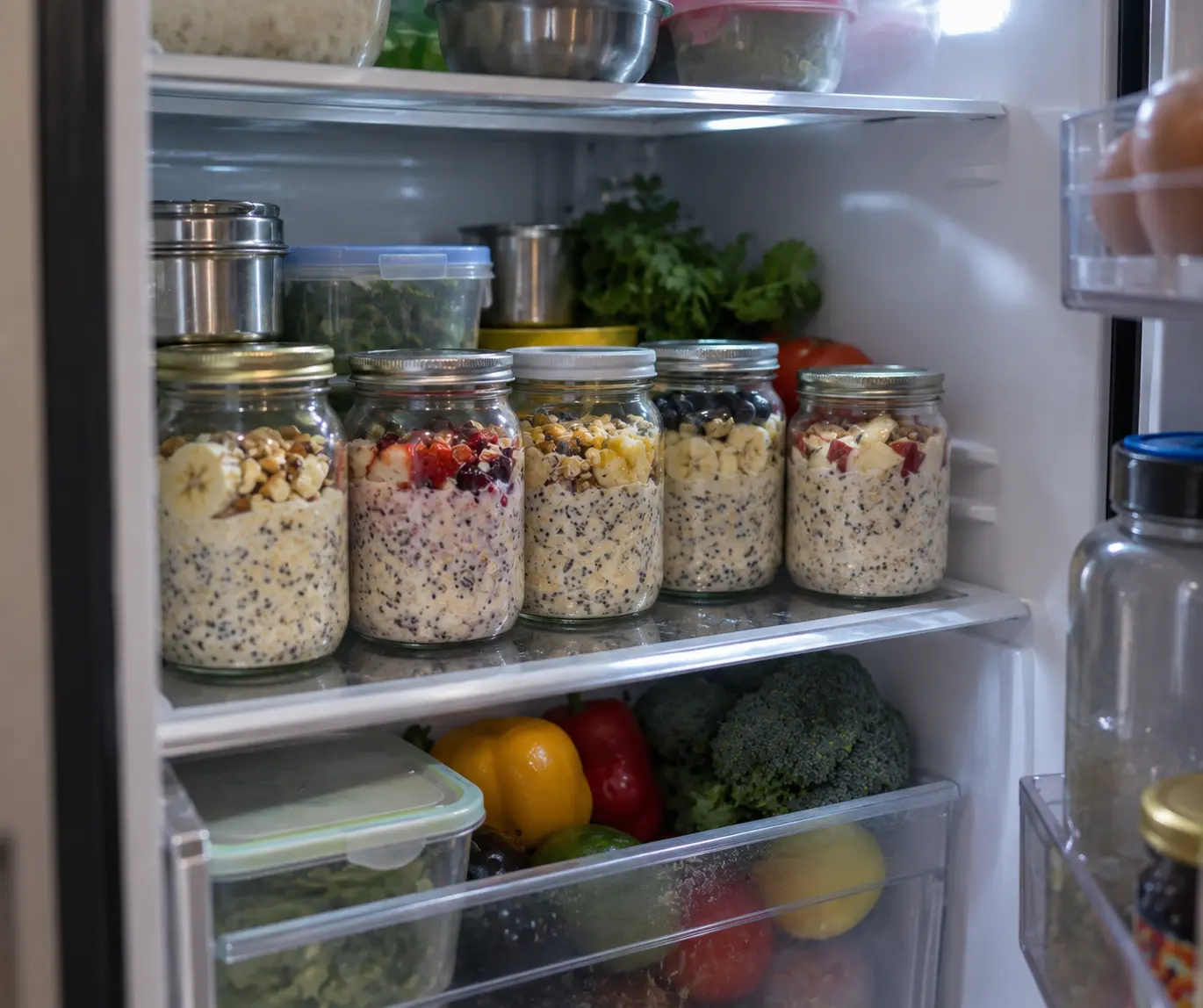
Overnight Oats
Zero cooking — 3 minutes the night before.
- ½ cup rolled oats
- ¾ cup low-fat milk or curd
- 1 tbsp chia seeds
- 1 tsp honey or 2 dates (blended)
- Pinch of cardamom powder
- In the morning: 1 banana, or mango, papaya or chiku
Mix everything except the fruit in a jar, cover and refrigerate overnight (at least 6 hours). Stir and add fruit in the morning. Eat cold from the jar or carry it to work.
Nutrition (with a banana): ~440 calories | ~14 g protein
Oats Upma
If you love rava upma, you will like this.
- ½ cup rolled oats, ¼ cup peas, 1 small carrot (diced), 1 small onion, ½ tsp grated ginger, 2 green chillies, 1 tsp mustard seeds, curry leaves, 1 tbsp roasted peanuts, 1 tsp oil, 1 cup water, salt and lemon
- Dry-roast the oats on medium heat for 3–4 minutes until golden and nutty-smelling; set aside
- Temper mustard seeds, curry leaves, chillies and ginger in oil; add onion, then carrot and peas
- Add water and salt, bring to a boil, stir in the roasted oats until the water is absorbed (2–3 min)
- Finish with peanuts and lemon juice
Nutrition: ~320 calories | ~10 g protein
Dry-roasting is the step most people skip. Roasted oats keep their texture instead of turning mushy — don't skip it for upma or any savoury oats dish.
Oats Idli
No fermentation needed.
- ½ cup rolled oats (ground to a coarse powder), ½ cup rava, ½ cup curd, ¼ cup water, salt, ½ tsp Eno fruit salt
- Optional: grated carrot, coriander, green chilli
- Mix oat powder, rava, curd, salt and vegetables; add water to a thick, pourable batter
- Rest 10 minutes, then fold in the Eno just before steaming
- Pour into greased idli moulds and steam 12–14 minutes
Nutrition (3 idlis, of 6): ~265 calories | ~10 g protein. Serve with sambar for extra protein.
Oats Poha
Familiar poha flavours, with oats instead of flattened rice.
- ½ cup rolled oats, 1 small onion, 1 green chilli, curry leaves, ½ tsp turmeric, 1 tsp mustard seeds, 1 tbsp roasted peanuts, 1 tsp oil, salt, lemon, coriander
- Rinse the oats briefly and drain completely — this softens them like soaked poha
- Temper mustard seeds, curry leaves, chilli and onion; add turmeric and the drained oats
- Add salt and peanuts, cook 2–3 minutes on low heat, finish with lemon and coriander
Nutrition: ~260 calories | ~8 g protein
Sweet Oats with Jaggery
Warm and comforting — a lighter take on kheer.
- ½ cup rolled oats, 1 cup low-fat milk, 1 tbsp grated jaggery (or 2 blended dates), ¼ tsp cardamom, 5 slivered almonds, 1 tbsp raisins, ½ banana
Simmer the oats in milk for 4–5 minutes, stirring. Add jaggery and cardamom, cook 1–2 minutes more, then top with almonds, raisins and banana.
Nutrition: ~420 calories | ~15 g protein — the jaggery, raisins and banana add up, so keep this for days you want a bigger breakfast.
Crispy Oats Dosa
Thin, crispy, and half the time of regular dosa.
- ½ cup rolled oats (ground to flour), ¼ cup rice flour, 2 tbsp curd, water, 1 small onion, 1 green chilli, coriander, cumin seeds, salt, oil
- Mix oat flour, rice flour, curd and salt with enough water for a thin, watery batter; add onion, chilli, coriander and cumin
- Rest 5 minutes. Heat a non-stick pan until very hot, then lower to medium
- Pour a ladle and spread quickly — it sets faster than regular dosa batter and tears if you spread it late
- Drizzle ½ tsp oil around the edges, cook 2 minutes until crisp, flip, cook 1 minute
Nutrition (2 dosas): ~205 calories | ~5 g protein
Oats + Milk + Peanut Butter (Training Days)
½ cup oats cooked in 1 cup milk, topped with 1 tbsp peanut butter and a sliced banana: ~490 calories | ~18 g protein. A bigger breakfast for mornings you train. If you're buying peanut butter, our comparison of peanut butter brands in India covers which jars are just peanuts.
Oats Mistakes to Avoid
- Too much sugar or ghee: 3 tsp sugar and 1 tsp ghee take a plain ½-cup bowl from about 150 to nearly 250 calories. Sweeten with fruit or a little jaggery.
- Cooking it too thick: use a little more liquid than you think and take it off the heat while still loose — it thickens as it cools.
- No protein: oats alone give about 5 g. Pair them with milk, curd, an egg, paneer or dal.
High-Protein Indian Breakfasts
These go beyond the 10 core recipes above, so some are over 300 calories — the calories are listed for each.
The 15 g+ protein target above works for most people. If you train or are trying to keep muscle while losing fat, aim for 20–30 g at breakfast. Indian kitchens can get you there without a protein bar.
← Swipe to compare →
| Breakfast | Portion | Calories | Protein |
|---|---|---|---|
| Egg-white omelette | 4 egg whites + onion, tomato, 1 tsp oil | ~125 | ~15 g |
| Hung curd bowl | 150 g hung curd + 1 tbsp nuts and seeds + ½ cup fruit | ~230 | ~15 g |
| Moong dal chilla + curd | Recipe 1 (2 chillas) + ½ cup curd | ~280 | ~16 g |
| Masala oats + paneer | Recipe 5 (with water) + 50 g paneer | ~340 | ~15 g |
| Boiled eggs + toast | 3 eggs + 2 slices whole wheat toast | ~395 | ~26 g |
| Protein smoothie | 250 ml milk, 1 banana, 2 tbsp oats, 1 tbsp peanut butter | ~380 | ~15 g |
| Protein smoothie + whey | The same + 1 scoop whey | ~500 | ~39 g |
Approximate values based on USDA FoodData Central; your brands and portion sizes will move them a little.
Hung curd: strain regular curd in a muslin cloth in the fridge overnight. It turns thick and creamy and carries far more protein per spoon than regular curd.
Whey is optional. Whole foods come first. If you do add a scoop to the smoothie, our whey protein brand comparison covers which one to pick. Don't let shakes replace real breakfasts every day — use them as a convenience, not a habit.
Add Protein to Any Breakfast
- Moong dal chilla or besan chilla → serve with a bowl of curd
- Poha or upma → add 2 tbsp roasted peanuts, or a boiled egg on the side
- Sprouts → add a boiled egg or some crumbled paneer
- Masala oats → stir in an egg or paneer (see Recipe 5)
A 7-Day High-Protein Breakfast Rotation
← Swipe to compare →
| Day | Breakfast |
|---|---|
| Monday | Moong dal chilla (2) + curd |
| Tuesday | Egg bhurji (2 eggs) + 1 slice whole wheat toast |
| Wednesday | Overnight oats (made on Sunday) |
| Thursday | Besan chilla (2) + hung curd |
| Friday | Masala oats + paneer |
| Saturday | Poha with peanuts + 1 boiled egg |
| Sunday | Oats idli (3) + sambar |
Building muscle rather than losing fat? You'll need more total food than this page targets — see the gym diet plan for beginners.
5-Minute No-Cook Breakfasts for Office Days
These go beyond the 10 core recipes above, so some are over 300 calories — the calories are listed for each.
On rushed weekday mornings, cooking is the first thing to go. These need no stove, take under 5 minutes, and pack well for the commute.
← Swipe to compare →
| Breakfast | Portion | Calories | Protein |
|---|---|---|---|
| Banana + peanut butter | 1 medium banana + 2 tbsp peanut butter | 295 | 9 g |
| Dates + almonds | 5 regular dates + 10 almonds | 170 | 3–4 g |
| Whey shake | 1 scoop whey + 250 ml toned milk | 265 | 32 g |
| Greek yogurt + honey | 150 g plain Greek yogurt + 1 tsp honey | 170 | 15 g |
| Peanut butter toast + banana | 2 slices whole wheat bread + 1.5 tbsp peanut butter + ½ banana | 355 | 15 g |
| Makhana + dry fruit mix | ½ cup roasted makhana, 5 almonds, 3 walnuts, 2 dates, 1 tbsp seeds | 230 | 7 g |
| Boiled eggs | 2 eggs, boiled on Sunday | 156 | 13 g |
| Chia pudding | 3 tbsp chia + 1 cup toned milk + 1 tsp honey + fruit (soaked overnight) | 385 | 14 g |
Calculated from USDA FoodData Central values for these portions, with milk taken as Indian toned milk. Treat them as close estimates — brand, fruit size and how heaped your tablespoon is can move any row by 10–15%.
Check which dates you're buying. A regular (deglet nour) date weighs about 7 g; a Medjool is about 24 g. The same-looking handful is either a light snack or a third of your morning calories:
Dates and almonds are also the lowest-protein option here, so plan a boiled egg or a banana at your desk mid-morning.
Whey shake: made with water instead of milk it's about 120 calories and 24 g protein. If you're buying whey for the first time, start with our beginner's guide to whey protein, then the whey brand comparison. No whey? 200 ml milk blended with 1 cup curd gives about 15 g protein.
Read the peanut butter label, not the front of the jar. Words like "natural" or "protein-rich" on the front are marketing. The ingredients list is what counts:
← Swipe to compare →
| On the ingredients list | What it means |
|---|---|
| Peanuts (and sometimes salt) — nothing else | What you want |
| Sugar, jaggery, or any syrup | Sweetened, even if the jar says "natural" |
| Palm oil or hydrogenated vegetable oil | Added to stop the oil separating |
| "Roasted peanuts (92%)" | Fine — just check what the other 8% is |
A jar that separates with a layer of oil on top is a good sign — stir it back in. We compared the natural peanut butter brands sold in India on exactly this.
What to Keep at Your Office Desk
For mornings when breakfast really doesn't happen:
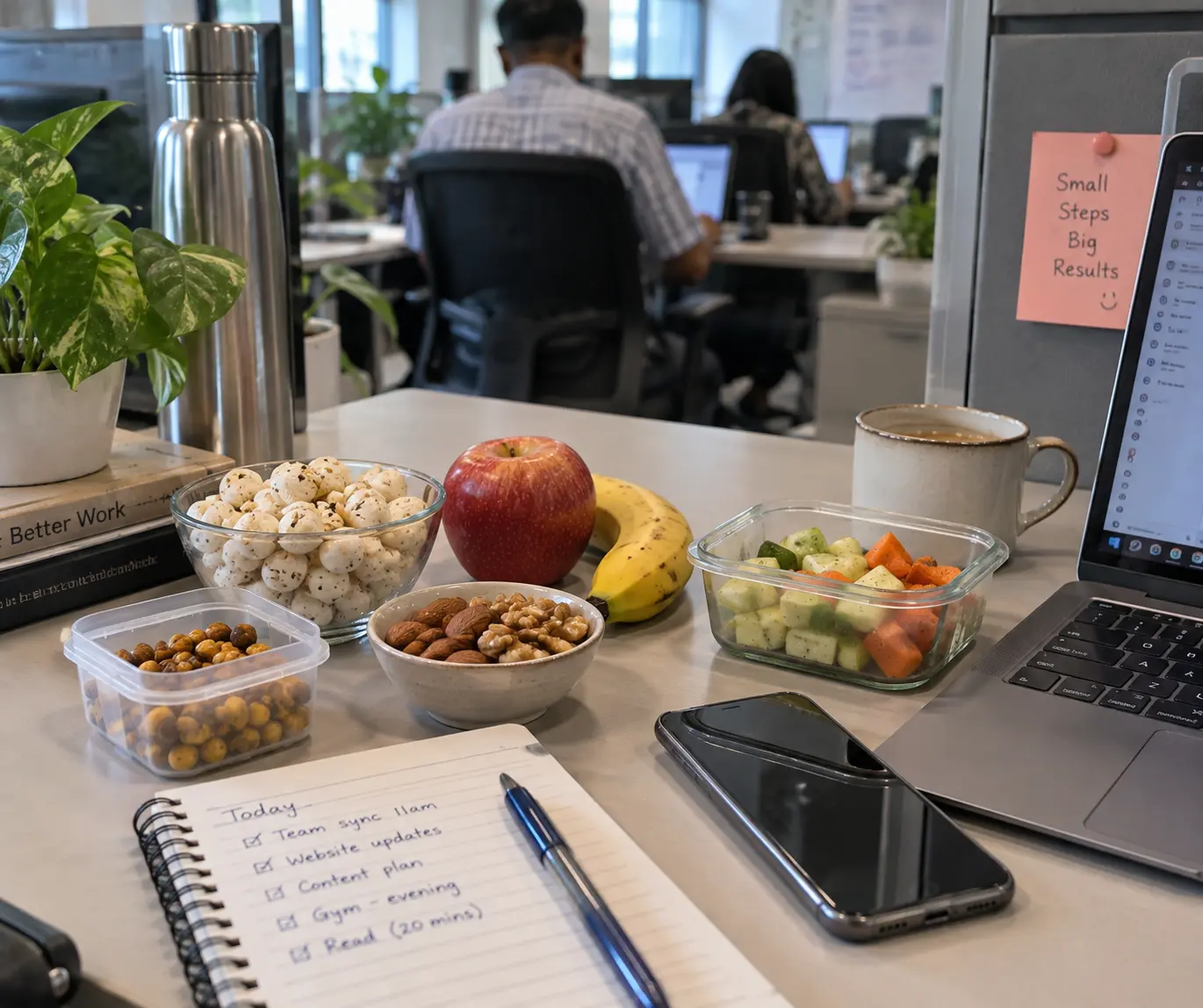
- Roasted chana — small airtight box, no fridge needed
- Mixed nuts and dates — small container
- Makhana — light and doesn't smell
- Single-serve peanut butter packets — pair with any fruit
- A low-sugar protein bar — check the label; emergency backup only
Desk snacks are backups, not a breakfast plan. If you're reaching for them every day, fix the morning routine — the Sunday prep below is the easiest place to start.
Common Breakfast Mistakes That Stall Weight Loss
1. Calling Parathas "Healthy" Because They Have Vegetables
A single aloo paratha with butter contains 350–450 calories and up to 20 g fat. Even a methi paratha with ghee crosses 300 calories easily. Save these for a weekend treat, not a daily breakfast.
2. Fruit Juice Instead of Whole Fruit
One glass of orange juice = 4 oranges with all the fibre removed. You get the sugar spike without the satiety. Always eat whole fruit.
3. Branded "Healthy" Cereals
Most cornflakes, muesli, and granola products sold in India contain 10–25 g of added sugar per serving. Read labels carefully — look for cereals with less than 5 g sugar per 100 g.
4. Too Little Protein
A breakfast of toast with jam, or plain poha with no protein source, leaves you hungry within 90 minutes. Always include a protein element: eggs, curd, paneer, dal chilla, or sprouts.
Flavoured oats packets, breakfast biscuits, and granola bars marketed as "healthy" in India are often loaded with refined sugar and palm oil. Check the ingredient list — if sugar appears in the first three ingredients, it is not a healthy breakfast.
📖 Read Also:
Free TDEE & Calorie CalculatorKnow exactly how many calories your breakfast should have — calculate your daily target and plan all meals accordingly.
Sunday Meal Prep for Easy Weekday Breakfasts
The biggest barrier to healthy breakfasts is time. Solve it with 30 minutes of Sunday prep:
- Soak moong dal on Sunday evening for Monday chilla
- Sprout moong over the weekend — lasts 3 days in the fridge
- Boil 6 eggs — keeps 5 days refrigerated, ready to eat any morning
- Prepare idli batter — lasts 3–4 days, steam fresh daily
- Dry roast rava and oats — store in airtight containers, no prep needed on weekday mornings
- Make 4 overnight-oat jars — Monday to Thursday breakfast sorted
- Soak almonds the night before for the next morning
- Portion makhana and nuts into small boxes — 5 days of desk backup
- Pre-cut onions, tomatoes, capsicum and carrots — airtight boxes cut poha, upma and chilla prep to under 10 minutes
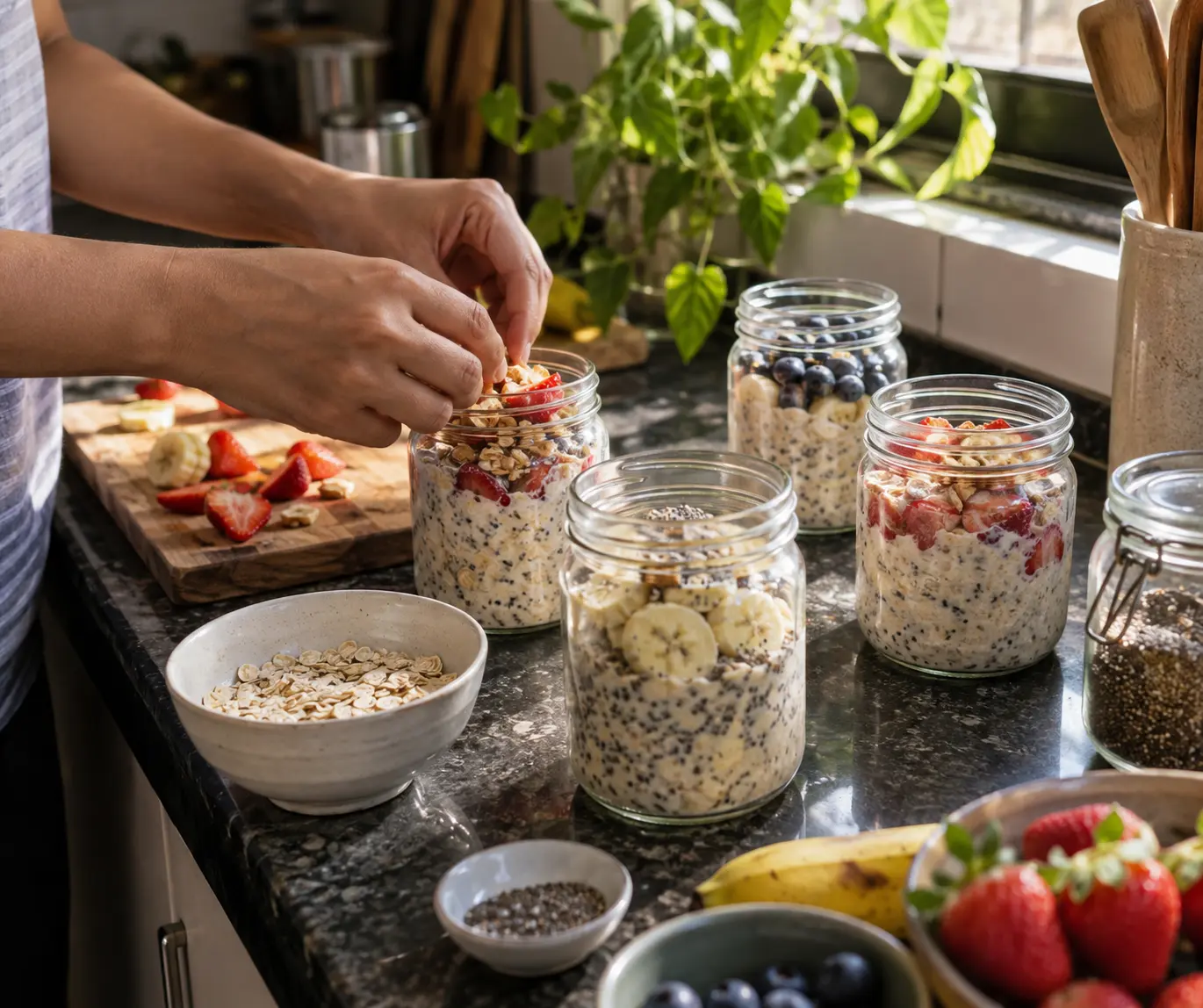
With this prep done, every breakfast on this list takes under 10 minutes on a busy weekday. For lunch and dinner too, see the Indian weekly meal prep guide.
Related Articles
- Calorie Deficit Explained: The Only Rule That Matters for Weight Loss
- 7-Day Indian Weight Loss Diet Chart
FAQ
1. Which Indian breakfast has the most protein?
Egg bhurji (2 eggs) leads with ~14 g protein per serving. Besan chilla (~13 g) and moong dal chilla (~12 g) are the best vegetarian options.
2. Is poha good for weight loss?
Yes — plain poha is low in fat and moderately low in calories (~255 cal for ¾ cup). The key is minimal oil and adding peanuts or sprouts for protein to make it more satiating.
3. Can I eat idli every day for weight loss?
Absolutely. Idli is one of the most weight-loss-friendly Indian breakfasts — low in fat, light, and easy on the stomach. Stick to 3 idlis with ½ cup sambar and green chutney rather than coconut chutney with extra oil.
4. Is skipping breakfast better for weight loss?
For some people, intermittent fasting works well. But for most people — especially those with active mornings, physical jobs, or who exercise in the morning — eating a protein-rich breakfast reduces total daily calorie intake and prevents overeating at lunch.
5. How many calories should Indian breakfast have for weight loss?
A good target is 250–350 calories for breakfast, with at least 15 g of protein. This provides enough energy for a productive morning without exceeding your daily calorie deficit.
6. What is the fastest healthy Indian breakfast?
Curd with fruits and nuts (3 minutes) and sprouts chaat (5 minutes) are the fastest options that require zero cooking. Both come in at around 200 calories or less. For more zero-cook ideas, see the 5-minute office breakfasts.
7. Is it okay to eat oats every day?
Yes, for most people. Rotating between the oats recipes above — upma, idli, poha, dosa, overnight oats — keeps it from getting monotonous.
8. Do oats make you gain weight?
Not on their own. A plain bowl is moderate in calories; weight gain comes from what goes on top — heaped sugar, ghee or sweetened milk. Keep the add-ons in check and oats fit a weight-loss plan.
9. Can vegetarians get enough protein at breakfast?
Yes. Combine two sources at the same meal: moong dal chilla with curd, besan chilla with hung curd, or masala oats with paneer. Each gets you to roughly 15 g or more. Ovo-vegetarians can add an egg.
10. Is paneer or eggs better for a high-protein breakfast?
Both work. Eggs are a complete protein and usually cheaper per gram of protein; paneer suits strict vegetarians and adds calcium. Pick whichever fits your diet and budget.
11. How do I stop feeling hungry by 10 AM?
Add protein. A banana on its own digests quickly; add peanut butter, curd, boiled eggs or Greek yogurt and the same breakfast keeps you going much longer.
12. What if I'm not hungry in the morning?
Start small — a banana and 5 almonds is better than nothing — and your appetite usually adjusts within 1–2 weeks. Also look at dinner: eating at 10 PM and waking at 6:30 AM often means you simply aren't hungry yet. Moving dinner 30–60 minutes earlier helps.
13. Is it okay to eat the same breakfast every day?
Yes, if it covers protein and fibre. Consistency matters more than variety — just change the fruit or nuts now and then. Pick a nutrient-dense option like moong dal chilla or overnight oats rather than bread and butter.
14. Is a protein shake an okay breakfast?
Occasionally. A whey shake with milk and a banana covers protein and some carbs, but it lacks the fibre of a whole-food breakfast. Use it on rushed days, not as a daily replacement.
15. Is chai with breakfast fine?
One cup is fine. The problems are 2+ teaspoons of sugar per cup, 3–4 cups a day, or chai replacing actual food.
This article is for informational purposes only and does not constitute medical or nutritional advice. Consult a registered dietitian for personalised guidance.
Free Tools to Help You
Put this article into action — use our free calculators to get your personalized numbers.
Was this article helpful?
Want More Tips Like This?
Join 1,000+ readers getting weekly fitness, diet, and wellness tips + FREE meal plan
No spam, ever. Unsubscribe anytime.

About the Author: Ashwani
Fitness influencer and wellness writer helping Indians build healthier lifestyles.
Read more about us →Comments
Leave a Comment
Your email will not be published. Comments are reviewed before appearing.
You Might Also Like
Continue your wellness journey

11 min read
Millet Diet Plan for Weight Loss: Ragi, Jowar & Bajra Complete Guide
Millets are India's original superfoods — ancient grains that are higher in protein and fibre than rice, lower on the glycaemic index, and far better for weight loss. Here is everything you need to know and a complete diet plan to start using them.

9 min read
Curd (Dahi) for Weight Loss: Benefits, Best Time to Eat & Recipes
Curd is not just a digestive aid — it is one of the most effective weight loss foods in an Indian kitchen. The combination of protein, probiotics, and calcium actively supports fat loss. Here is how to use it right.
36 min read
Indian Diet Plan for Weight Loss: The Complete 2026 Guide
Most Indians gain weight not from indulgence but from not knowing their portions. This complete Indian diet plan covers calorie targets, 7-day meal charts, 1200 and 1500 calorie plans, vegetarian options, and the 10 mistakes keeping you stuck.