Intermittent Fasting for Beginners: A Complete Indian Guide (16:8 & More)
Confused about intermittent fasting? This beginner-friendly guide explains how IF works, which method suits Indian lifestyles, what to eat during your eating window, and mistakes to avoid.

Medical Safety Note: This article is for general educational purposes only and is not a substitute for professional medical advice, diagnosis, or treatment. If you are pregnant, managing a condition like diabetes, PCOS, or thyroid disorder, or taking medication, please consult a qualified doctor or registered dietitian before changing your diet, supplements, or exercise routine.
Imagine this.
You wake up at 7 AM, rush to get ready for work, skip breakfast because you're late, grab chai during the commute, eat a heavy lunch at the office, snack on biscuits in the evening, and then have a late dinner at 10:30 PM with the family.
Sound familiar?
This routine is extremely common across India — especially among people with office jobs, long commutes, and irregular eating schedules. Over time, this pattern often leads to:
- Gradual weight gain
- Constant tiredness
- Cravings for sugary snacks
- Difficulty losing belly fat
This is where intermittent fasting can be a powerful lifestyle change.
📖 Read Also:
Indian Diet Plan for Weight Loss: The Complete 2026 GuideFor the complete weight-loss framework that intermittent fasting fits into — calorie targets, meal charts, and common mistakes — see our full Indian diet guide.
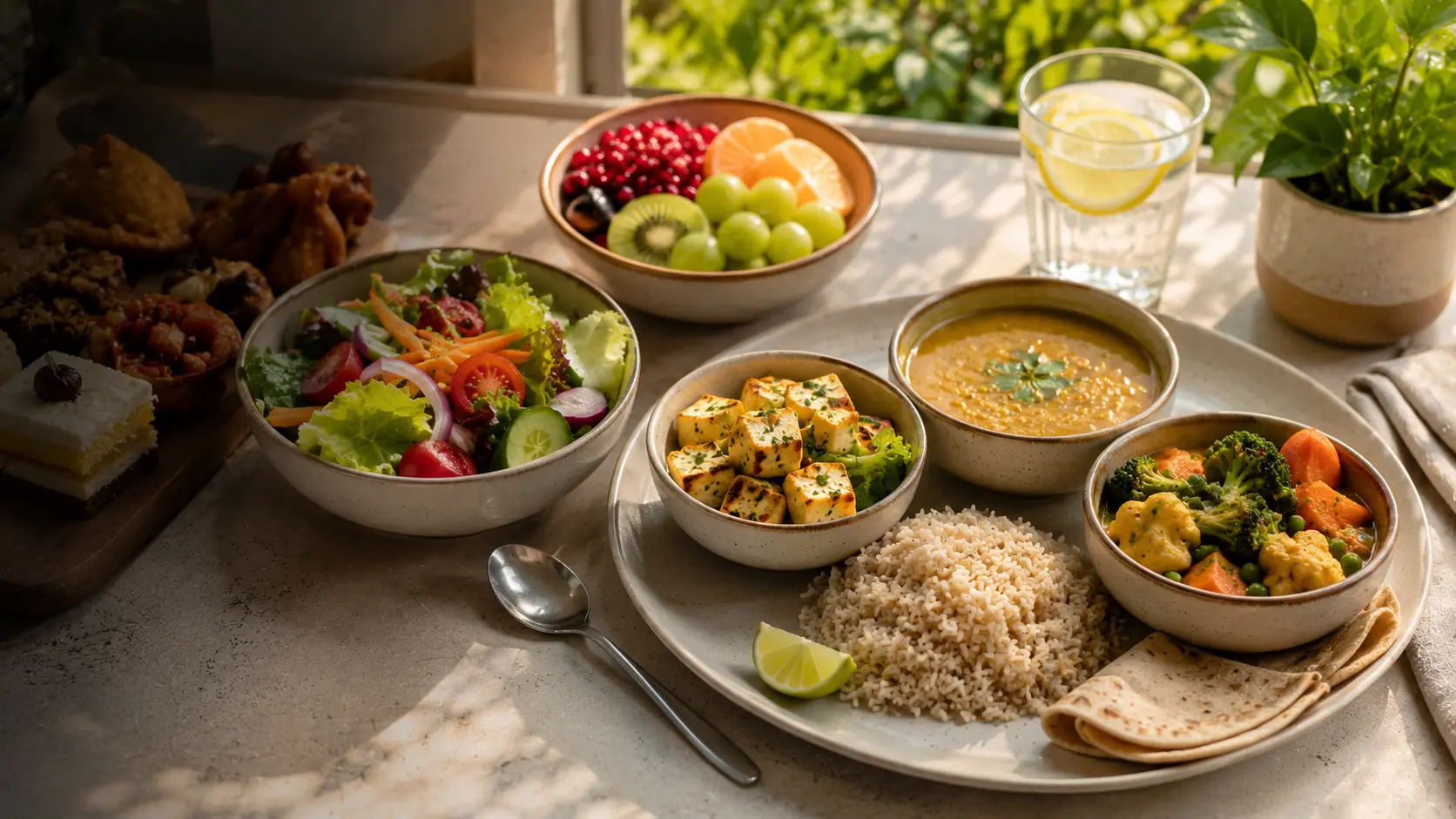
Unlike strict diets, IF focuses on when you eat, not just what you eat. And the best part? You can follow it entirely with regular Indian home food — dal, roti, sabzi, paneer, curd.
In this guide, we'll cover:
- What intermittent fasting is and how it works
- All IF methods — which one is right for you
- A realistic Indian meal plan
- What to drink during fasting hours
- Workout tips during IF
- 8 common beginner mistakes
- Realistic results to expect
- FAQs for Indian beginners
What Exactly Is Intermittent Fasting?
Intermittent fasting (IF) is not a diet. It doesn't tell you what to eat — it tells you when to eat. You cycle between periods of eating and fasting, and during the fasting window, you consume zero calories.
The idea isn't new. If you think about it, your grandparents probably did this naturally. They ate dinner by 7–8 PM, didn't snack at midnight, and had breakfast around 8–9 AM. That's a 12–13 hour fast without even trying.
Modern IF just takes this a step further — extending the fasting window to give your body more time to burn stored fat instead of constantly processing incoming food.
How Does Intermittent Fasting Help You Lose Weight?
When you eat, your body breaks food into glucose for energy. Insulin rises to help cells absorb this glucose. Any excess gets stored as fat.
When you fast for several hours, the opposite happens:
- Insulin levels drop significantly
- Your body starts using stored fat for energy
- Growth hormone increases (which helps preserve muscle)
- Cellular repair processes kick in (called autophagy)
After about 12–14 hours of fasting, your body starts switching from burning sugar (glucose) to burning stored fat. This is called the metabolic switch.
For many Indian beginners, fasting also automatically stops late-night snacking — reducing 300–500 extra calories daily without any extra effort.
Research shows IF can reduce insulin levels by 20–31% and increase fat-burning hormones like norepinephrine — helping break through weight loss plateaus.
Popular IF Methods — Which One Is Right for You?
There's no single "correct" way to do IF. Here are the most common methods, ranked from easiest to most advanced:
12:12 Method (Beginner-Friendly)
Fast for 12 hours, eat within 12 hours. This is basically how most people used to eat before late-night snacking became normal.
Example: Dinner by 8 PM → Breakfast at 8 AM
Best for: Absolute beginners who have never tried fasting before.
14:10 Method (The Middle Ground)
Fast for 14 hours, eat within 10 hours. Perfect if 16:8 feels too long but 12:12 is too easy.
Example: Last meal by 8 PM → First meal at 10 AM
Best for: People who find skipping breakfast completely difficult.
16:8 Method (Most Popular)
Fast for 16 hours, eat within an 8-hour window. This is the sweet spot for most people — effective for fat loss without being too restrictive.
Example: Last meal by 8 PM → First meal at 12 PM (noon)
You essentially skip breakfast and eat lunch + one snack + dinner.
5:2 Method (Advanced)
Eat normally 5 days a week, restrict calories to 500–600 on 2 non-consecutive days.
Not recommended for beginners. Start with daily fasting methods first.
Gradual Approach — Build Up Slowly
Jumping straight to 16 hours can cause dizziness or hunger pangs for beginners. Follow this progressive schedule instead:
← Swipe to compare →
| Week | Fasting Duration | Example Schedule |
|---|---|---|
| Week 1 | 12 hours | 8 PM → 8 AM |
| Week 2 | 13–14 hours | 8 PM → 9–10 AM |
| Week 3 | 14–15 hours | 8 PM → 10–11 AM |
| Week 4 | 16 hours | 8 PM → 12 PM |
By Week 4, 16:8 will feel natural — not forced. That's when it becomes sustainable.
Who should NOT do IF without medical advice: people with diabetes, those who are underweight, pregnant or breastfeeding women, teens under 18, anyone on medications that require food at specific times, and anyone with a history of eating disorders. Always consult a doctor first.
Intermittent Fasting Meal Plan (Indian Style)
A very common beginner mistake is overeating junk during the eating window. Fasting is not a free pass to eat anything.
← Swipe to compare →
| Time | Meal | Example Foods |
|---|---|---|
| 7–11 AM | Fasting | Water, green tea, black coffee |
| 12:00 PM | First Meal (Lunch) | Dal + roti + sabzi + salad + curd |
| 3:00–4:00 PM | Snack | Roasted chana / peanuts / seasonal fruit |
| 7:00 PM | Dinner | Paneer/egg curry + roti + salad |
| After 8 PM | Fasting | Water or herbal tea only |
Sample Indian Meal Ideas
Lunch Options
- Dal + brown rice + salad
- 2 roti + paneer sabzi + curd
- Vegetable khichdi + cucumber salad
Evening Snacks
- Moong sprouts chaat
- Fruit bowl (apple, papaya, guava)
- Roasted makhana
Dinner Options
- Vegetable sabzi + 2 roti
- Paneer bhurji + salad
- Dal + sautéed vegetables
Keep dinner lighter than lunch. Your digestion slows at night, and a heavy dinner close to the fasting window makes it harder to sleep and easier to overeat.
Best Indian Foods for Intermittent Fasting
Focus on high-protein and high-fibre foods to stay full during the fasting window.
Protein Foods
- Paneer, eggs, dal and lentils
- Chickpeas (chole), rajma, soy chunks
- Curd, Greek yogurt
Healthy Carbs
- Whole wheat roti, brown rice, oats
- Millets (ragi, jowar, bajra)
Healthy Fats
- Almonds, walnuts, peanuts
- Seeds (flax, chia, pumpkin)
- Ghee (small quantity)
Vegetables — Eat Freely
- Spinach, bottle gourd (lauki), cabbage
- Carrots, beans, broccoli
What Can You Have During the Fasting Window?
This is the most asked question — and the answer is simple.
Allowed (zero or near-zero calories):
- Plain water — as much as you want
- Black coffee (no sugar, no milk)
- Green tea or herbal tea
- Plain jeera water
- Black tea (no sugar, no milk)
Not Allowed:
- Chai/coffee with milk or sugar
- Juice, coconut water, buttermilk
- Any food — even "healthy" snacks
- Protein shakes or smoothies
- Diet sodas (best to avoid)
The most common Indian question — "Can I have chai with milk?" A tiny splash of milk (10–15 ml) won't completely break your fast, but for best results, switch to black tea or green tea during fasting hours.
Workout Plan During Intermittent Fasting
Exercise significantly improves fat loss results during IF. You don't need intense workouts when starting out.
← Swipe to compare →
| Day | Workout | Duration |
|---|---|---|
| Monday | Brisk walking | 30 min |
| Tuesday | Bodyweight exercises | 25 min |
| Wednesday | Yoga or stretching | 20 min |
| Thursday | Brisk walking | 30 min |
| Friday | Home HIIT workout | 20 min |
| Saturday | Light cycling | 30 min |
| Sunday | Rest or light yoga | 15 min |
Best workout timing:
- Morning during fasting — maximises fat burning
- Evening before dinner — if morning doesn't suit you
If you feel dizzy exercising during fasting, either schedule workouts in your eating window or have a small pre-workout snack (a banana or handful of nuts).
8 Common Mistakes That Kill Your IF Results
1. Jumping Straight to 16:8
If you've never fasted, start with 12:12 for a week. Then move to 14:10. Then 16:8. Rushing leads to headaches, irritability, and quitting.
2. Overeating During the Eating Window
"I fasted for 16 hours, so I can eat whatever I want." No. If you eat 3,000 calories in 8 hours, you'll gain weight regardless of fasting.
3. Not Drinking Enough Water
Most hunger pangs during fasting are actually thirst. Drink 2.5–3 litres of water throughout the day — it makes fasting dramatically easier.
4. Breaking the Fast with Junk Food
Your first meal after fasting should be balanced — protein + fibre + healthy fats. Breaking it with samosas or biscuits spikes insulin and defeats the purpose.
5. Ignoring Protein
With fewer meals, you have fewer chances to get enough protein. If you skip it, you'll lose muscle along with fat — which is not healthy weight loss.
6. Fasting Too Aggressively
20-hour fasts, 24-hour fasts, alternate-day fasting — these are not for beginners. More fasting does not mean more results. Consistency beats intensity.
7. Not Adjusting on Workout Days
If you exercise hard during your fasting window and feel weak, either shift workouts to your eating window or have a small pre-workout snack.
8. Expecting Results in 3 Days
IF is not a magic switch. Give it at least 3–4 weeks of consistent practice before judging whether it's working for you.
If you experience extreme dizziness, weakness, or fainting during fasting — stop immediately and eat something. These are signs your body is not ready. Consult a doctor before restarting.
Managing IF in an Indian Household
In Indian homes, meals are family events. Skipping meals can feel awkward. Here are practical solutions:
If family eats late dinner:
- Eat your portion slightly earlier (7–7:30 PM)
- Join the family at the table with water or herbal tea
Office lunch culture:
- Most offices have lunch around 1 PM — this fits perfectly with IF starting at 12 PM
Long commutes:
- Carry roasted chana, a handful of nuts, or a fruit to avoid vending machine snacks
Realistic Results: What to Expect
← Swipe to compare →
| Timeframe | What You Will Notice |
|---|---|
| Week 1 | Hunger pangs (normal), slightly better energy after adjusting |
| Week 2–3 | Reduced bloating, less snacking urge, mental clarity |
| Month 1 | 1–2 kg loss (with proper eating), better digestion |
| Month 2–3 | 3–5 kg loss, visible body composition changes, more energy |
IF doesn't produce overnight miracles. But combined with decent food choices, it produces consistent, lasting results.
Related Articles
- Calorie Deficit Explained: The Only Rule That Actually Matters for Weight Loss
- 7-Day Indian Weight Loss Diet Plan for Beginners
- How Much Water Should You Drink Daily for Weight Loss?
- HIIT Workout for Beginners at Home — India
- Indian Weekly Meal Prep Guide for Healthy Eating
Final Thoughts
Intermittent fasting works — not because it's magic, but because it naturally reduces your eating window, helps control calories, and improves how your body processes food.
But it only works if you do it right — eat quality food during your window, stay hydrated, build up gradually, and don't treat it as a punishment.
Start with 12:12 this week. Just close the kitchen after dinner and don't eat until morning. That's it. You're already fasting.
Simple start. Gradual progress. Lasting results.
FAQ: Intermittent Fasting for Beginners in India
Can I drink chai during intermittent fasting?
Yes, but only without sugar or milk during fasting hours. Black tea or green tea is allowed. A regular chai with milk and sugar breaks the fast.
How much weight can you lose with intermittent fasting?
Results vary, but many beginners lose 2–4 kg in the first month when combining IF with balanced Indian meals and regular exercise.
Is skipping breakfast healthy?
For most healthy adults, skipping breakfast during IF is acceptable — as long as total daily nutrition remains balanced. The "breakfast is the most important meal" idea is not supported by strong science for everyone.
Can I eat rice during intermittent fasting?
Yes. Moderate portions of rice, roti, or millets can absolutely be part of an IF diet. The key is portion control and overall calorie awareness — not eliminating specific foods.
How long should I follow intermittent fasting?
Many people follow IF long-term as a lifestyle, not a temporary diet. Once your body adjusts (usually 3–4 weeks), it becomes very natural and sustainable.
Free Tools to Help You
Put this article into action — use our free calculators to get your personalized numbers.
Was this article helpful?
Want More Tips Like This?
Join 1,000+ readers getting weekly fitness, diet, and wellness tips + FREE meal plan
No spam, ever. Unsubscribe anytime.

About the Author: Ashwani
Fitness influencer and wellness writer helping Indians build healthier lifestyles.
Read more about us →Comments
Leave a Comment
Your email will not be published. Comments are reviewed before appearing.
You Might Also Like
Continue your wellness journey

14 min read
Indian Festive Eating: Enjoy Diwali & Navratri Without Weight Gain
Diwali sweets, Navratri fasting, Holi bhaang, Eid biryani — Indian festivals are built around food. Most people gain 2–4 kg every festive season and spend months trying to undo it. This guide shows you how to genuinely enjoy every festival without the guilt or the weight gain.

24 min read
1200 Calorie Indian Diet Plan (2026): 7-Day Veg & Non-Veg Meal Plan for Weight Loss
Complete 1200 calorie Indian diet plan for weight loss — non-veg and veg breakfast options with exact calories, 7-day meal plans, Indian food calorie chart, and safe diet guidelines.
33 min read
Indian Diet Plan for Weight Loss: The Complete 2026 Guide
Most Indians gain weight not from indulgence but from not knowing their portions. This complete Indian diet plan covers calorie targets, 7-day meal charts, 1200 and 1500 calorie plans, vegetarian options, and the 10 mistakes keeping you stuck — updated June 2026.