Ashwagandha for Women: PCOS, Hormones, Thyroid & Dosage Guide (India 2026)
Ashwagandha affects female hormones, PCOS, thyroid, and fertility in very specific ways — and not all of them are good for every woman. Here's what the clinical research actually says, what your doctor may not have mentioned, and exactly how to use it safely.

Medical Safety Note: This article is for general educational purposes only and is not a substitute for professional medical advice, diagnosis, or treatment. If you are pregnant, managing a condition like diabetes, PCOS, or thyroid disorder, or taking medication, please consult a qualified doctor or registered dietitian before changing your diet, supplements, or exercise routine.
Affiliate Disclosure: As an Amazon Associate I earn from qualifying purchases. This post contains affiliate links. If you buy through them, we may earn a small commission at no extra cost to you — this never affects our recommendations. We only suggest products we believe in. Read our full affiliate disclosure.
India's most popular Ayurvedic supplement has a serious body of clinical research behind it — but most of that research was done on men. When it comes to women, ashwagandha behaves differently, and for Indian women dealing with PCOS, thyroid problems, or stress-related hormonal chaos, "differently" matters a great deal.
This is not a general ashwagandha overview (we cover that in our complete ashwagandha benefits and dosage guide). This guide is specifically about what ashwagandha does — and doesn't do — inside the female hormonal system. The good, the nuanced, and the genuinely risky.
Medical disclaimer: Ashwagandha interacts with hormones, thyroid function, and several medications. If you have PCOS, thyroid disorders, autoimmune conditions, or are on any hormone therapy, please consult your gynaecologist or endocrinologist before starting. This article is educational only and is not a substitute for medical advice.
Quick Answer: Should Women Take Ashwagandha?
TL;DR: Ashwagandha can genuinely help Indian women with stress-driven hormonal disruption, PCOS (particularly adrenal or stress-type), subclinical hypothyroidism, perimenopause symptoms, and poor sleep. However, it's not safe for pregnant women, those with hyperthyroidism or Graves' disease, or active autoimmune conditions. For specific hormonal benefits, always choose a standardised KSM-66 or Sensoril extract — not plain churna powder.
How Ashwagandha Works in the Female Body
Ashwagandha (Withania somnifera) gets its hormonal effects from compounds called withanolides — plant-derived steroids that interact with multiple hormonal pathways simultaneously. Here's why this matters specifically for women:
The HPA Axis (Your Stress-Hormone Highway)
The most well-researched mechanism is ashwagandha's effect on the hypothalamic-pituitary-adrenal (HPA) axis — the system that governs your cortisol response. Ashwagandha reduces cortisol by inhibiting the enzyme that converts cortisol precursors, and by recalibrating how the HPA axis responds to chronic stress.
For women, chronically high cortisol is particularly disruptive because it:
- Suppresses GnRH (gonadotropin-releasing hormone), which controls LH and FSH — the hormones that trigger ovulation
- Drives adrenal androgen production (a major contributor to PCOS-like symptoms)
- Disrupts progesterone production
- Promotes visceral fat storage and worsens insulin resistance
Put simply: when your body thinks it's permanently under threat, reproduction takes a back seat. That's cortisol at work, and it's a core reason stress derails menstrual cycles.
Thyroid Hormone Interaction
Withanolides appear to stimulate thyroid hormone production, particularly T4. This matters in the Indian context because subclinical hypothyroidism affects an estimated 10–15% of Indian women of reproductive age — meaning mild thyroid underfunction is far more common than many women realise.
That stimulating effect can be a benefit if you're hypothyroid. It becomes a problem if you're hyperthyroid or have an autoimmune thyroid condition (more on this below).
Oestrogen Receptor Activity
Some withanolides interact weakly with oestrogen receptors. This isn't full hormonal replacement — the activity is mild — but it has clinical relevance for perimenopausal women and anyone with oestrogen-sensitive conditions. Research is still developing here, so it's a reason to be informed, not alarmed.
Ashwagandha and PCOS: What the Evidence Shows
Can ashwagandha help PCOS? Yes — particularly for the stress-driven and adrenal subtype of PCOS, where cortisol dysregulation, elevated adrenal androgens, and insulin resistance are the dominant features.
PCOS affects an estimated 20–30% of Indian women of reproductive age, making it the most common hormonal disorder in the country. The typical picture involves:
- Elevated androgens (testosterone, DHEA-S)
- Insulin resistance
- Irregular or absent ovulation
- Chronic low-grade inflammation
- Often, HPA axis dysregulation (especially in the adrenal PCOS subtype)
Ashwagandha addresses several of these mechanisms directly:
1. Cortisol Reduction and Adrenal Androgens
A significant subset of PCOS cases are either caused or heavily worsened by chronic stress. When cortisol stays elevated, your adrenal glands produce more DHEA-S and androstenedione — which convert to testosterone. This is sometimes called "adrenal PCOS" and it's the subtype where ashwagandha is most likely to help.
A randomised controlled trial published in the Indian Journal of Psychological Medicine found that 300mg of KSM-66 ashwagandha twice daily reduced serum cortisol by 27.9% and significantly improved stress and anxiety scores. Lower cortisol typically correlates with reduced adrenal androgen production.
2. Insulin Sensitivity
A 2015 clinical study documented significant improvements in fasting blood glucose, insulin levels, and HbA1c in participants taking ashwagandha extract. For PCOS patients where insulin resistance is a core driver — which it is in the majority of cases — this is clinically meaningful.
One important interaction: If you're already on metformin for PCOS, combining it with ashwagandha's blood-sugar lowering effect could push glucose too low. Always tell your doctor you're adding ashwagandha.
3. Anti-Inflammatory Action
PCOS involves chronic low-grade inflammation that worsens both insulin resistance and androgen overproduction. Multiple trials confirm that ashwagandha's withanolides reduce inflammatory markers including CRP, IL-6, and TNF-alpha.
4. Hypothyroid-PCOS Co-occurrence
PCOS and subclinical hypothyroidism frequently co-exist. If you have both, ashwagandha's thyroid-stimulating effect adds another dimension of potential benefit — but one that needs monitoring (see the thyroid section).
A note on PCOS subtypes: Ashwagandha is most relevant for adrenal-type PCOS (driven by stress and cortisol). It's less of a direct intervention for ovarian-type PCOS (driven by LH/FSH ratio imbalances from the pituitary). Knowing your PCOS type — worth asking your gynaecologist about — helps you set realistic expectations.
Ashwagandha and Menstrual Cycle Regulation
One of the most common reasons Indian women take ashwagandha is irregular periods. There's a mechanistic case for it — but also important limits to understand.
When stress is the primary driver of irregular cycles (stress-induced oligomenorrhoea or amenorrhoea), the mechanism is clear: high cortisol suppresses GnRH and blunts the LH surge needed for ovulation. By reducing cortisol and recalibrating the HPA axis, ashwagandha may restore normal hormonal signalling to the ovaries.
Who is most likely to benefit: Women whose cycles clearly become irregular during stressful periods — heavy exam seasons, job transitions, bereavement, or significant relationship stress — and return to regularity when things calm down.
Who this probably won't fix: Irregular periods from structural PCOS (multiple follicular cysts, LH/FSH ratio imbalance), primary thyroid disorders, premature ovarian insufficiency, or nutritional deficiencies. These need their own specific treatments.
Realistic timeline: If stress is genuinely the driver, most women notice more regular cycles after 2–3 months of consistent ashwagandha use alongside actual lifestyle changes — better sleep, reduced workload where possible, exercise, and sometimes therapy.
Ashwagandha does not replace that work. It supports the hormonal recovery that becomes possible when you reduce the stress load.
Ashwagandha and Thyroid: Critical Considerations
This is the section most Indian women with thyroid issues need to read carefully before starting ashwagandha.
If You Have Hypothyroidism (Underactive Thyroid)
Ashwagandha may be beneficial — its T4-stimulating effect can help raise thyroid hormone levels. However, if you're on levothyroxine (the standard thyroid replacement drug in India — sold as Thyronorm or Eltroxin), ashwagandha could increase your thyroid hormone levels to a point where your current levothyroxine dose becomes too high. This means potential symptoms of overtreatment: heart palpitations, anxiety, insomnia, tremors.
If you take levothyroxine and want to try ashwagandha, inform your endocrinologist and plan a TSH recheck after 6–8 weeks of use.
If You Have Hyperthyroidism or Graves' Disease
Avoid ashwagandha. The thyroid-stimulating and immune-activating properties of withanolides are directly contraindicated. Adding more thyroid stimulation to an already overactive gland is dangerous.
If You Have Hashimoto's Thyroiditis
This is nuanced. Ashwagandha has immune-modulating properties that could theoretically worsen an autoimmune condition. Some integrative practitioners use it cautiously with Hashimoto's patients (particularly for the cortisol and sleep benefits), but this is not standard medical practice. The decision should be made with your endocrinologist, not a supplement label.
For more on managing weight and metabolism with thyroid conditions, see our thyroid and weight management guide for Indians.
Ashwagandha and Fertility
There's genuine emerging research here — with one significant caution.
The positive case for female fertility: The mechanistic logic is reasonable: reduced cortisol improves HPA-HPO (hypothalamic-pituitary-ovarian) communication, which improves ovulatory function. Ashwagandha's antioxidant properties reduce oxidative stress on oocytes (eggs), which is relevant for ovarian reserve. And its insulin-sensitising effect improves the hormonal environment for conception.
A 2021 clinical study in women with female sexual dysfunction found significant improvements in arousal, lubrication, and orgasm frequency with ashwagandha supplementation — pointing to positive effects on female hormonal and sexual health.
For male-factor infertility: The evidence is more direct. Multiple trials show ashwagandha increases testosterone and improves sperm count, motility, and morphology in men. If infertility involves a male factor, this is well-supported.
The important fertility caution: Traditional Ayurvedic texts and limited modern pharmacological data suggest high-dose ashwagandha may have uterotonic properties — meaning it could stimulate uterine contractions. For this reason:
- Do not take ashwagandha during pregnancy (any trimester)
- If actively trying to conceive, consult your fertility specialist before using it
- If breastfeeding, avoid ashwagandha — safety data for lactating women is insufficient
Ashwagandha and Menopause
Perimenopause — the transition phase before menopause, which can last years — involves declining oestrogen and progesterone alongside often-elevated cortisol. It's a hormonal environment where ashwagandha's adaptogenic profile fits particularly well.
A randomised controlled trial published in 2021, specifically on perimenopausal women, tested 300mg of KSM-66 ashwagandha twice daily. Results showed significant reductions in:
- Hot flash frequency and severity
- Sleep disturbance and insomnia
- Anxiety and mood instability
- Genital symptoms (dryness, discomfort — mediated via oestrogen receptor interaction)
For women who cannot or choose not to use hormone replacement therapy (HRT) — whether due to personal preference, breast cancer history, or other medical reasons — ashwagandha represents one of the better-studied non-hormonal options for perimenopausal symptom relief. It's not a replacement for HRT, but it's not nothing either.
Ashwagandha and Weight Management in Women
This is especially relevant for women with PCOS, where weight gain is common, stubborn, and metabolically different from typical weight gain.
Ashwagandha's effect on weight is indirect but multi-pathway:
- Cortisol → visceral fat: High cortisol directly promotes belly fat storage — the most metabolically harmful type. Reducing cortisol removes this signal.
- Sleep improvement → appetite regulation: Ashwagandha consistently improves sleep quality in studies. Better sleep improves leptin (fullness hormone) sensitivity and reduces ghrelin (hunger hormone), which reduces overall calorie intake without active dieting.
- Reduced stress eating: Lower cortisol and anxiety reduces the neurological drive toward high-calorie comfort foods.
- Insulin sensitivity: Especially relevant for PCOS-related weight gain, where insulin resistance creates a hormonal environment that resists fat loss.
A 2019 study found significant reductions in body weight, BMI, and body fat percentage in adults taking ashwagandha extract over 8 weeks compared to placebo — even without structured diet changes. The effect was modest (this is not a fat-loss drug), but it was consistent and statistically significant.
For women with PCOS looking at weight management comprehensively, combine ashwagandha with evidence-based dietary strategies for PCOS and strength training — the combination produces meaningfully better results than any single intervention.
Dosage Guide for Women
The research-supported dosing for women is the same as for men, but there are specific practical considerations:
← Swipe to compare →
| Goal | Recommended Dose | Timing | Notes |
|---|---|---|---|
| PCOS / hormonal balance | 300mg KSM-66 twice daily | Morning + evening with meals | Start at 300mg once daily for 2 weeks first |
| Stress and cortisol reduction | 300–600mg daily | Evening preferred | Most studied dose is 300mg twice daily |
| Sleep quality | 300–600mg | 1–2 hours before bed | Best evidence for bedtime dosing |
| Perimenopause symptoms | 300mg KSM-66 twice daily | Morning + evening | Use for minimum 8 weeks before assessing |
| Thyroid support | Only under medical supervision | Per doctor's advice | Requires TSH monitoring |
Cycle duration: Most benefits appear between 8–12 weeks. For long-term use, take a 4–6 week break after every 3 months as a reasonable precaution — long-term continuous safety data beyond 3 months is limited.
With or without food? Ashwagandha can cause mild nausea on an empty stomach in some women. Taking it with meals or warm milk is traditional practice and generally reduces GI discomfort.
Ashwagandha Forms: What to Choose
← Swipe to compare →
| Form | Withanolide Content | Best For | Verdict |
|---|---|---|---|
| KSM-66 extract (capsule) | Standardised ~5% | PCOS, hormones, stress | Best choice for hormonal goals |
| Sensoril extract | Standardised ~10% | Anxiety, sleep, stress | Good alternative |
| Ashwagandha powder / churna | Highly variable | General wellness only | Not reliable for hormonal use |
| Gummies | Low dose, added sugar | Convenience | Not suitable for hormonal goals |
For any specific hormonal outcome — PCOS, thyroid support, perimenopause — use a standardised extract. Plain churna (powder) has wildly variable withanolide content between batches and brands, which means inconsistent results.
Best Ashwagandha Products for Women in India
Based on standardisation, third-party testing, and real-world availability at Indian pharmacies and online, here are the top picks:
Himalaya Ashwagandha Tablets — 60 Tablets
India's most trusted herbal brand. Standardised ashwagandha root extract in tablet form — no prescription needed. AYUSH certified, consistent quality control, available at every pharmacy and on Amazon India. Best entry-level ashwagandha for beginners.
Best for: Women who want a reliable, affordable starting point. Himalaya uses a traditional extract (not KSM-66), but it's AYUSH-certified, quality-controlled, and available everywhere. Good for general stress and sleep support.
Limitation: Not a KSM-66 extract, so withanolide content is lower than clinical-dose products. For specific PCOS or hormonal outcomes, consider the next option.
Carbamide Forte KSM-66 Ashwagandha — 1000mg, 60 Capsules
Clinically studied KSM-66 extract at 1000mg per capsule — the same form used in most major ashwagandha research. Third-party tested, no fillers. Best choice for stress reduction, testosterone support, and gym performance benefits.
Best for: Women with PCOS, significant stress-related hormonal disruption, or those who want the extract form closest to what clinical studies actually used. KSM-66 is the most researched ashwagandha extract globally. Third-party tested, no fillers — a meaningful quality differentiator at this price point.
Organic India Ashwagandha Capsules — 60 Capsules
Certified organic ashwagandha root extract from one of India's most respected herbal brands. USDA organic, non-GMO, standardised extract. Premium option for those who prioritise organic certification and brand transparency.
Best for: Women who prioritise organic certification and clean-label sourcing. Organic India is a well-regarded brand with genuine farm-to-capsule transparency. USDA organic and non-GMO certified. Good choice if you're avoiding conventionally grown botanicals.
Note: All three products are available on Amazon India with Prime delivery. Prices as of June 2026; may vary.
📖 Read Also:
KSM-66 vs Himalaya vs Patanjali Ashwagandha — Which is Best in India?Still deciding between brands? We compared KSM-66, Himalaya, and Patanjali on extract strength, withanolide content, and price per effective dose — including which one makes sense for hormonal support.
Who Should Avoid Ashwagandha (Or Use With Caution)
Definitely Avoid:
- Pregnant women — potential uterotonic (contraction-stimulating) effect
- Breastfeeding women — insufficient safety data
- Women with hyperthyroidism or Graves' disease — thyroid and immune stimulation contraindicated
- Women with active autoimmune disease — consult your rheumatologist or immunologist first
- Women on sedative medications (benzodiazepines, sleep drugs) — ashwagandha enhances sedation
Use With Caution (Consult Your Doctor First):
- Women on metformin or insulin — hypoglycaemia risk from combined blood-sugar lowering
- Women on levothyroxine (Thyronorm, Eltroxin) — may need TSH recheck and dose adjustment
- Women on immunosuppressants — ashwagandha stimulates immune function
- Women with hormone-sensitive cancers (breast, ovarian, uterine) — oestrogen receptor interaction warrants oncologist clearance
- Women with Hashimoto's thyroiditis — nuanced; specialist decision only
📖 Read Also:
Ashwagandha vs Shilajit: Which Do You Need? (2026)Wondering whether shilajit suits your goals better than ashwagandha? This comparison covers benefits, side effects, and uses for both men and women.
📖 Read Also:
Best Shilajit Brand in India (2026): Top 3 ComparedIf shilajit makes your list after the comparison above, this compares the three biggest Indian brands on purification and lab testing.
Frequently Asked Questions
Can ashwagandha help regularise my periods?
If your irregular periods are primarily stress-driven — meaning cycles go irregular during high-pressure periods and recover when things calm down — ashwagandha may help by reducing cortisol and restoring normal HPA-HPO axis signalling. However, irregular periods have many causes: PCOS, thyroid dysfunction, nutritional deficiencies, and structural issues all cause the same symptom. Get a proper clinical evaluation before assuming stress is the primary cause.
I have PCOS. Should I take ashwagandha?
For adrenal-type PCOS (elevated DHEA-S, stress-driven symptoms, high cortisol), ashwagandha has genuine mechanistic relevance. Many Indian gynaecologists are cautiously supportive of it as an adjunct to primary treatment. That said, always check with your doctor first — particularly if you're on metformin or have thyroid involvement alongside your PCOS.
Can ashwagandha cause weight gain in women?
In some women, ashwagandha's appetite-improving effects (via reduced cortisol and improved sleep) can increase hunger slightly. If you're already eating at or above your maintenance calories, this could contribute to weight gain. Monitor your appetite in the first 4 weeks and adjust food intake accordingly.
Is ashwagandha safe to take during your period?
Yes — there's no clinical evidence that ashwagandha is harmful at any specific phase of the menstrual cycle. Some women choose to pause during menstruation based on traditional Ayurvedic practice, but there's no scientific basis for this in otherwise healthy women.
How long does ashwagandha take to work for hormonal issues?
Cortisol reduction is typically measurable within 4–8 weeks. Menstrual cycle improvements, if they occur, usually appear after 2–3 months. PCOS-related metabolic improvements (insulin sensitivity, androgen levels) are documented at the 8–12 week mark in clinical studies. Commit to a minimum 8-week trial before judging results.
Can I take ashwagandha with birth control pills?
Ashwagandha is not known to directly interfere with hormonal contraceptives, but its mild hormonal activity means it's worth mentioning to your gynaecologist — particularly if you're on combined oestrogen-containing OCPs. The specific interaction with contraceptive pills hasn't been well studied in clinical trials.
What blood tests should I monitor if I take ashwagandha for PCOS?
At baseline and after 8–12 weeks, it's useful to check: cortisol (morning serum), TSH + free T4, fasting insulin and glucose, HOMA-IR (insulin resistance score), and if available, DHEA-S and total testosterone. These give you objective data on whether ashwagandha is having the effects you're hoping for.
Conclusion
Ashwagandha is not a generic wellness supplement for women — it's a phytochemical with documented hormonal activity that can be genuinely useful or genuinely risky depending on your specific situation.
The strongest evidence supports its use in: stress-driven hormonal disruption, adrenal-type PCOS management alongside primary treatment, subclinical hypothyroidism (with monitoring), perimenopause symptom relief, and sleep-cortisol cycles. The key is matching it to your actual hormonal picture rather than taking it because it's trending.
Key takeaways:
- Use KSM-66 or Sensoril standardised extracts for hormonal goals — not plain powder
- Start at 300mg once daily; work up to 300mg twice daily over 2 weeks
- Realistic timeline for hormonal effects: 8–12 weeks minimum
- Critical contraindications: pregnancy, hyperthyroidism, Graves' disease, active autoimmune disease
- Drug interactions to flag: metformin, levothyroxine, immunosuppressants, sedatives
- Take a 4–6 week break every 3 months as a long-term safety precaution
For a complete picture of your nutritional needs alongside any supplement plan, use our health and nutrition calculator.
This article was reviewed for medical accuracy and updated in June 2026. For personalised medical advice, consult a qualified gynaecologist or endocrinologist.
References
The guidance in this article is based on the following peer-reviewed research and public health guidance. Always discuss changes to your diet, supplements, or medication with a qualified doctor or registered dietitian.
- Chandrasekhar K, et al. A prospective, randomized double-blind, placebo-controlled study of safety and efficacy of a high-concentration full-spectrum extract of ashwagandha root in reducing stress and anxiety in adults. Indian J Psychol Med (2012)
- National Center for Complementary and Integrative Health (NIH). Ashwagandha — Usefulness and Safety
- Teede HJ, et al. Recommendations from the 2023 International Evidence-based Guideline for the Assessment and Management of Polycystic Ovary Syndrome. (2023)
- Efficacy and Safety of Ashwagandha Root Extract — clinical evidence review, PMC
Free Tools to Help You
Put this article into action — use our free calculators to get your personalized numbers.
Was this article helpful?
Want More Tips Like This?
Join 1,000+ readers getting weekly fitness, diet, and wellness tips + FREE meal plan
No spam, ever. Unsubscribe anytime.

About the Author: Ashwani
Fitness influencer and wellness writer helping Indians build healthier lifestyles.
Read more about us →Comments
Leave a Comment
Your email will not be published. Comments are reviewed before appearing.
You Might Also Like
Continue your wellness journey
25 min read
Best 1000mg Omega-3 Fish Oil in India (2026): EPA+DHA Compared
A capsule labelled 1000mg fish oil can contain as little as 300mg of actual omega-3. Here is what the EPA+DHA numbers really say, what a gram of it costs across the strength tiers, and the dose-response finding that argues against the biggest bottle.
19 min read
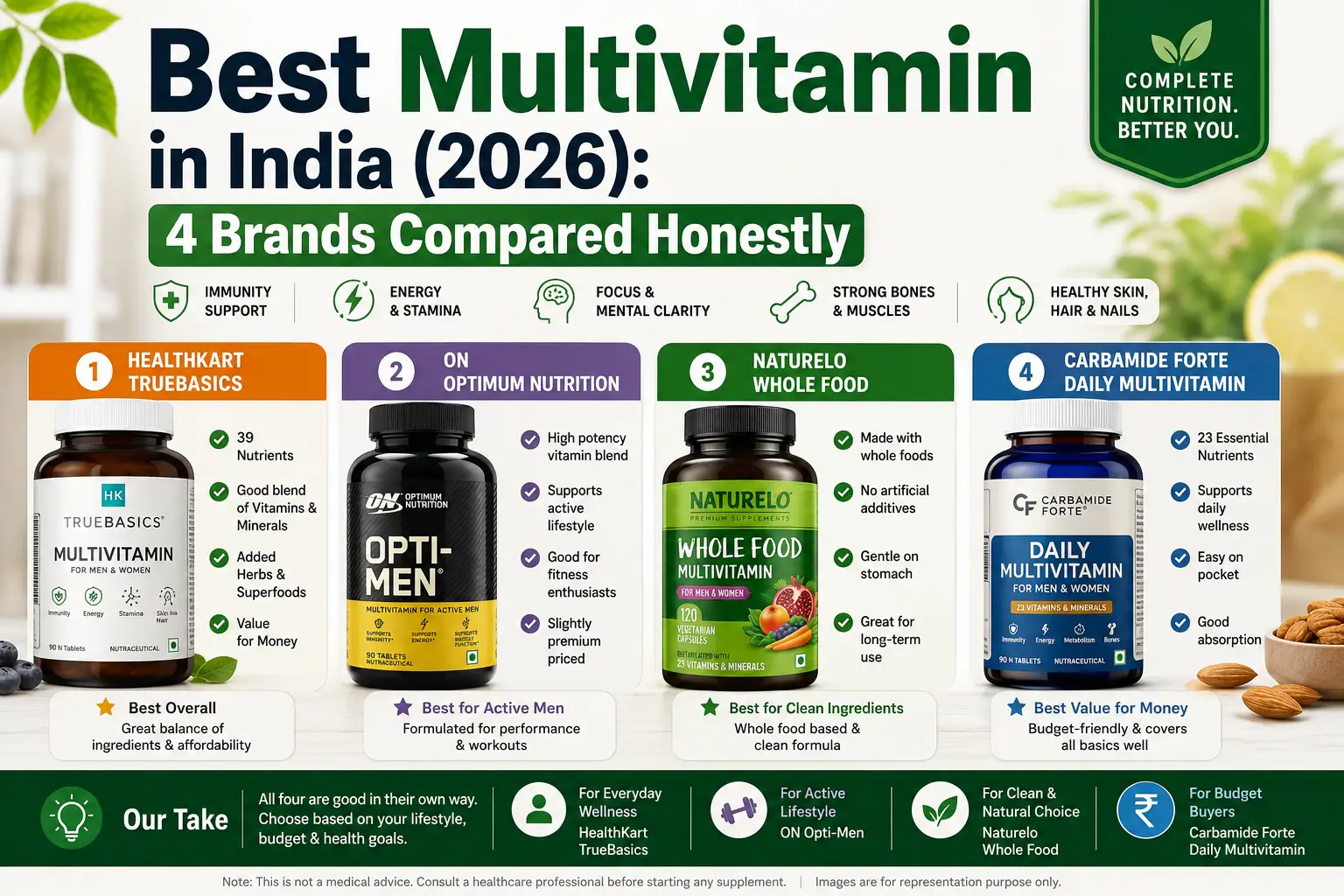
Best Multivitamin in India (2026): 4 Brands Compared Honestly
Centrum, Revital, HK Vitals and MuscleBlaze MB-Vite compared on what is actually in them — plus the honest answer to whether you need a multivitamin at all.
24 min read
Best Protein Bars in India 2026: RiteBite vs Yogabar vs MuscleBlaze
All three flagship bars deliver exactly 20g of protein, so the protein number tells you nothing. What separates them is saturated fat, fibre, polyol load — and a cost per gram of protein roughly three times what whey costs.