Ashwagandha Benefits, Dosage & Side Effects: The Honest Guide for Indians (2026)
Ashwagandha reduces cortisol by up to 32% in clinical studies — but most Indians are taking the wrong form or the wrong dose. Complete 2026 guide covering proven benefits, KSM-66 vs Patanjali, exact dosage, and which brands are actually worth buying.

Medical Safety Note: This article is for general educational purposes only and is not a substitute for professional medical advice, diagnosis, or treatment. If you are pregnant, managing a condition like diabetes, PCOS, or thyroid disorder, or taking medication, please consult a qualified doctor or registered dietitian before changing your diet, supplements, or exercise routine.
Affiliate Disclosure: This post contains affiliate links. If you buy through them, we may earn a small commission at no extra cost to you — this never affects our recommendations. We only suggest products we believe in. Learn more.
A colleague of mine spent three months complaining about terrible sleep and constant fatigue. His doctor ran tests — everything came back normal. A nutritionist friend suggested ashwagandha. Six weeks later, he was sleeping through the night and his energy had visibly improved.
I started researching it properly after that. I went through the clinical studies, compared brands, and tried to separate what the science actually supports from what supplement marketing has exaggerated.
This is what I found — no brand bias, no hype.
What Is Ashwagandha? (And Why Indians Should Pay Attention)
Ashwagandha (Withania somnifera) is a small shrub native to India, North Africa, and the Middle East. In Ayurveda, it has been used for over 3,000 years as a Rasayana — a rejuvenating herb associated with strength, vitality, and longevity.
The name translates to "smell of horse" in Sanskrit — a reference to its distinctive odour and the traditional belief that it gives you horse-like stamina. Whether or not you believe in that metaphor, the modern clinical research is more interesting than the folklore.
It is classified as an adaptogen — a compound that helps the body regulate its response to physical and psychological stress. Unlike stimulants that force energy, adaptogens work by modulating the stress-hormone system.
What makes it work: Ashwagandha's active compounds are called withanolides — steroidal lactones concentrated in the root. The potency of any ashwagandha product depends almost entirely on withanolide concentration, which varies dramatically between brands. A cheap generic capsule and a standardised KSM-66 extract are not the same product.
What Does the Research Actually Support?
Here is an honest, study-by-study breakdown — separating what is well-established from what is still being investigated.
✅ Strongly Supported — Multiple Studies Agree
1. Stress and Anxiety Reduction
This is ashwagandha's best-documented benefit and the reason it deserves serious attention in a country where chronic workplace and lifestyle stress is an epidemic.
The mechanism is straightforward: ashwagandha reduces serum cortisol — the hormone your adrenal glands release when you are under stress. Chronically elevated cortisol causes anxiety, disrupts sleep, drives belly fat accumulation, and impairs immune function.
Research findings:
- A 2019 study in Medicine found that 240mg of ashwagandha extract daily for 60 days reduced cortisol by 22.2% compared to placebo
- Perceived stress scores improved by 44% in the ashwagandha group
- A separate study found cortisol reductions of up to 32% at 600mg/day
For context: 22–32% cortisol reduction is clinically significant. Most pharmaceutical anxiolytics work through entirely different mechanisms, and few herbal compounds show effects of this magnitude in controlled trials.
2. Sleep Quality Improvement
Ashwagandha's sleep benefits are directly connected to its cortisol-lowering effect — high evening cortisol is a primary driver of insomnia and poor sleep quality. A secondary mechanism involves triethylene glycol (TEG), a compound in ashwagandha leaves that has demonstrated direct sleep-inducing effects in animal models.
A 2020 double-blind study found that 300mg of KSM-66 taken twice daily improved:
- Time to fall asleep
- Total sleep time
- Morning alertness and energy
3. Testosterone and Male Fertility
This is the benefit most Indian men search for — and the evidence is genuinely supportive, with an important caveat.
Study findings:
- A 2010 study in Fertility and Sterility showed significant improvement in sperm count, motility, and testosterone in infertile men
- A 2015 study found 17% testosterone increase in resistance-trained men taking 300mg KSM-66 twice daily for 8 weeks
- Luteinizing hormone (LH) — the hormone that signals testosterone production — also increased in most studies
The caveat: The testosterone benefit appears most pronounced in men who are stressed, sleep-deprived, or have lower baseline levels. If your testosterone is already in a healthy range and your lifestyle is solid, the effect will be modest.
4. Physical Performance and Muscle Strength
A 2015 study in the Journal of the International Society of Sports Nutrition placed 57 men into two groups — ashwagandha (300mg KSM-66 twice daily) or placebo — for 8 weeks of resistance training. Results:
- Significantly greater gains in muscle strength (bench press and leg extension)
- Greater muscle size increase
- Reduced exercise-induced muscle damage (measured via creatine kinase levels)
- Better cardiorespiratory endurance (VO2 max improvement)
For gym-goers, this is not a replacement for creatine or whey protein — but it is a meaningful complement, particularly for recovery and long-term strength progression.
⚠️ Promising — More Research Needed
5. Blood Sugar and Insulin Sensitivity
Early studies suggest ashwagandha may improve insulin sensitivity and reduce fasting glucose in people with type 2 diabetes or pre-diabetes. Results across studies are inconsistent and the effect size is modest. It can be considered a supportive measure — not a treatment.
6. Thyroid Function
Some studies show increases in T3 and T4 thyroid hormone levels. This could benefit people with hypothyroidism. However, people with hyperthyroidism (overactive thyroid) should avoid ashwagandha entirely — it may worsen the condition.
7. Weight Management
Ashwagandha does not directly burn fat. The weight-related benefits work through indirect pathways:
- Lower cortisol → less stress-related belly fat storage
- Better sleep → improved hunger hormone regulation (ghrelin and leptin)
- More muscle → higher resting metabolism
If you are expecting a fat-burning supplement, ashwagandha will disappoint. If you are dealing with stress-driven weight gain or cortisol-driven appetite dysregulation, it can genuinely help.
Pairing ashwagandha with a steady, affordable protein source in your diet makes the muscle-recovery benefits more noticeable. Peanut butter is one of the cheapest options for this — see our comparison of the best peanut butter brands in India if you want a practical, everyday pick.
KSM-66 vs Sensoril vs Patanjali — What Should Indians Actually Buy?
This is where most guides fail Indian readers — generic comparisons that don't account for what's actually available and affordable in India.
← Swipe to compare →
| Type | Withanolide % | Best For | India Availability |
|---|---|---|---|
| KSM-66 | 5% | All-round — most studied | Widely available online |
| Sensoril | 10% | Stress and sleep | Limited availability |
| Patanjali Churna | 1-3% | Traditional Ayurvedic use | Every pharmacy in India |
| Himalaya Tablets | Standardised (exact % not disclosed) | Reliable, affordable, accessible | Every pharmacy in India |
| Generic capsules | Unknown | Unpredictable | Everywhere — avoid |
Honest assessment:
KSM-66 is the gold standard. It appears in the majority of the well-designed clinical trials cited in this guide. When a study shows ashwagandha benefits, it is almost always KSM-66 that was tested.
Patanjali Churna is the traditional form and widely trusted. It works — but the withanolide concentration is significantly lower, which means you need higher quantities for similar effects. It is ideal if you prefer the Ayurvedic approach (warm milk preparation) and are not seeking athletic performance benefits specifically.
Himalaya Ashwagandha sits between the two — standardised extract, reliable quality control, available at every medical store in India, and priced accessibly. For most Indians who want a trusted, affordable starting point, Himalaya is a reasonable choice.
Himalaya Ashwagandha Tablets — 60 Tablets
India's most trusted herbal brand. Standardised ashwagandha root extract in tablet form — no prescription needed. AYUSH certified, consistent quality control, available at every pharmacy and on Amazon India. Best entry-level ashwagandha for beginners.
Carbamide Forte KSM-66 Ashwagandha — 1000mg, 60 Capsules
Clinically studied KSM-66 extract at 1000mg per capsule — the same form used in most major ashwagandha research. Third-party tested, no fillers. Best choice for stress reduction, testosterone support, and gym performance benefits.
Organic India Ashwagandha Capsules — 60 Capsules
Certified organic ashwagandha root extract from one of India's most respected herbal brands. USDA organic, non-GMO, standardised extract. Premium option for those who prioritise organic certification and brand transparency.
📖 Read Also:
KSM-66 vs Himalaya vs Patanjali Ashwagandha — Which is Best in India?Full head-to-head of India's three most-bought ashwagandha options — extract strength, withanolide percentage, clinical backing, and price per effective dose. Clear verdict by use case.
Correct Dosage — Exact Numbers by Goal
← Swipe to compare →
| Goal | Dose | Form | Timing |
|---|---|---|---|
| Stress and anxiety | 300–600mg/day | KSM-66 extract | Morning or split |
| Sleep improvement | 300mg | KSM-66 or Sensoril | 30 min before bed |
| Athletic performance | 300mg twice daily | KSM-66 | Morning + pre/post workout |
| Testosterone support | 300–600mg/day | KSM-66 | Morning or split |
| Traditional Ayurvedic | 1–2 tsp in warm milk | Raw churna | Night before bed |
There is a ceiling effect with ashwagandha. Doses above 600mg per day show diminishing returns in most studies and increase the likelihood of digestive side effects. More is not better here — stick to the 300–600mg range.
When to Take Ashwagandha — Before or After Workout?
This is one of the most searched questions among gym-goers in India, and most guides do not answer it specifically.
For gym performance: Take 300mg approximately 30–60 minutes before your workout. Ashwagandha's cortisol-lowering effect reduces exercise-induced cortisol spikes, which may improve strength output and reduce post-workout muscle soreness.
For testosterone and recovery: Take 300mg post-workout or in the evening. Recovery is when testosterone production and muscle repair are most active.
For sleep: Take 300mg 30–45 minutes before bed — ideally in warm milk (see preparation guide below).
Most practical approach for gym-goers: 300mg in the morning with breakfast, 300mg at night before bed. This covers performance, recovery, and sleep simultaneously — which is the protocol used in most athletic performance studies.
Can You Take Ashwagandha With Creatine or Whey?
Yes — and the combination is actually synergistic for gym performance.
Ashwagandha + Creatine: Both supplements improve strength and muscle recovery through different mechanisms. Creatine works on ATP regeneration (immediate energy system). Ashwagandha works on stress hormones and inflammatory response. They do not interact negatively and complement each other well.
Ashwagandha + Whey Protein: No interaction. Ashwagandha's anti-catabolic properties (reducing muscle damage) complement whey's role in muscle protein synthesis. Standard timing applies — ashwagandha with food, whey post-workout.
Ashwagandha + Collagen: Another sensible pairing for anyone past their mid-20s. Ashwagandha supports recovery and stress hormones, while collagen targets joint and skin health — two areas that whey and creatine do not address. See our guide to collagen supplements in India if you want to understand which type (marine vs bovine) suits your goals.
What to avoid combining:
- Ashwagandha + thyroid medication (may amplify effects)
- Ashwagandha + sedatives or anti-anxiety drugs (may compound sedative effects)
- Ashwagandha + immunosuppressants (may counteract)
If you are already taking creatine and looking for the next supplement to add, ashwagandha is a logical choice — particularly if you are under regular stress, have poor sleep, or want additional recovery support. Add one supplement at a time so you can assess the individual effect.
📖 Read Also:
AS-IT-IS vs MuscleBlaze Creatine — Which is Better for Indians?If you are combining ashwagandha with creatine, here is the honest comparison of the two best creatine brands in India.
How Long Before You See Results?
Ashwagandha is not an instant fix. The effects accumulate over weeks.
← Swipe to compare →
| Timeline | What You May Notice |
|---|---|
| Week 1–2 | Mild reduction in anxiety, slightly easier to fall asleep |
| Week 3–4 | Noticeable reduction in stress response, improved energy |
| Week 6–8 | Measurable changes in sleep quality, strength, and possibly testosterone |
| Week 10–12 | Full cumulative benefits across all areas |
Most people who stop after 2–3 weeks and say "it didn't work" simply did not give it long enough. The standard research protocol is 8–12 weeks minimum.
Side Effects — What Is Real and What Is Exaggerated
Common side effects at standard doses (rare):
- Mild digestive upset — nausea, loose stools in the first week
- Drowsiness — particularly at higher doses or evening use
- Mild headache in the first few days
Who must avoid ashwagandha:
← Swipe to compare →
| Condition | Why |
|---|---|
| Pregnancy | May stimulate uterine contractions — serious risk |
| Hyperthyroidism | May worsen elevated thyroid hormones |
| Autoimmune conditions (lupus, RA) | Stimulates immune activity — may flare symptoms |
| Immunosuppressant medications | May counteract drug effects |
| Surgery within 2 weeks | May interact with anaesthesia |
Consult your doctor before taking ashwagandha if you are on prescription medication for thyroid, blood sugar, blood pressure, or anxiety. The herb can interact with these medications — sometimes amplifying effects beyond what is intended.
Ashwagandha for Women — Complete Picture
Yes, ashwagandha is beneficial and safe for most women. The research is less extensive than for men, but several benefits are well-documented:
- PCOS: Cortisol reduction and potential thyroid support are both relevant for PCOS management. High cortisol dysregulates the HPA axis, which affects the hormonal environment in PCOS.
- Stress and burnout: The cortisol-lowering benefit applies equally to women — arguably more so given that women in India often carry both professional and household stress loads simultaneously.
- Sexual function: A 2015 study specifically in women found improved sexual function scores, lubrication, and satisfaction in the ashwagandha group compared to placebo.
- Energy and fatigue: Particularly useful for women experiencing burnout or perimenopausal fatigue.
Avoid during pregnancy — the risk of stimulating uterine contractions is not worth taking. Safety during breastfeeding has not been adequately studied.
📖 Read Also:
Ashwagandha for Women: PCOS, Hormones, Thyroid & Dosage Guide (India 2026)For the full picture on PCOS, thyroid, and fertility-specific effects — including what your doctor may not have mentioned — see our dedicated guide for women.
Ashwagandha With Milk — The Traditional Preparation
The Ayurvedic route is not just cultural — there is a practical reason for it. Fat-soluble compounds (including withanolides) absorb better in the presence of dietary fat. Warm milk with a small amount of ghee creates a natural delivery vehicle.
Ashwagandha Milk (Sleep and Recovery Drink):
- Warm 250ml whole milk (do not boil)
- Add 1 teaspoon ashwagandha churna or open a 300mg capsule into the milk
- Add a pinch of cardamom and a small pinch of cinnamon
- Add 1/4 teaspoon ghee (optional — improves absorption)
- Allow to cool slightly, then add 1 teaspoon honey
- Drink 30–45 minutes before bed
This preparation is genuinely pleasant, deeply rooted in Ayurvedic tradition, and works well. If you find capsules cause stomach discomfort, the milk preparation is often better tolerated.
Common Myths — Addressed Directly
"Ashwagandha will build big muscles" It supports muscle recovery and reduces cortisol-driven muscle breakdown — but it is not anabolic in the way testosterone or creatine are. Without training, it will not build muscle. With training, it improves the quality of adaptation.
"Higher dose = better results" There is a clear ceiling effect above 600mg/day. More is not better and increases side effect risk. Stick to 300–600mg.
"Take it every day forever" Cycling is a reasonable approach: 8–12 weeks on, 4 weeks off. This prevents tolerance development and allows your body to maintain natural cortisol regulation sensitivity.
"All ashwagandha is the same" The single biggest mistake most buyers make. A ₹100 generic ashwagandha powder and a ₹600 KSM-66 capsule are completely different products in terms of withanolide concentration and bioavailability. If you have ever tried ashwagandha and felt nothing, there is a reasonable chance you were taking an underdosed or poorly standardised product.
"Patanjali ashwagandha is just as good as KSM-66" Patanjali churna is a traditional product with a genuine place in Ayurvedic practice. For the specific benefits covered in clinical research — cortisol reduction, testosterone support, athletic performance — standardised KSM-66 extract is more reliably potent. Both have value depending on your goal.
Ashwagandha for Weight Loss — Honest Assessment
This is heavily searched in India, so it deserves a dedicated section with an honest answer.
Ashwagandha does not directly burn fat.
What it does:
- Reduces cortisol → High cortisol specifically promotes belly fat storage. Lowering it reduces this tendency.
- Improves sleep → Poor sleep elevates ghrelin (hunger hormone) and reduces leptin (satiety hormone). Better sleep = better appetite regulation.
- Builds muscle → More muscle mass increases your basal metabolic rate, meaning you burn more calories at rest.
- Reduces stress eating → By lowering anxiety levels, ashwagandha may reduce emotionally-driven food intake for some people.
Realistic expectation: If your weight gain is partly driven by chronic stress, elevated cortisol, and poor sleep — ashwagandha can genuinely support fat loss. If your excess weight is simply from overeating and under-exercising, ashwagandha alone will not move the needle.
Simple Beginner Protocol
Week 1–2: Start with 300mg per day at night with warm milk. Assess tolerance — any digestive discomfort usually resolves in the first week.
Month 1: 300mg per night consistently. Track sleep quality, energy levels, and stress response subjectively.
Month 2: If you are tolerating it well and want to maximise benefits, add a second 300mg dose in the morning with breakfast.
Month 3: Assess results. If benefits are clear, continue. Plan a 4-week break after 12 weeks.
Minimum assessment period: 8 weeks. Ashwagandha works cumulatively. Judging it before 6–8 weeks is premature.
📖 Read Also:
Ashwagandha vs Shilajit: Which Do You Need? (2026)They solve different problems — ashwagandha lowers cortisol and stress, shilajit targets energy and testosterone. Full comparison to pick the right one for your goal.
Frequently Asked Questions
What is the recommended Ashwagandha dosage for Indians?
The standard effective dose is 300–600mg of KSM-66 or standardised ashwagandha root extract per day. For stress and sleep, 300mg at night is a good starting point. For athletic performance and testosterone support, 300mg twice daily (morning and evening) is used in most successful studies. Traditional churna preparation uses 1–2 teaspoons in warm milk.
What is the best time to take Ashwagandha?
Depends on your goal. For sleep improvement: 30–45 minutes before bed in warm milk. For gym performance: 30–60 minutes pre-workout. For general stress relief: with breakfast. For both sleep and performance: split the dose — morning and night.
How long does Ashwagandha take to work?
Mild stress and sleep improvements are often noticeable within 2–4 weeks. Significant changes in strength, stamina, and testosterone typically require 8–12 weeks of consistent daily use. Ashwagandha is not a stimulant — effects are cumulative, not immediate.
Is Ashwagandha safe for women in India?
Yes, for most women. It effectively reduces cortisol, supports thyroid function, and may improve sexual function and energy. It is particularly relevant for women with PCOS or hormonal stress-related symptoms. Pregnant women should not take it. Breastfeeding women should consult a doctor.
Can I take Ashwagandha with creatine and whey protein?
Yes. Ashwagandha, creatine, and whey protein work through different mechanisms and complement each other well for gym performance. No negative interactions between them. Avoid combining ashwagandha with thyroid medication, sedatives, or immunosuppressants without medical guidance.
Which is better — Himalaya Ashwagandha or KSM-66?
They serve different needs. Himalaya ashwagandha is standardised, affordable, widely trusted, and a reliable entry point. KSM-66 is the form used in most clinical research and delivers more precisely measured withanolide content — making it preferable when you want the specific benefits studied (stress reduction, testosterone, athletic performance). If budget allows, choose KSM-66. If you want the most accessible trusted option, Himalaya is fine.
What is the difference between Patanjali Ashwagandha and KSM-66?
Patanjali ashwagandha churna is a traditional preparation with 1–3% withanolide content. KSM-66 is a standardised extract concentrated to 5% withanolides — the form tested in almost all major clinical trials. Both are genuine ashwagandha. KSM-66 is more potent per gram and more reliably dosed. Patanjali churna is better for traditional Ayurvedic use and the milk preparation.
Are there side effects of Ashwagandha?
At recommended doses (300–600mg), side effects are uncommon. Some people experience mild digestive upset or drowsiness in the first week. High doses over a prolonged period have been linked to rare cases of liver stress. This is preventable by sticking to recommended doses and cycling off every 12 weeks.
Should I cycle Ashwagandha?
Cycling is a reasonable approach — 8–12 weeks on, 4 weeks off. This prevents tolerance and preserves your body's natural cortisol regulation sensitivity. Continuous use for years without a break is not necessarily harmful for most people, but taking periodic breaks is a sensible practice.
📖 Read Also:
Creatine for Women India — Complete Safety Guide 2026If you are considering ashwagandha for stress and hormonal balance, creatine is a complementary supplement worth understanding — especially for Indian women.
📖 Read Also:
Best Whey Protein for Beginners in India 2026Building a supplement stack? Whey protein is the logical foundation — here is the complete beginner guide with honest brand reviews.
📖 Read Also:
Best Multivitamin in India — 4 Brands ComparedSeveral Indian multivitamins now include ashwagandha or ginseng at token doses. Here is how to tell a real dose from a marketing checkbox on the label.
References
The guidance in this article is based on the following peer-reviewed research and public health guidance. Always discuss changes to your diet, supplements, or medication with a qualified doctor or registered dietitian.
- Chandrasekhar K, et al. A prospective, randomized double-blind, placebo-controlled study of safety and efficacy of a high-concentration full-spectrum extract of ashwagandha root in reducing stress and anxiety in adults. Indian J Psychol Med (2012)
- National Center for Complementary and Integrative Health (NIH). Ashwagandha — Usefulness and Safety
- Efficacy and Safety of Ashwagandha Root Extract — clinical evidence review, PMC
Free Tools to Help You
Put this article into action — use our free calculators to get your personalized numbers.
Was this article helpful?
Want More Tips Like This?
Join 1,000+ readers getting weekly fitness, diet, and wellness tips + FREE meal plan
No spam, ever. Unsubscribe anytime.

About the Author: Ashwani
Fitness enthusiast and wellness writer. I research supplements, Indian diet strategies, and evidence-based health habits — and only recommend things I have personally studied and would use myself.
Read more about us →Comments
Leave a Comment
Your email will not be published. Comments are reviewed before appearing.
You Might Also Like
Continue your wellness journey
16 min read
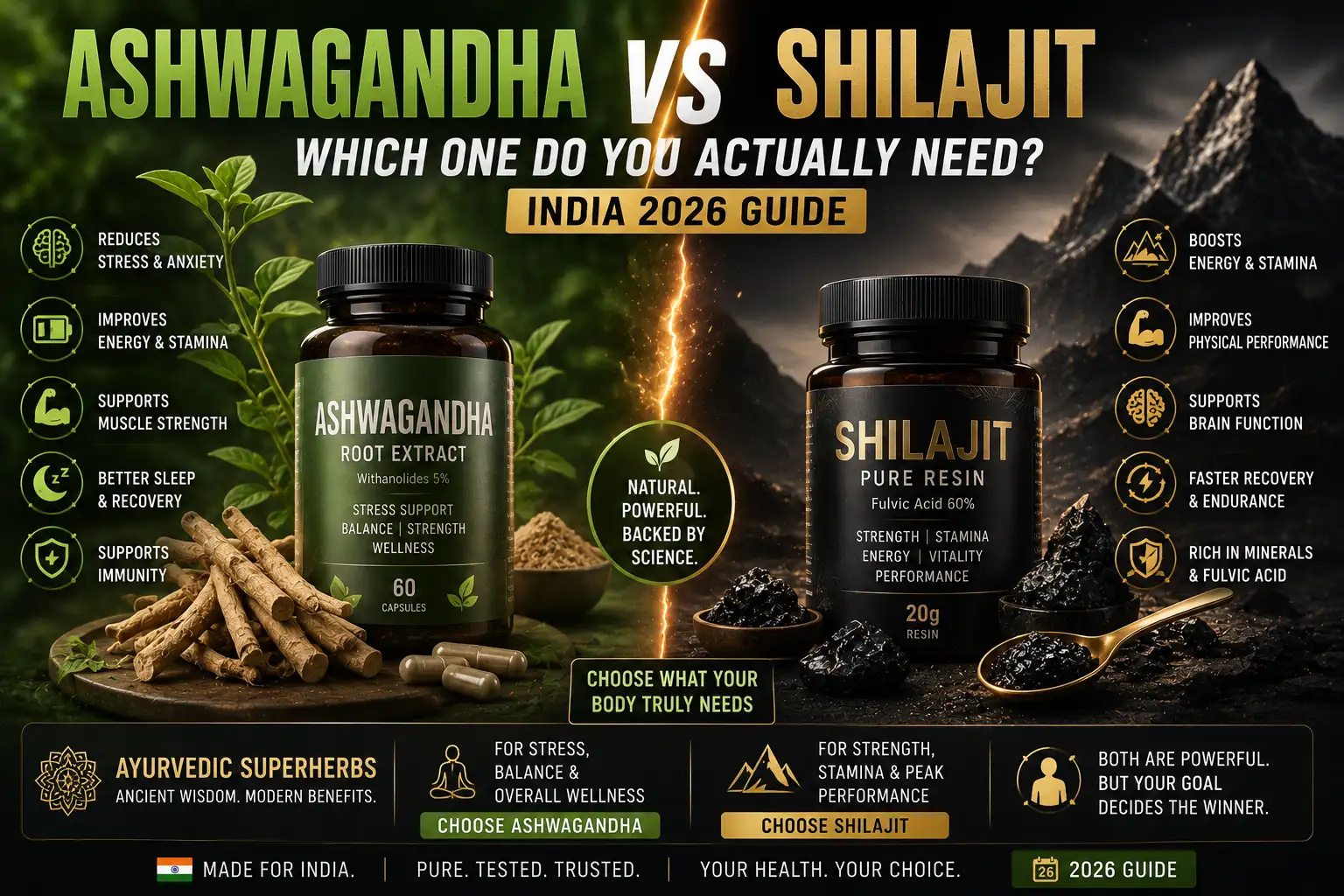
Ashwagandha vs Shilajit: Which Do You Need? (2026)
Ashwagandha vs Shilajit — stress-relief vs raw stamina. We compare their mechanisms, clinical evidence, benefits for men and women, gym performance, side effects, and how to stack both.
19 min read
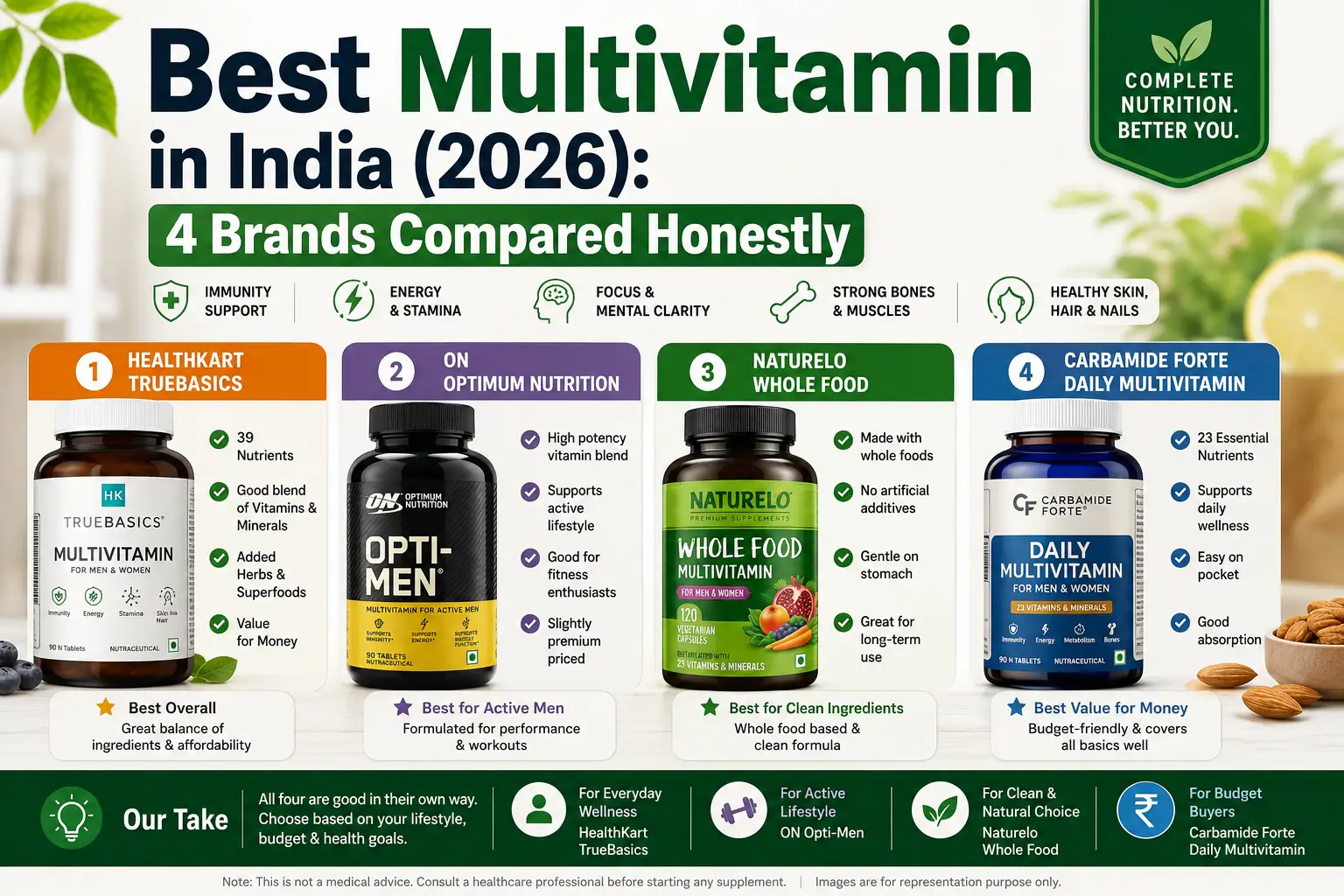
Best Multivitamin in India (2026): 4 Brands Compared Honestly
Centrum, Revital, HK Vitals and MuscleBlaze MB-Vite compared on what is actually in them — plus the honest answer to whether you need a multivitamin at all.
22 min read
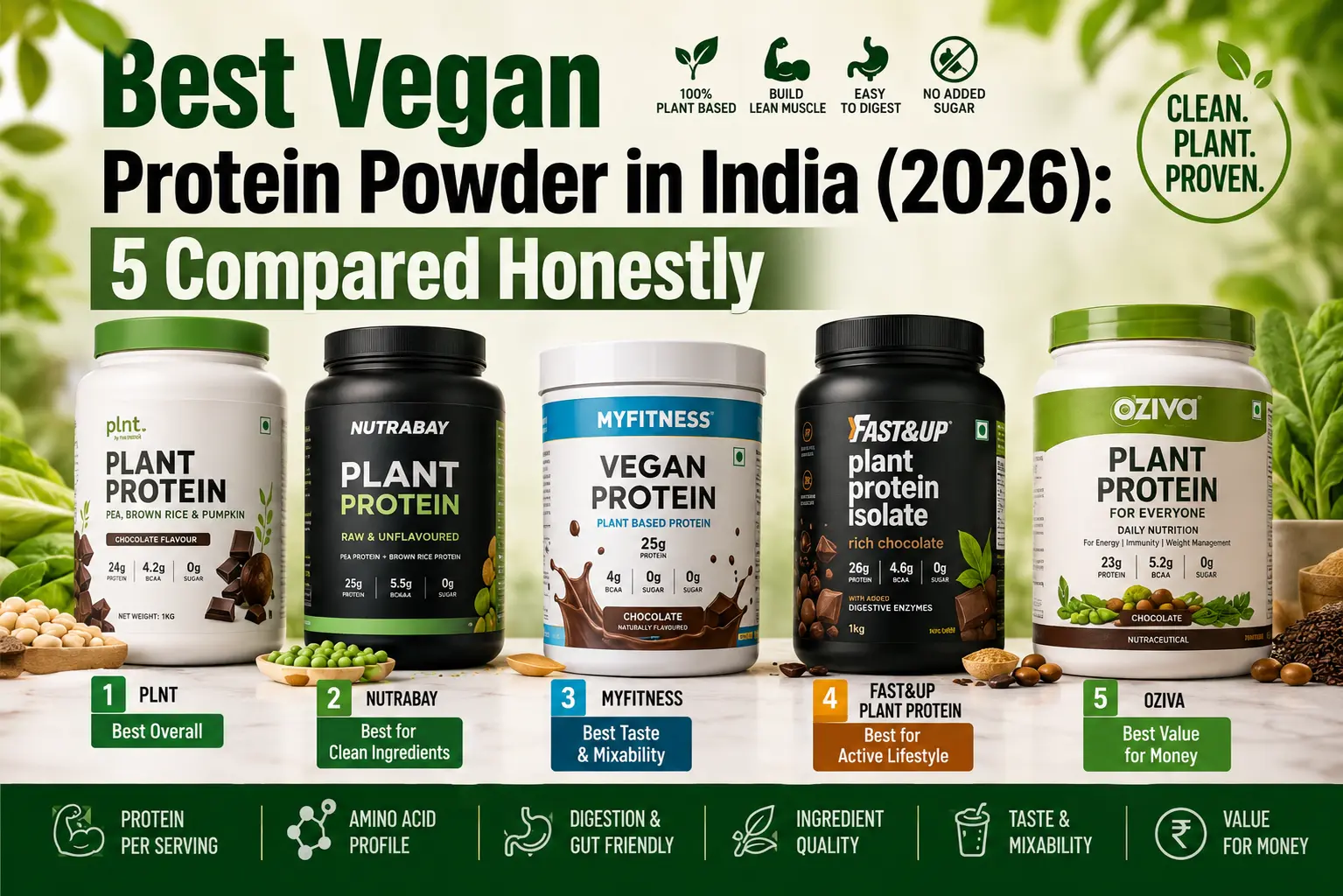
Best Vegan Protein Powder in India (2026): 5 Compared Honestly
Pea, soy and blended plant proteins sold in India, compared on protein per scoop, amino acid completeness, and the thing every other guide skips — whether you will actually finish the tub.