Office Worker Fitness Routine: Fix Back Pain, Posture & Belly Fat (Desk-Friendly)
Sitting 8+ hours a day is silently damaging your posture, back, and waistline. This desk-friendly fitness routine for Indian office workers fixes all three — no gym membership needed.

Medical Safety Note: This article is for general educational purposes only and is not a substitute for professional medical advice, diagnosis, or treatment. If you are pregnant, managing a condition like diabetes, PCOS, or thyroid disorder, or taking medication, please consult a qualified doctor or registered dietitian before changing your diet, supplements, or exercise routine.
Most Indian office workers, IT professionals, and WFH employees spend 8–10 hours sitting every day. Over weeks and months, this creates a slow accumulation of damage that shows up as back pain, neck stiffness, belly fat, and constant fatigue — long before it becomes a medical diagnosis.
The good news: you do not need to quit your job or spend hours in the gym. You need a realistic routine that fits inside your workday. This guide gives you exactly that — desk stretches, a complete workout plan, posture fixes, and daily habits that undo what sitting does to your body.
Why Prolonged Sitting is Damaging Your Body
The human body was not designed to remain still for 8–10 hours. When you sit for extended periods, several things happen simultaneously:
- Hip flexors tighten and shorten — because they are held in a contracted position for hours. This directly causes lower back pain, because tight hip flexors tilt the pelvis forward.
- Glutes become weak and inactive — a phenomenon researchers call "gluteal amnesia." Weak glutes shift load to the lower back and knees.
- Thoracic spine rounds — the mid-back curves forward as you hunch toward a screen, leading to the typical office worker posture: rounded shoulders, forward head, tight chest.
- Blood circulation slows — muscles are the body's primary pump for returning blood to the heart. Stationary muscles mean slower circulation, which contributes to fatigue, brain fog, and swollen feet.
- Metabolism drops — prolonged sitting suppresses the enzyme lipoprotein lipase (LPL), which is responsible for fat breakdown. This is why desk workers gain abdominal fat even without overeating.
Research published in the Annals of Internal Medicine found that people who sit for 8+ hours daily have a 15–20% higher risk of cardiovascular disease, type 2 diabetes, and all-cause mortality — even if they exercise regularly. Movement throughout the day matters, not just one gym session.
The 20-20-2 Rule: Your Minimum Daily Habit
The simplest habit that counteracts prolonged sitting:
Every 20 minutes → Take a 20-second break → Move at least 2 steps
Set a phone alarm or use a free app like Stand Up! or StretchMinder. During each break:
- Stand up fully and straighten your spine
- Do a quick shoulder roll or neck stretch
- Walk to the water bottle or window
This is not about burning calories. It is about breaking the continuous hold that sitting places on your hip flexors, glutes, and thoracic spine. Two minutes of movement every 20 minutes throughout an 8-hour day adds up to nearly 50 minutes of accumulated movement — without a single gym visit.
Desk Posture Checklist: Fix This First
Poor posture causes more damage than most people realise. Before any exercise, fix your sitting position:
Correct posture setup:
- Screen at eye level — not below, which forces you to look down and strains the neck
- Back fully supported by the chair — not sitting on the edge or leaning forward
- Feet flat on the floor — not crossed or tucked under the chair
- Elbows at 90 degrees — keyboard at a height where your shoulders are relaxed
- Monitor 50–70 cm from your eyes — not right in front of your face
Common mistakes to stop immediately:
- Sitting cross-legged for long periods (compresses one side of the hip and tilts the pelvis)
- Resting your chin in your hand while reading — this pulls the neck sideways
- Turning your chair and body to a secondary screen repeatedly — use a proper dual-monitor setup at face height
- Leaning forward to read — zoom in on the screen instead
A correctly set up workstation reduces back and neck pain by 40–60% before any exercise is added.
5-Minute Desk Stretch Routine (Do 2–3 Times Daily)
These stretches target the exact muscles that tighten from sitting. Do them at your desk — no mat or equipment needed.
← Swipe to compare →
| Stretch | How to Do It | Duration |
|---|---|---|
| Neck tilt | Tilt ear toward shoulder gently, hold, switch sides | 20 sec each side |
| Shoulder rolls | Large, slow backward rotations | 15 reps |
| Chest opener | Clasp hands behind back, squeeze shoulder blades, lift chest | 30 sec |
| Wrist extension stretch | Extend arm forward, palm up, pull fingers back with other hand | 20 sec each |
| Seated spinal twist | Sit tall, rotate torso toward chair back, hold, switch | 30 sec each side |
| Standing hip flexor stretch | Step one foot forward into a lunge position, push hips forward gently | 30 sec each side |
Do all six in sequence — it takes exactly 5 minutes and immediately relieves the tension that builds from 2–3 hours of sitting.
10-Minute Movement Breaks (Once Every Hour)
Pick one or two of these every working hour to stay active without leaving your workspace:
- Walk briskly inside your home or office floor for 2 minutes
- Climb stairs — 1–2 floors up and down is equivalent to a short cardio burst
- 20 bodyweight squats next to your desk (one of the best movements to reactivate glutes)
- 10 wall push-ups (targets chest and shoulders without sweating)
- Calf raises while standing at your desk — 20 slow reps
- 30 seconds of marching in place with high knees
These micro-breaks take zero motivation because they require no preparation. The key is making movement the default response to any natural pause — a phone call, a loading screen, a meeting break.
Complete Office Worker Workout Plan
This routine is designed for before or after work. It directly targets the muscles most damaged by desk sitting: glutes, core, upper back, and hip flexors.
Beginner Level (15–20 Minutes/Day)
Warm-up (3 minutes): March in place, arm circles, slow neck rolls
← Swipe to compare →
| Exercise | Sets | Reps | What It Fixes |
|---|---|---|---|
| Chair squats | 3 | 12 | Reactivates glutes, strengthens legs |
| Wall push-ups | 3 | 10 | Strengthens chest, corrects rounded shoulders |
| Reverse lunges | 2 | 10 each leg | Hip flexor stretch + leg strength |
| Plank | 2 | 20–30 sec | Core stability, reduces back pain |
| Glute bridge | 3 | 15 | Directly targets inactive glutes |
Cooldown (2 minutes): Standing hamstring stretch + pigeon pose stretch
📖 Read Also:
Home Workout Plan for Indians 2026: No Gym, Real Results (Beginner to Advanced)This desk-fix routine is a starting point — once posture and mobility improve, this complete guide has the full beginner-to-advanced progression for building real strength at home.
Intermediate Level (25–30 Minutes/Day)
For those 4–6 weeks into regular exercise:
← Swipe to compare →
| Exercise | Sets | Reps |
|---|---|---|
| Full push-ups | 3 | 12 |
| Jump squats (or regular if knees are sensitive) | 3 | 15 |
| Mountain climbers | 3 | 30 sec |
| Plank | 3 | 45 sec |
| Superman hold | 3 | 30 sec |
| Bird dog | 3 | 12 each side |
Progress from beginner to intermediate when all beginner sets feel easy for two consecutive weeks.
If you travel for work or want to add resistance without setting up a full home gym, a set of portable bands fits easily into a desk drawer or laptop bag and adds intensity to glute and shoulder work in seconds.
📖 Read Also:
5 Best Resistance Bands for Home Workout in India (2026)Lightweight, desk-drawer-friendly bands that make glute bridges, rows, and shoulder work more challenging once bodyweight reps stop being tough enough.
Glutes and Core: The Two Muscles That End Back Pain
Lower back pain in office workers almost always traces back to two root causes: weak glutes (which cannot support the pelvis) and weak deep core muscles (which cannot stabilise the spine). Stretching helps, but strengthening these muscles eliminates the root cause.
Targeted mini-routine (3–4 times per week, 10 minutes):
- Glute bridge: 3 sets of 20 reps. Lie on back, knees bent, push hips up by squeezing glutes. Hold at top for 2 seconds.
- Bird dog: 3 sets of 12 each side. On hands and knees, extend opposite arm and leg simultaneously. Keep core braced and back flat.
- Side plank: 2 sets of 20–30 seconds each side. Builds oblique strength which supports the spine from the sides.
- Lying leg raises: 3 sets of 12. Lie flat, raise straight legs to 45 degrees and lower slowly — directly targets lower abs.
Most people see significant back pain reduction within 4–6 weeks of consistent glute and core work.
Diet and Hydration for Desk Workers
Hydration
Dehydration causes fatigue that most people mistake for hunger or sleepiness. Desk workers often drink tea or coffee to combat this fatigue — which further dehydrates them.
Simple rule: Keep a 1-litre water bottle on your desk. Refill it once. That is your 2-litre daily minimum. Add lemon, jeera, or mint if plain water is unappealing.
Signs you are chronically dehydrated: afternoon headaches, difficulty concentrating after lunch, dark yellow urine, and feeling hungry soon after eating.
Snacks
Replace the biscuits, namkeen, and cold drinks that most office workers rely on with these:
- Handful of mixed nuts (almonds, walnuts) — slow-release energy, no blood sugar spike
- Fruit — banana, apple, or guava
- Roasted chana or makhana — high protein, very low calorie
- Buttermilk (chaas) — gut-friendly, hydrating, virtually zero calorie
- A small piece of dark chocolate (70%+) — satisfies cravings without derailing diet
The Lunch Mistake
The biggest diet error for desk workers: eating lunch at the desk, mindlessly, then feeling sleepy. Eat lunch away from your screen, take 5–10 minutes to walk afterward, and eat a protein-heavy lunch (dal, paneer, eggs, chicken) which prevents the post-lunch energy crash.
The 20-20-20 Rule for Eye Health
Every 20 minutes, look at something 20 feet away for 20 seconds.
Digital eye strain causes headaches, blurred vision, and dry eyes — which drain energy and reduce concentration. The 20-20-20 rule gives your eye muscles the regular relaxation they need. Blink consciously during the 20 seconds to remoisten eyes.
Additionally: reduce screen brightness to match room lighting, avoid sitting directly under harsh fluorescent lighting, and use night mode after 7 PM.
Daily Routine Blueprint for Indian Office Workers
← Swipe to compare →
| Time | Action |
|---|---|
| 6:30–7:00 AM | 15–20 min workout (beginner or intermediate plan) |
| Every 20 min at desk | 20-second stretch or stand |
| Every 60 min | 5–10 min movement break (walk, squats, stairs) |
| Lunch | Eat away from desk, 5-min walk after |
| 3–4 PM | Desk stretch routine (5 min) |
| Evening | 20–30 min brisk walk or yoga |
| 9:30 PM | Stop screens, prepare for 7–8 hrs sleep |
Consistency over 4 weeks produces visible, measurable changes in posture, back pain levels, and energy throughout the workday.
Frequently Asked Questions
What exercises can office workers do at their desk during work hours?
Simple desk exercises that require no equipment: shoulder rolls and neck stretches every hour, seated spinal twists, calf raises while standing, wrist and forearm stretches, and standing hip flexor stretches. Even standing up and walking for 2 minutes every hour significantly reduces the negative health effects of prolonged sitting. The 20-20-2 rule — move every 20 minutes — is the easiest habit to start with.
How can I fix my posture after sitting at a desk all day?
Posture improvement requires two things simultaneously: strengthening the muscles that hold you upright (glutes, core, upper back) and stretching the muscles that tighten from sitting (chest, hip flexors, hamstrings). Adjust your workstation so your screen is at eye level and your chair supports your lower back. Results from consistent posture exercises appear in 4–6 weeks.
How often should I take breaks from sitting at work?
Research recommends a movement break every 30–60 minutes at minimum. A 2-minute walk every 30 minutes is more effective than a longer break every 2 hours. The most practical approach is the 20-20-2 method — a 20-second movement every 20 minutes — which accumulates significant total daily movement without disrupting workflow.
What is the best workout routine for desk job workers in India?
The ideal routine: 3 days of strength training focusing on glutes, core, and back (targeting the muscles most damaged by sitting), 2 days of 30-minute brisk walking, and a daily 5–10 minute desk stretch routine. This combination counteracts the specific muscular imbalances caused by prolonged desk work and can be completed without a gym.
Can back pain from sitting all day be fixed with exercises?
In most cases, yes. Non-specific lower back pain from prolonged sitting responds very well to targeted strengthening of the glutes and deep core muscles combined with stretching of tight hip flexors and hamstrings. Most people see significant pain reduction within 4–6 weeks of consistent exercise. If pain is severe or radiates down the leg, consult a physiotherapist before starting.
Related Reading
- Fitness After 40 Beginners Guide
- Healthy Snacks for Office and Evening Cravings
- Beginner Yoga Poses for Stress Relief and Flexibility
- Stress and Weight Gain Connection
- Walking for Weight Loss Beginners Guide
- Best Walking Pads in India — if your step count collapses on work days, this is the desk-bound fix
- Best Resistance Bands in India — for the 3 strength days this routine asks for
- Best Massage Guns in India — for the rounded-shoulder and upper-back tightness described above, with an honest note on where you must not use one
Free Tools to Help You
Put this article into action — use our free calculators to get your personalized numbers.
Was this article helpful?
Want More Tips Like This?
Join 1,000+ readers getting weekly fitness, diet, and wellness tips + FREE meal plan
No spam, ever. Unsubscribe anytime.

About the Author: Ashwani
Fitness influencer and wellness writer helping Indians build healthier lifestyles.
Read more about us →Comments
Leave a Comment
Your email will not be published. Comments are reviewed before appearing.
You Might Also Like
Continue your wellness journey

26 min read
Monsoon Fitness India (2026): Home Workout & Diet Guide
Monsoon in India kills most fitness routines. Skipped gym days, muddy roads, low motivation, and seasonal infections derail months of progress. Here is your complete guide to stay fit, build immunity, and actually thrive during the Indian rainy season — workouts, diet, calorie data, and a 4-week progressive plan.
15 min read
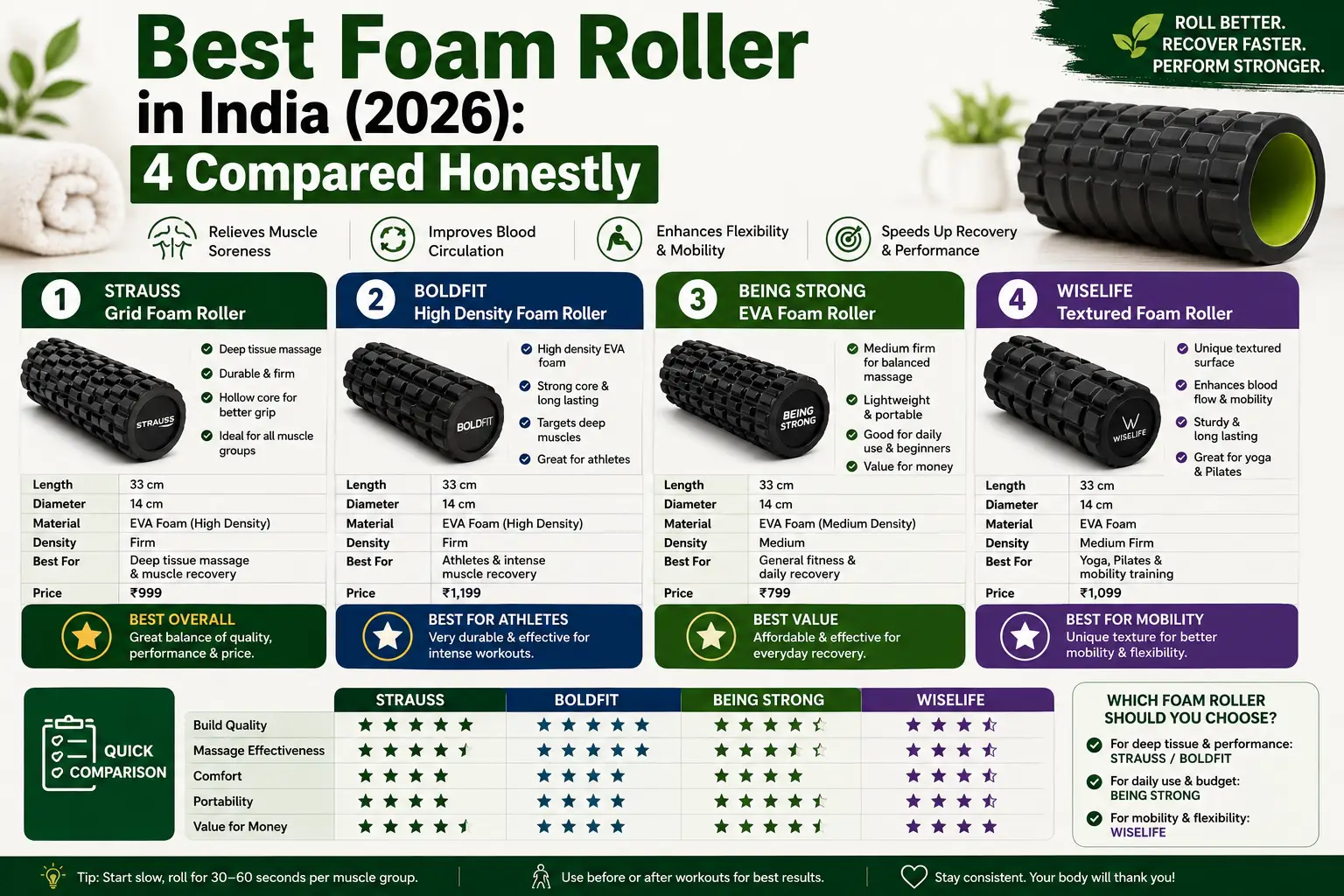
Best Foam Roller in India (2026): 4 Compared Honestly
Boldfit and Strauss foam rollers compared on density, size and rating data — plus what foam rolling actually does for sore muscles, and what it definitely does not.

17 min read
Best Gym Shoes in India (2026): 6 Compared Honestly
Most Indians buy a running shoe for the gym. Here is exactly when that is fine, when it costs you, and six options compared — from a ₹1,500 Campus to the Nike Metcon.