Walking for Weight Loss: A Complete Beginner's Guide (That Actually Works)
Think walking can't help you lose weight? Think again. This no-nonsense guide breaks down exactly how walking burns fat, how much you need, and how to make it work for your body — even if you've never exercised before.

Let's Get One Thing Straight
You don't need to run 5 km every morning. You don't need a gym membership. You don't need to do burpees until you can't breathe.
If you're someone who has been putting off exercise because it feels overwhelming — walking is the single best place to start. And no, it's not "too easy" or "not real exercise." That's a myth we need to throw out right now.
Walking is how the human body was designed to move. It burns fat, improves your heart health, reduces stress, and here's the best part — almost anyone can do it, regardless of age, weight, or fitness level.
In this guide, we'll cover exactly how walking helps you lose weight, how much you actually need, common mistakes, and a simple plan you can start today.
Does Walking Really Help You Lose Weight?
Short answer — yes. But let's understand why.
Weight loss happens when you burn more calories than you eat. That's it. There's no magic food, no secret workout, no shortcut. It's a calorie deficit — and walking helps you create one without destroying your body in the process.
Here's what makes walking special for fat loss:
-
It burns calories without spiking hunger (unlike intense workouts that make you eat more)
-
It keeps cortisol (stress hormone) low — high cortisol actually blocks fat loss
-
It improves insulin sensitivity, which means your body handles sugar better
-
It's sustainable — you can do it every single day without needing recovery
A 70 kg person burns roughly 250–350 calories in a brisk 45-minute walk. Do that 5 times a week, and you're looking at 1,250–1,750 extra calories burned — without touching your diet.
How Much Walking Do You Actually Need?
You've probably heard "10,000 steps a day." That number originally came from a Japanese marketing campaign in the 1960s for a pedometer. It wasn't based on science — it was a catchy number that stuck.
Research now shows that significant health benefits start at around 7,000–8,000 steps. But here's the real answer: any walking is better than no walking. If you're currently at 2,000 steps, jumping to 5,000 is a massive improvement.
← Swipe to compare →
| Your Current Level | Realistic Target | Expected Benefit |
|---|---|---|
| Under 3,000 steps | Start with 4,000–5,000 | Better energy, mood boost |
| 3,000–5,000 steps | Aim for 6,000–7,000 | Noticeable fat loss begins |
| 5,000–7,000 steps | Push to 8,000–10,000 | Consistent fat loss + fitness |
| Above 10,000 steps | Maintain + add intensity | Accelerated results |
The goal isn't to hit a magic number. The goal is to walk more than you did yesterday, and keep doing it.
Types of Walking (And Which One Burns the Most Fat)
Not all walking is the same. Here's a quick breakdown:
1. Casual Walking
This is your everyday movement — walking around the house, to the shop, at work. It's low intensity but still counts toward your daily step goal.
Calorie burn: ~150–200 cal/hour
Best for: Building a base, staying active throughout the day
2. Brisk Walking (The Sweet Spot)
Walking fast enough that you can talk but can't sing. Your heart rate goes up, breathing gets slightly faster, and you start sweating.
Calorie burn: ~300–400 cal/hour
Best for: Fat loss, heart health, building stamina
This is the type of walking most people should focus on for weight loss.
3. Incline Walking
Walking uphill or on an inclined treadmill. This activates your glutes, hamstrings, and calves much more than flat walking.
Calorie burn: ~400–500 cal/hour
Best for: Toning legs, burning more calories in less time
4. Post-Meal Walking
A 10–15 minute walk after meals. This doesn't burn huge calories, but it does something incredibly important — it helps regulate blood sugar spikes.
Why it matters:
Lower blood sugar spikes = less insulin = less fat storage. This one habit alone can change how your body processes food.
A Simple 4-Week Walking Plan for Beginners
Don't overthink it. Start where you are and build from there.
← Swipe to compare →
| Week | Daily Walk | Pace | Days/Week |
|---|---|---|---|
| Week 1 | 15–20 minutes | Comfortable | 5 days |
| Week 2 | 25–30 minutes | Slightly faster | 5 days |
| Week 3 | 35–40 minutes | Brisk | 5–6 days |
| Week 4 | 40–50 minutes | Brisk + incline | 5–6 days |
After 4 weeks, you'll have built a walking habit that feels natural. That's when the real results start compounding.
When Is the Best Time to Walk?
Honestly? The best time is whenever you'll actually do it. But if you want to optimise:
Morning Walk (Before Breakfast)
Your body has lower glycogen stores after sleeping, so it may tap into fat stores more easily. Morning walks also set a positive tone for the day, and most people who walk in the morning are more consistent.
After-Meal Walk (Lunch or Dinner)
Even a 10-minute walk after eating reduces blood sugar by 15–20%. If you eat rice, roti, or anything carb-heavy, this habit is a game-changer for fat loss.
Evening Walk
Great for stress relief and winding down. Evening walks also help improve sleep quality — and better sleep means better fat loss.
Pro tip: If you can only walk once a day, choose morning or post-dinner. If you can manage two short walks, try morning + after lunch. Don't stress about perfection — just move.
7 Mistakes That Stop Walking from Working
Walking is simple, but people still make these mistakes that kill their results:
Walking too slow
Strolling won't do much. You need to walk fast enough to feel slightly breathless. If you can hold a full conversation without pausing, you're going too slow.
Relying only on walking (ignoring diet)
Walking burns 300 calories. One samosa + chai adds 350. You can't outwalk a bad diet. Walking creates the calorie gap — your food choices widen or close it.
"Rewarding" yourself with food after walking
"I walked 30 minutes, so I deserve a brownie." This is the fastest way to erase your progress. A walk is not a free pass to eat extra.
Doing the same walk every day
Your body adapts. After a few weeks, increase your pace, add incline, or extend the duration. Progressive overload applies to walking too.
Skipping on weekends
Consistency beats intensity. Walking 5 days a week every week beats walking 7 days one week and then zero the next.
Wearing wrong footwear
Flat chappals or hard-soled shoes cause joint pain over time. Get a decent pair of walking shoes — they don't need to be expensive, just supportive.
Expecting results in one week
Walking works, but it works slowly. Give it 4–6 weeks of consistent effort before judging. The changes are happening inside your body before they show outside.
Walking + Diet: The Combo That Actually Works
Walking alone will give you results. Walking + smart eating will give you results twice as fast. You don't need a complicated diet plan. Just follow these basic rules:
Eat enough protein — dal, paneer, eggs, curd, sprouts. Protein keeps you full and protects muscle while you lose fat.
Don't skip meals — skipping meals leads to overeating later. Eat 3 proper meals with 1–2 small snacks.
Reduce fried food and sugar — you don't need to quit everything. Just reduce frequency. Two samosas a week instead of two a day makes a huge difference.
Drink enough water — dehydration slows metabolism and increases false hunger. Aim for 2.5–3 litres daily.
You don't need perfection. You need progress. A 30-minute walk + slightly better food choices = consistent fat loss.
How Much Weight Can You Lose by Walking?
Let's be realistic. Here's what to expect if you walk consistently and eat sensibly:
← Swipe to compare →
| Timeframe | What to Expect |
|---|---|
| Week 1–2 | Better energy, improved mood, slightly less bloating |
| Week 3–4 | Clothes feel slightly looser, sleep improves, cravings reduce |
| Month 2 | 1.5–3 kg fat loss (if diet is reasonable), stamina noticeably better |
| Month 3 | 3–5 kg total loss, people start noticing the change |
These numbers aren't dramatic — and that's the point. Dramatic results come from unsustainable methods. Walking gives you results that last because the habit lasts.
How to Stay Motivated (When Walking Feels Boring)
Let's be honest — walking the same route every day gets boring. Here's how to keep it interesting:
Listen to something
Podcasts, audiobooks, music playlists — your walk becomes "me time" instead of a chore.
Walk with someone
A friend, spouse, or even your dog. Social walks feel shorter and more enjoyable.
Change your route
Park instead of colony. New area instead of the same circle. Variety keeps your brain engaged.
Track your progress
Use your phone's step counter or a free app. Watching your numbers improve is surprisingly satisfying.
A wrist tracker does the same job without needing your phone in your pocket, and it is more consistent because it never gets left on the table. Worth a look only once the habit exists — not as the thing that creates it.
📖 Read Also:
Best Fitness Tracker in India — 4 ComparedStep counting is the one thing every tracker genuinely does well. Here is what separates a ₹2,000 device from a ₹10,000 one — and when the difference is worth paying for.
Have a backup for days you cannot go out
This is the one that breaks most Indian walking habits. When the AQI hits 300 in Delhi winter, or the monsoon does not let up for a week, the streak dies — and streaks are hard to restart. Having an indoor option ready matters more than having a perfect outdoor route.
📖 Read Also:
Best Walking Pad in India (2026): What to Check Before You BuyWhat actually matters when buying a walking pad — motor rating, deck size, weight limits — and an honest section on who should not buy one at all.
"The best exercise for weight loss is the one you actually do. For most people, that's walking." — Every honest fitness coach ever.
Who Should Be Careful?
Walking is one of the safest forms of exercise, but check with your doctor first if you have:
-
Severe knee or joint problems
-
Uncontrolled heart conditions
-
Chronic back pain that gets worse with movement
-
Any condition where your doctor has restricted physical activity
For most people, walking is completely safe. But if you're unsure, a quick chat with your doctor is always a good idea.
The Bottom Line
Walking won't give you a six-pack in 30 days. No honest guide will promise you that. But here's what walking will give you:
-
Steady, sustainable fat loss that doesn't bounce back
-
Better energy, sleep, and mood
-
A fitness habit that doesn't feel like punishment
-
A foundation to build on when you're ready for more
You don't need to be an athlete. You don't need to be young. You don't need expensive gear. You just need a pair of shoes and the decision to start.
Start with 15 minutes today. That's it. Just 15 minutes. Tomorrow, do it again. And the day after. Before you know it, walking will be the best habit you ever built.
📖 Read Also:
Home Workout Plan for Indians 2026: No Gym, Real Results (Beginner to Advanced)Once walking becomes a habit, this complete guide is the natural next step — a structured no-gym plan for building strength on top of the fat loss you're already getting.
📖 You Might Also Like:
Frequently Asked Questions
How much should I walk per day for weight loss in India?
Start with 30 minutes of brisk walking (5–6 km/h) per day and gradually work up to 45–60 minutes. A total of 7,000–10,000 steps daily is an effective goal for weight loss. Even 30 minutes of brisk walking burns 150–200 calories and creates a meaningful daily calorie deficit when sustained consistently over weeks.
Does walking 10,000 steps a day help lose weight?
Yes — 10,000 steps burns approximately 300–400 calories for an average 65–70 kg Indian adult. Over a week, this creates a 2100–2800 calorie deficit from walking alone, translating to about 0.3–0.4 kg of fat loss per week. Combined with a moderate dietary adjustment, walking 10,000 steps daily is a highly sustainable weight loss strategy.
What is the best time to walk for weight loss in India?
Early morning (6–8 AM) before breakfast is most popular and effective — cooler temperatures, lower pollution, and fasted walking that slightly increases fat oxidation. A post-dinner walk of 15–20 minutes is equally valuable — studies show it significantly lowers blood sugar spikes after the evening meal, which is important for Indians prone to insulin resistance.
Is walking alone enough for significant weight loss?
Walking alone can produce meaningful weight loss when done consistently at sufficient duration and combined with dietary awareness. However, walking primarily burns calories without building significant muscle. Adding 2–3 days of bodyweight or resistance training alongside daily walking improves body composition (fat-to-muscle ratio) and prevents the metabolic slowdown that can occur with weight loss.
How many calories does walking burn per kilometre in India?
Walking burns approximately 60–80 calories per kilometre for an average Indian adult weighing 60–70 kg. Heavier individuals burn more (70–90 cal/km) and lighter individuals burn less. Walking faster (brisk walk at 6 km/h vs a leisurely 3 km/h stroll) burns significantly more calories in the same time, making pace an important factor.
Related Reading
Free Tools to Help You
Put this article into action — use our free calculators to get your personalized numbers.
Was this article helpful?
Want More Tips Like This?
Join 1,000+ readers getting weekly fitness, diet, and wellness tips + FREE meal plan
No spam, ever. Unsubscribe anytime.

About the Author: Ashwani
Fitness influencer and wellness writer helping Indians build healthier lifestyles.
Read more about us →Comments
Leave a Comment
Your email will not be published. Comments are reviewed before appearing.
You Might Also Like
Continue your wellness journey

23 min read
Surya Namaskar for Weight Loss: Calories & 4-Week Plan
How many rounds of Surya Namaskar do you actually need to lose weight? Calorie burn tables by body weight, 108 rounds guide, belly fat cortisol science, 4-week beginner plan, and the equipment that makes daily practice easier.
15 min read
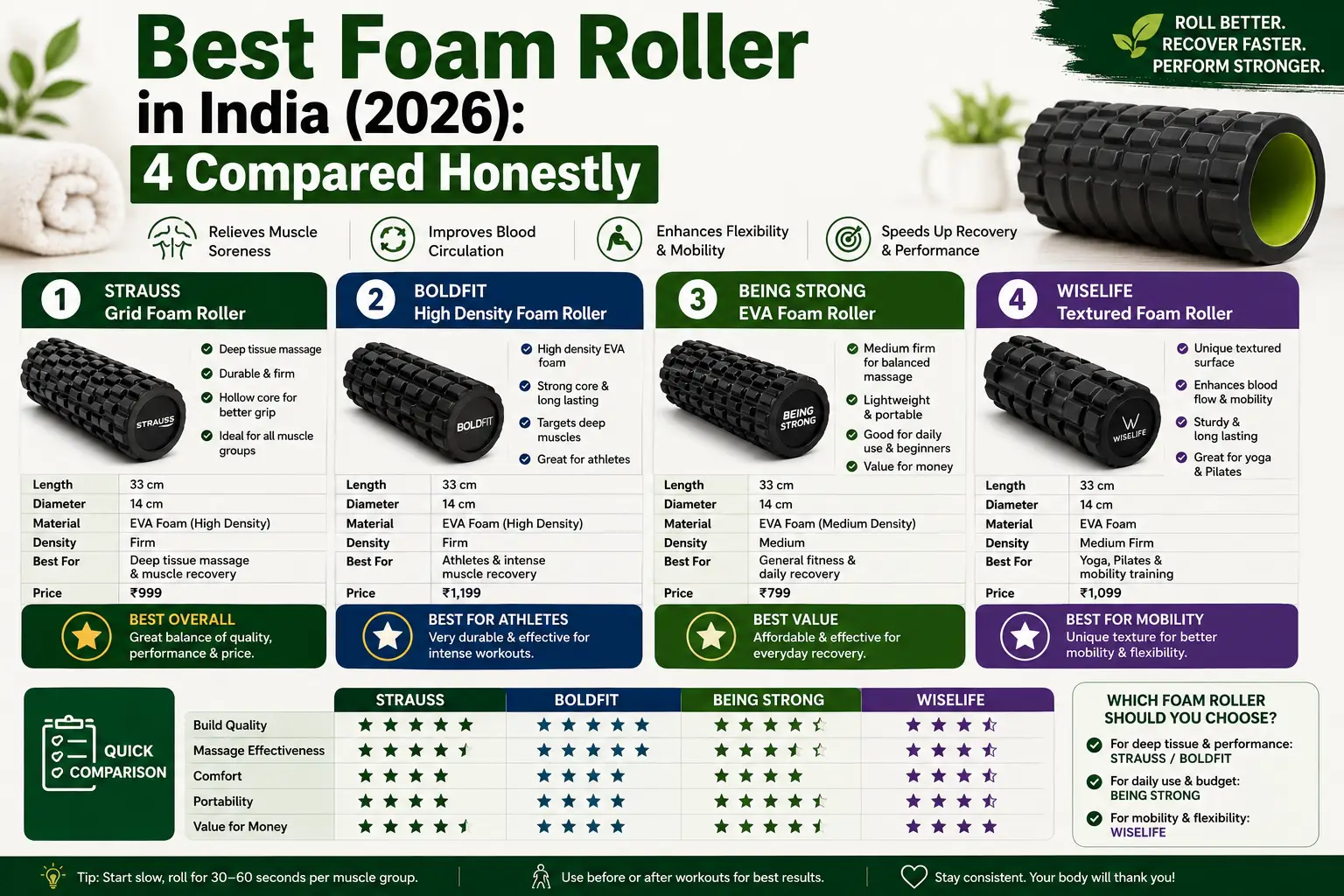
Best Foam Roller in India (2026): 4 Compared Honestly
Boldfit and Strauss foam rollers compared on density, size and rating data — plus what foam rolling actually does for sore muscles, and what it definitely does not.
17 min read
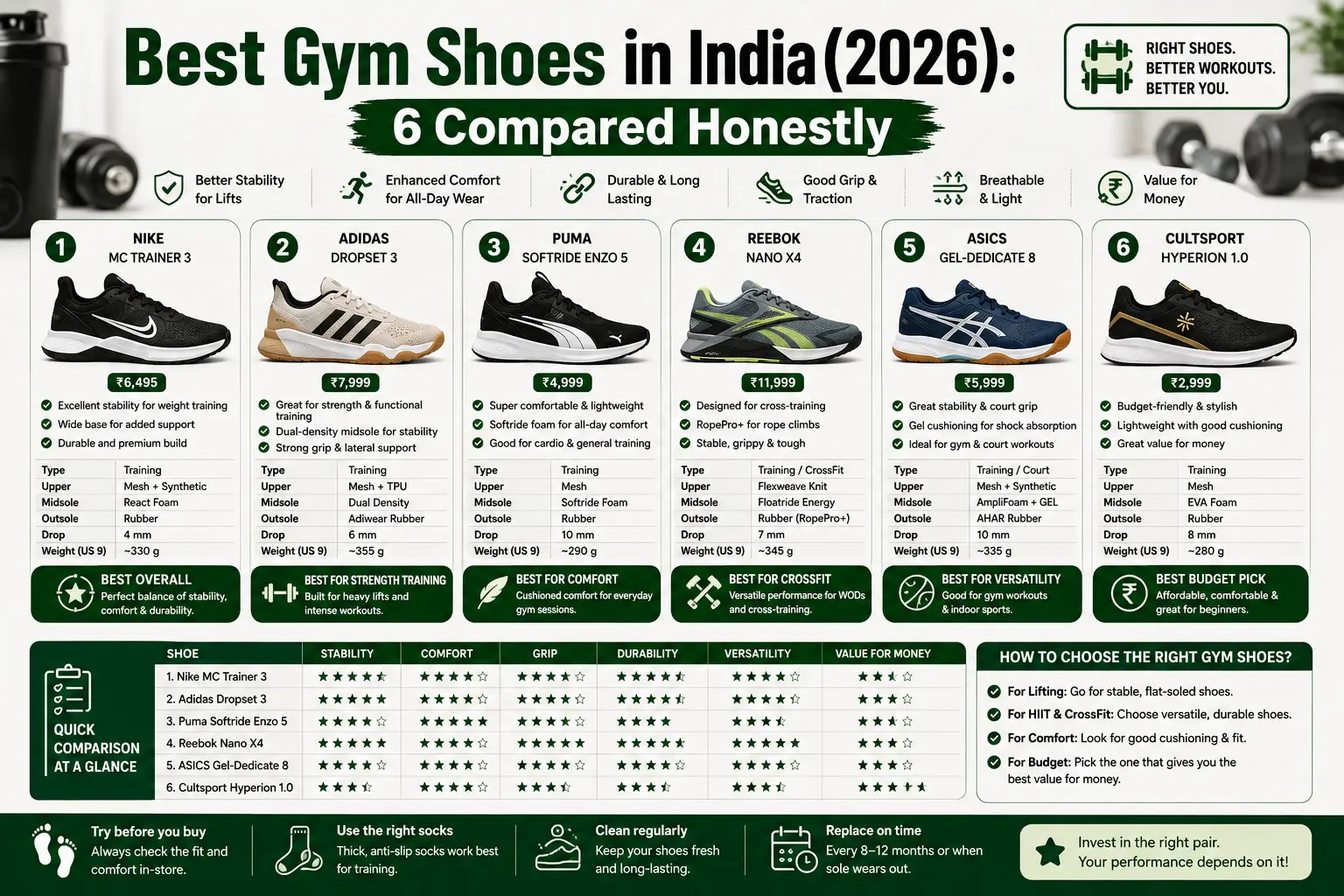
Best Gym Shoes in India (2026): 6 Compared Honestly
Most Indians buy a running shoe for the gym. Here is exactly when that is fine, when it costs you, and six options compared — from a ₹1,500 Campus to the Nike Metcon.