Fitness After 40: A No-Nonsense Guide to Getting (and Staying) Fit
Think it's too late to get fit after 40? It's not. This guide covers what changes in your body, what exercises actually work, common mistakes to avoid, and a realistic plan that fits your life.

It's Not Too Late. It's Actually the Perfect Time.
There's a strange belief that once you cross 40, fitness is somehow "over." That your body is past its prime. That exercise is only for people in their 20s and 30s.
That's nonsense. In fact, fitness after 40 is more important than fitness in your 20s — because now the stakes are higher. Bone density, heart health, joint mobility, blood sugar control, mental clarity — exercise directly protects all of these.
The difference? Your approach needs to change. What worked at 25 won't necessarily work at 45. Your body recovers differently, responds differently, and has different needs. But it absolutely still responds — and the results can genuinely surprise you.
This guide explains what actually changes after 40, what exercises to focus on, what to avoid, and how to build a sustainable routine without injuring yourself.
What Actually Changes After 40?
Let's understand the reality — not to scare you, but so you can work with your body instead of against it:
Muscle loss speeds up
After 30, you lose about 3–5% of muscle mass per decade. After 40, this accelerates if you don't actively use your muscles. This is called sarcopenia — and it's the single biggest reason metabolism slows down with age.
Metabolism slows down
Partly because of muscle loss, partly because of hormonal changes. You burn roughly 100–200 fewer calories per day compared to your 20s. It's not dramatic, but it adds up if your eating habits haven't changed.
Recovery takes longer
That workout that left you sore for a day at 25 might leave you sore for three days at 45. Your body still recovers — just more slowly. This means rest days become more important, not less.
Joints need more attention
Years of use, sitting jobs, and reduced flexibility mean your joints are less forgiving. High-impact exercises that were fine at 25 might cause knee or back issues now.
Hormonal shifts
Testosterone decreases gradually in men. Women approach perimenopause and menopause. These hormonal changes affect energy, mood, fat storage patterns, and muscle building ability.
None of this means you can't get fit. It means you need a smarter approach — not a harder one.
The 4 Pillars of Fitness After 40
At 25, you could get away with just running or just lifting weights. After 40, you need a more balanced approach. Here are the four things every 40+ adult should include:
1. Strength Training (Most Important)
This is non-negotiable. Strength training is the single best thing you can do for your body after 40. It directly fights muscle loss, boosts metabolism, strengthens bones, and improves insulin sensitivity.
How to Start:
-
2–3 days per week is enough
-
Focus on compound movements: squats, deadlifts (light), push-ups, rows
-
Start with bodyweight, then gradually add resistance bands or dumbbells
-
Keep reps moderate (8–12) with controlled form
-
Never sacrifice form for heavier weight
You're not trying to become a bodybuilder. You're trying to keep your muscles functional and your metabolism alive.
📖 Read Also:
5 Best Resistance Bands for Home Workout in India (2026)Bands are the easiest way to add resistance after 40 without joint strain from heavy weights — this comparison covers tension levels and which set suits beginners.
2. Walking & Cardio (Heart Health)
Your heart is a muscle too. Cardiovascular exercise keeps it strong, manages blood pressure, improves cholesterol, and helps with weight management.
Best Options After 40:
-
Brisk walking (30–45 minutes, 5 days/week) — and if bad air or weather regularly kills the habit, a walking pad keeps it indoors
-
Swimming (excellent for joints)
-
Cycling (low impact, great for knees)
-
Light jogging (if your joints allow it)
Avoid: Long-distance running on hard surfaces if you have joint issues. Swap for swimming or cycling instead.
3. Flexibility & Mobility (Injury Prevention)
This is what most people skip — and then wonder why they keep getting injured. After 40, your muscles and connective tissues are stiffer. Skipping warm-up or cool-down is a recipe for pulled muscles and joint pain.
Daily Essentials:
-
10 minutes of stretching every morning
-
Yoga 2–3 times per week (even 20 minutes counts)
-
Always warm up before exercise (5 minutes of light movement)
-
Always cool down after exercise (5 minutes of stretching)
4. Balance Training (Often Overlooked)
Balance naturally decreases with age. Falls become a real risk as you get older — and they're a leading cause of serious injury in people over 50. Starting balance training now builds a safety net for the future.
Simple Balance Exercises:
-
Single-leg standing (30 seconds each leg)
-
Heel-to-toe walking in a straight line
-
Standing on one leg while brushing teeth
-
Yoga poses like tree pose and warrior III
A Realistic Weekly Plan for 40+
This isn't a punishment schedule. It's designed to be sustainable and enjoyable:
← Swipe to compare →
| Day | Activity | Duration |
|---|---|---|
| Monday | Strength training (upper body) | 30–40 min |
| Tuesday | Brisk walking + stretching | 40 min |
| Wednesday | Strength training (lower body) | 30–40 min |
| Thursday | Yoga or swimming | 30–45 min |
| Friday | Full body strength (light) | 30 min |
| Saturday | Long walk, cycling, or active hobby | 45–60 min |
| Sunday | Complete rest or light stretching | 15 min |
The best workout plan is the one you actually follow. If this feels like too much initially, start with 3–4 days and build up.
7 Mistakes People Over 40 Make
Doing only cardio
Walking is great, but if it's your only exercise, you're still losing muscle and bone density. You need resistance training alongside cardio.
Trying to train like a 25-year-old
Jumping into CrossFit, heavy deadlifts, or HIIT without building a foundation first. Your ego writes cheques your joints can't cash. Start slow, build gradually.
Ignoring warm-up and cool-down
At 25, you could skip warm-up and survive. At 45, skipping warm-up is how you pull a hamstring and can't walk for two weeks.
Not eating enough protein
After 40, your body becomes less efficient at using protein. You actually need more protein than before — not less. Aim for 1.2–1.6 g per kg of body weight.
Skipping rest days
Recovery is where your body actually gets stronger. Training 7 days a week without rest leads to overtraining, injuries, and burnout.
Crash dieting to "lose weight fast"
At 40+, extreme calorie restriction causes muscle loss even faster. You need a moderate deficit with adequate protein — not starvation.
Ignoring sleep
Growth hormone — which helps repair muscles and burn fat — is released during deep sleep. Poor sleep at 40+ makes everything harder: recovery, metabolism, mood, and motivation.
Nutrition Priorities After 40
Your diet focus should shift slightly after 40. Here's what matters most:
Protein at every meal — Dal, paneer, eggs, curd, chicken, fish. Your muscles need it more than ever to maintain and rebuild.
Calcium and Vitamin D — Bone density decreases after 40, especially in women. Milk, curd, ragi, sesame seeds + daily sunlight exposure.
Fibre-rich foods — Digestion slows with age. Vegetables, whole grains, fruits with skin, and salads keep your gut moving.
Healthy fats — Nuts, seeds, ghee (moderate), fish. These support joint health and hormone production.
Water — Dehydration worsens joint stiffness, digestion, and energy. Aim for 2.5–3 litres daily.
📖 Read Also:
Best Collagen Supplements in India (2026): Complete GuideJoint stiffness and skin aging both speed up after 40 — collagen is one supplement worth understanding if you're looking to support joint comfort alongside your training.
What Results to Expect
← Swipe to compare →
| Timeframe | What You'll Notice |
|---|---|
| Week 1–2 | Some soreness (normal), slightly better energy, improved mood |
| Week 3–4 | Better sleep, less stiffness in the morning, clothes feel a bit looser |
| Month 2 | Noticeable strength improvement, better stamina, reduced body aches |
| Month 3–4 | Visible body changes, significant energy boost, people start noticing |
| Month 6+ | Transformation territory — stronger, leaner, and feeling years younger |
At 40+, results take slightly longer to show — but they last longer too, because you're building sustainable habits, not chasing quick fixes.
"The best time to start was 20 years ago. The second best time is today. Your body doesn't care how old you are — it cares whether you use it or not."
When to See a Doctor First
Before starting a new exercise routine after 40, get a basic health check if you:
-
Have been completely sedentary for more than a year
-
Have heart disease, high blood pressure, or diabetes
-
Experience chest pain, dizziness, or shortness of breath during light activity
-
Have severe joint problems (knee, hip, or back)
-
Are on medication that affects heart rate or blood pressure
A basic check-up (blood pressure, blood sugar, lipid profile) gives you a clear starting point and helps you exercise safely.
The Bottom Line
Age is just a number — but only if you treat your body right. At 40, 50, or even 60, your body is still capable of getting stronger, more flexible, and more resilient. It just needs the right approach.
Lift weights (even light ones). Walk daily. Stretch often. Eat enough protein. Sleep properly. And be patient with yourself — you're not competing with your younger self. You're investing in your older self.
Start today. Start small. But start. Your 50-year-old self will thank you.
📖 You Might Also Like:
Frequently Asked Questions
Is it too late to start fitness after 40?
Absolutely not — the body retains remarkable ability to build muscle, improve cardiovascular fitness, and lose fat well into the 40s, 50s, and beyond. Research shows adults over 40 who start strength training gain muscle and strength at similar rates to younger beginners in the first year.
What exercises are safe for people over 40?
Safe and highly effective exercises after 40 include walking, swimming, cycling, yoga, resistance band training, and weight training with proper form. High-impact activities like running and jumping should be introduced gradually. Joint-friendly exercises take priority — the goal is longevity, not pushing to extremes.
How many days per week should someone over 40 work out?
3–4 days per week with adequate rest between sessions is ideal. After 40, recovery takes longer than in your 20s, so rest days are not optional — they are where the progress happens. Overtraining at this age leads to injury and burnout that sets you back weeks or months.
What diet changes are needed for fitness after 40?
Prioritise protein (1.4–1.8g per kg) to combat age-related muscle loss (sarcopenia). Include calcium and Vitamin D for bone health. Reduce refined carbohydrates and sugar as metabolism slows with age. Anti-inflammatory foods like turmeric, fatty fish, and leafy greens support joint and overall health.
Why is recovery more important after 40?
After 40, hormone levels (testosterone, oestrogen, growth hormone) decline, slowing tissue repair. Sleep quality also often decreases with age, further impairing recovery. Prioritising 7–8 hours of sleep, managing stress, and allowing 48 hours between intense workouts becomes essential for consistent progress.
Related Reading
Free Tools to Help You
Put this article into action — use our free calculators to get your personalized numbers.
Was this article helpful?
Want More Tips Like This?
Join 1,000+ readers getting weekly fitness, diet, and wellness tips + FREE meal plan
No spam, ever. Unsubscribe anytime.

About the Author: Ashwani
Fitness influencer and wellness writer helping Indians build healthier lifestyles.
Read more about us →Comments
Leave a Comment
Your email will not be published. Comments are reviewed before appearing.
You Might Also Like
Continue your wellness journey

26 min read
Monsoon Fitness India (2026): Home Workout & Diet Guide
Monsoon in India kills most fitness routines. Skipped gym days, muddy roads, low motivation, and seasonal infections derail months of progress. Here is your complete guide to stay fit, build immunity, and actually thrive during the Indian rainy season — workouts, diet, calorie data, and a 4-week progressive plan.
15 min read
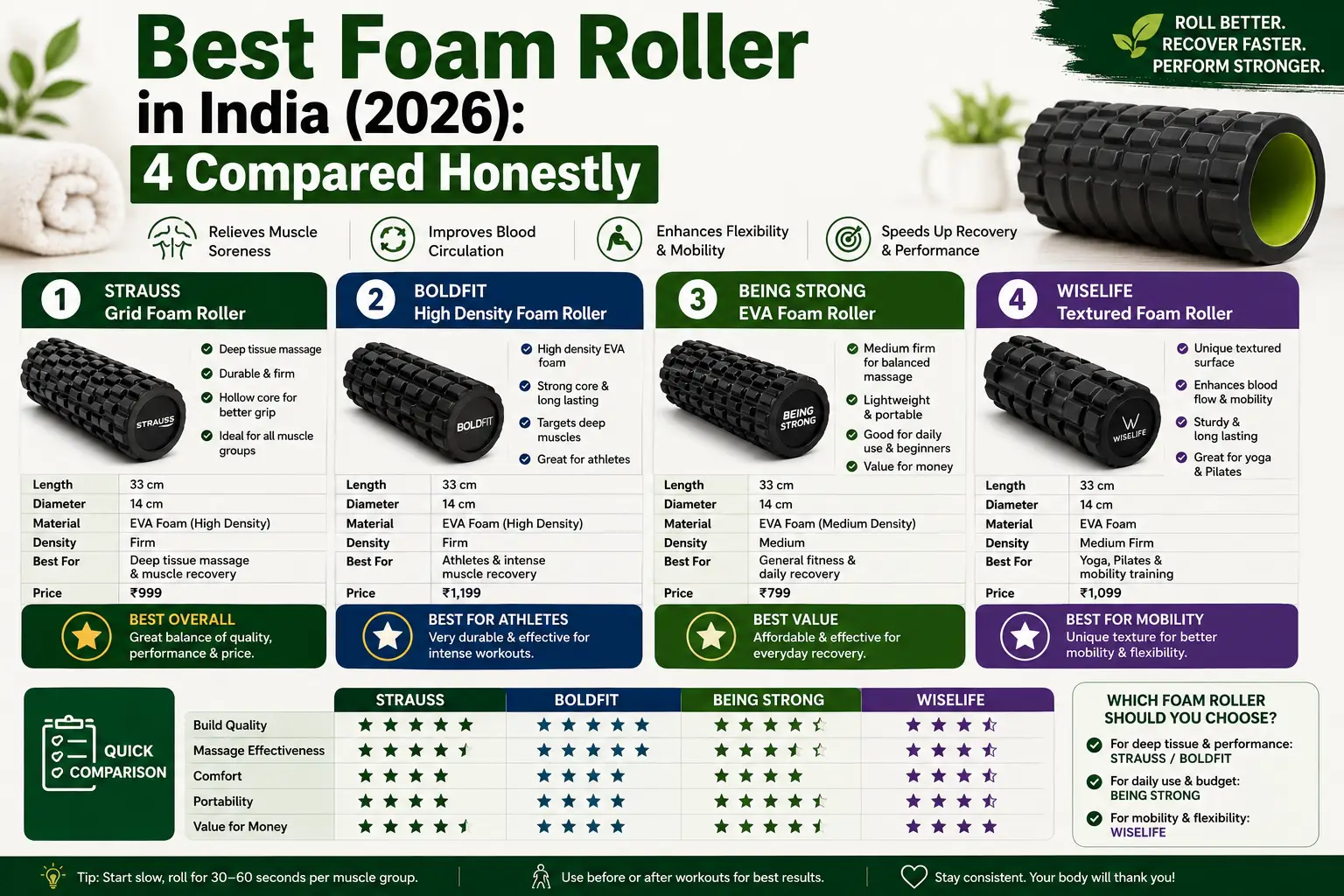
Best Foam Roller in India (2026): 4 Compared Honestly
Boldfit and Strauss foam rollers compared on density, size and rating data — plus what foam rolling actually does for sore muscles, and what it definitely does not.
17 min read
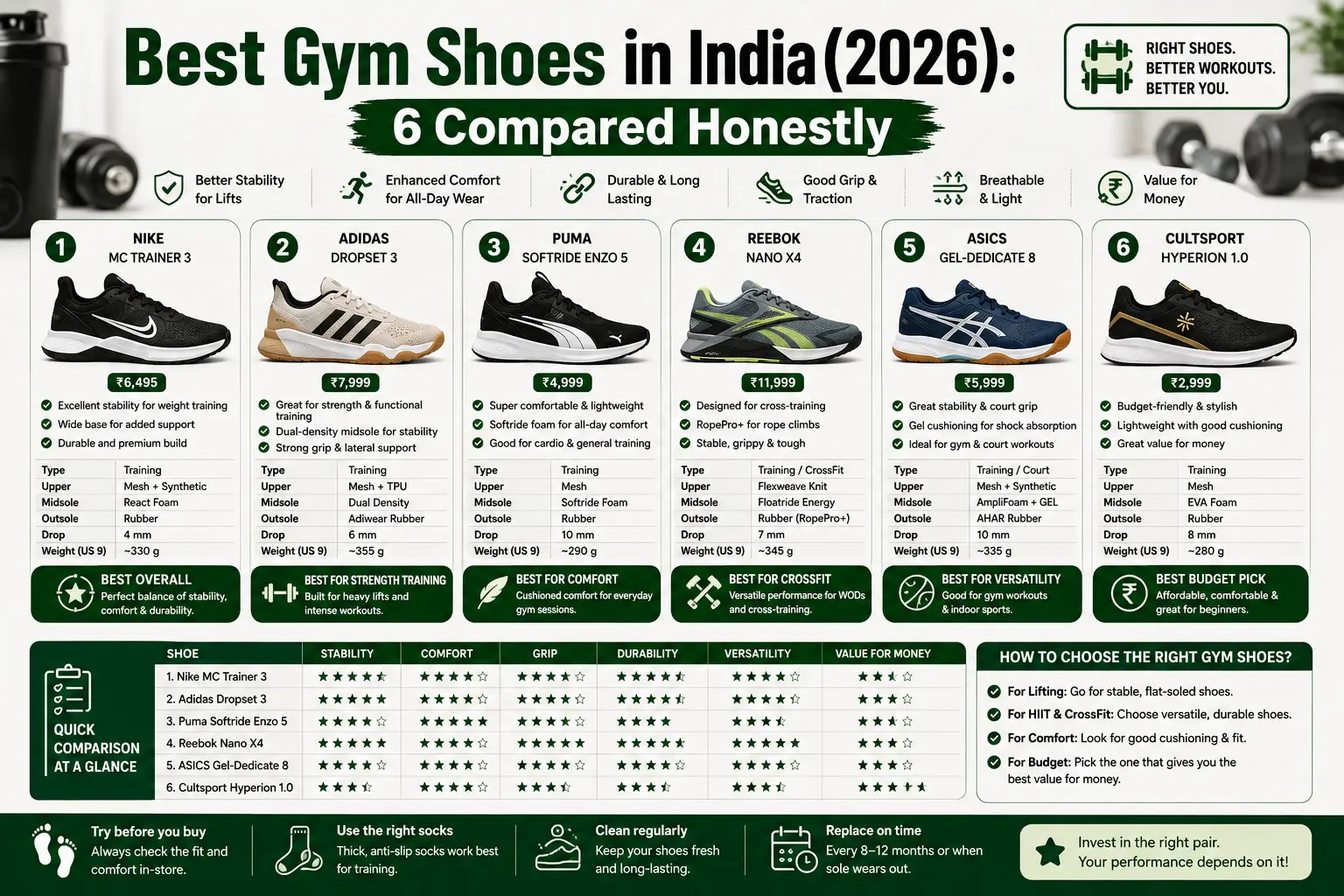
Best Gym Shoes in India (2026): 6 Compared Honestly
Most Indians buy a running shoe for the gym. Here is exactly when that is fine, when it costs you, and six options compared — from a ₹1,500 Campus to the Nike Metcon.