Indian Diet & Nutrition Complete Guide (2026): Eat Right for Your Health Goals
The definitive nutrition guide for Indians — understanding macros, building a balanced Indian plate, protein sources, meal timing, and practical strategies that work within Indian food culture.

Medical Safety Note: This article is for general educational purposes only and is not a substitute for professional medical advice, diagnosis, or treatment. If you are pregnant, managing a condition like diabetes, PCOS, or thyroid disorder, or taking medication, please consult a qualified doctor or registered dietitian before changing your diet, supplements, or exercise routine.
Why Indian Nutrition Advice Is Broken
Most Indian nutrition advice falls into two camps: dangerously restrictive crash diets ("only liquids for 7 days!") or vague platitudes ("eat more vegetables, less sugar").
Neither helps. What's missing is practical, science-based guidance that works within Indian food culture — with dal, roti, rice, chai, and family meals — not against it.
This guide covers everything you need to build a healthy relationship with food as an Indian: how nutrients work, how to structure your plate, the best Indian protein sources, when to eat, and how to fix the most common nutritional mistakes.
Quick Answer
← Swipe to compare →
| If you want to know... | The short answer |
|---|---|
| How to build a balanced Indian plate | ½ vegetables, ¼ protein (dal/paneer/curd/eggs), ¼ carbs (roti/rice) — see Part 2 |
| How much protein you need | 1.2–1.6g/kg (sedentary) to 2.0–2.5g/kg (muscle gain) per kg bodyweight — see Part 1 |
| Does meal timing matter | Total daily calories and macros matter far more than timing for most people — see Part 4 |
| The #1 Indian nutrition mistake | Not protein-deficient food culture — it's carb-heavy plates with protein as an afterthought |
| Do you need to give up Indian food | No — dal, sabzi, roti, and rice are all healthy at the right portions — see Part 2 |
Part 1: Understanding Macronutrients (For Indians)
What Are Macros and Why Do They Matter?
Your food is made of three macronutrients — protein, carbohydrates, and fat. Each plays a different role in your body. Understanding them removes the confusion behind every diet trend.
Protein: The Most Important Macro for Most Indians
What it does: Builds and repairs muscle, keeps you full, supports immune function, makes hormones and enzymes, and has the highest thermic effect of any macro (digesting it burns more calories).
How much you need: 1.6–2.0g per kg of body weight for active people; 1.2–1.6g/kg for sedentary adults.
The Indian problem: Over 70% of Indians don't meet their daily protein requirement. The typical Indian diet is carbohydrate-dominant — dal-chawal, roti-sabzi, poha, idli — with protein as an afterthought.
Use our Protein Calculator to find your exact daily target.
➡️ Deep dive: Best Protein Foods for Indians ➡️ Vegetarian options: Protein-Rich Vegetarian Foods India
Carbohydrates: Not the Enemy
What they do: Primary energy source for your brain and muscles. Essential for athletic performance and normal brain function.
The Indian reality: Indians already eat plenty of carbs — often too many relative to protein and vegetables. The goal isn't to eliminate carbs but to:
- Choose slower-digesting carbs when possible (brown rice, whole wheat atta, oats, millets)
- Reduce portion sizes rather than eliminating
- Always pair carbs with protein and fat to slow blood sugar rise
Good Indian carb sources: Brown rice, whole wheat roti, oats, millets (bajra, jowar, ragi), sweet potato, legumes (all dals)
Reduce: White bread, maida items (biscuits, naan, samosas), sugary drinks, packaged namkeen
📖 Read Also:
Oats Recipes for Weight Loss: 7 Indian Style Oats Breakfast IdeasOats are one of the better Indian carb choices listed above — here are seven ways to actually cook them so breakfast doesn't get boring.
Fat: Essential, Not the Problem
What it does: Fat is required for hormone production (testosterone, oestrogen, cortisol), fat-soluble vitamin absorption (A, D, E, K), brain function, and joint health.
Healthy Indian fat sources: Ghee (in moderation), cold-pressed mustard oil, coconut oil (in small amounts), nuts, seeds, avocado, fatty fish (mackerel, sardines)
Reduce: Refined vegetable oils (refined sunflower, refined soybean), vanaspati/dalda, deep-fried street food
The idea that ghee is unhealthy is outdated. 1–2 teaspoons of ghee daily in an otherwise balanced diet is not only acceptable but beneficial for digestion and fat-soluble vitamin absorption.
Part 2: Building the Perfect Indian Plate
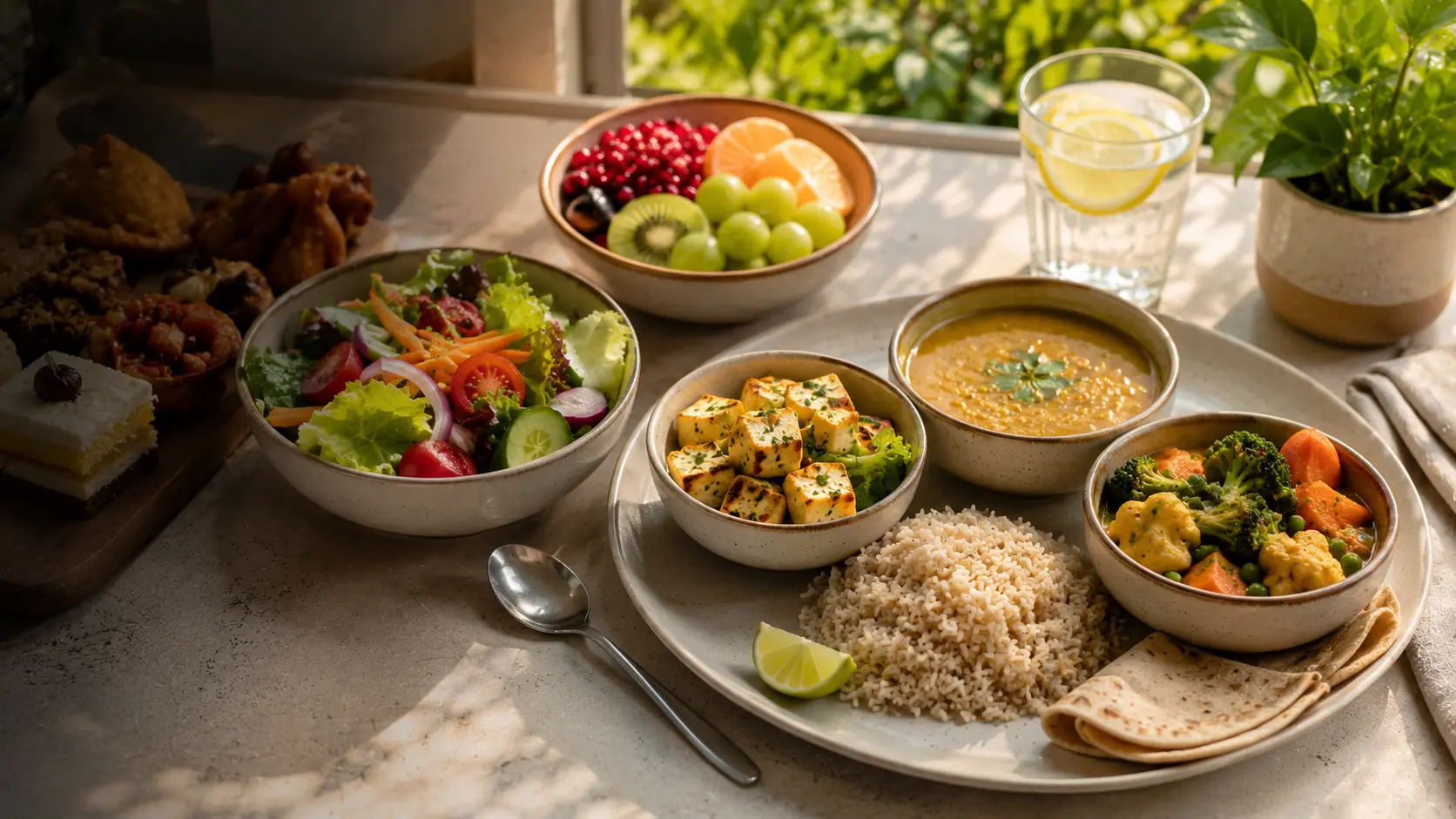
The ½ - ¼ - ¼ Formula
This simple rule structures every meal for fat loss and balanced nutrition:
½ the plate: Non-starchy vegetables
- Cooked sabzi, salad, cucumber, tomato, leafy greens
- Adds fibre, micronutrients, volume (makes you feel full) with minimal calories
¼ the plate: Quality protein
- Dal, paneer, curd, chicken, fish, eggs, tofu, rajma, chana
- The most commonly skipped part of Indian meals
¼ the plate: Carbohydrates
- 1–2 rotis or half a katori rice
- Controlled portion, not eliminated
➡️ Deep dive with visual examples: The Healthy Indian Meal Plate Blueprint
Practical Meal Examples Using This Formula
Breakfast:
- 2 whole eggs scrambled + 1 roti + cucumber salad ✅
- vs. 3 rotis with tea and biscuits ❌
Lunch:
- 1 katori rice + 1 katori dal + 1 katori sabzi + salad ✅
- vs. 2 katori rice + sabzi only ❌
Dinner:
- 2 rotis + paneer sabzi + curd + salad ✅
- vs. 3 rotis + aloo sabzi + no protein ❌
The Micronutrient Problem in Indian Diets
While protein deficiency is the most common Indian nutritional gap, four micronutrients are chronically low in the Indian population:
1. Vitamin D: Over 70% of Indians are deficient. Sun exposure helps but modern indoor lifestyles make supplementation necessary for most. Signs: fatigue, bone pain, frequent illness, difficulty losing weight.
➡️ Deep dive: Vitamin D Deficiency and Weight Loss
2. Iron: Especially in women and vegetarians. Low iron causes chronic fatigue and reduces exercise capacity. Best vegetarian sources: spinach + vitamin C (for absorption), ragi, rajma, pumpkin seeds.
3. B12: Only found in animal products. Vegetarians and vegans are at high risk of deficiency. Signs: fatigue, brain fog, tingling in hands/feet. Supplementation is often necessary.
4. Calcium: Despite being the world's largest producer of dairy, India has widespread calcium deficiency. Dairy remains the best source; for vegans: ragi, til (sesame), green leafy vegetables.
📖 Read Also:
Best Multivitamin in India — 4 Brands ComparedA multivitamin closes small versions of these four gaps — but not a confirmed deficiency. Centrum, Revital, HK Vitals and MB-Vite compared, plus when to test instead of supplement.
Digestion plays a quiet role in how well you actually absorb all these nutrients — if your gut isn't functioning well, even a perfectly planned diet underdelivers.
📖 Read Also:
Indian Foods for Gut Health & Microbiome: Complete GuideA breakdown of which everyday Indian foods support a healthy gut microbiome — directly relevant if you're trying to fix nutrient absorption alongside these macro and micronutrient targets.
Part 3: The Best Indian Foods by Goal
For Fat Loss
Prioritise:
- High-volume, low-calorie foods: all vegetables, dal, buttermilk (chaas), cucumber, salad
- Protein at every meal (keeps hunger low for longer)
- Fibre-rich foods: whole dals, vegetables, oats, ragi (slows digestion, reduces blood sugar spikes)
Reduce (not eliminate):
- Rice portions (switch to smaller katori)
- Maida-based items (biscuits, white bread, naan)
- Fried snacks (chips, pakoras, samosas)
- Sweetened beverages (even "healthy" ones like fruit juice)
Need actual recipes rather than just a list of principles? These fit directly into the fat-loss approach above.
📖 Read Also:
15 Healthy Indian Recipes for Weight Loss (Under 400 Calories)Easy, tasty Indian recipes that follow the fat-loss food priorities above — high volume, high protein, and each one under 400 calories.
For Muscle Gain
Daily protein target: 2.0–2.5g per kg of body weight.
Best Indian high-protein meal combinations:
- Paneer bhurji + 2 rotis + dal
- Chicken curry + brown rice + salad
- Egg white omelette + whole wheat toast + curd
- Rajma chawal with extra rajma portion
- Sprouts chaat + Greek yogurt
➡️ Full muscle diet plan: Muscle Gain Diet Plan for Indian Men
For Diabetes and Pre-Diabetes
The Indian genetic predisposition to insulin resistance makes blood sugar management especially important. Indians develop Type 2 diabetes at lower body weights and younger ages than Western populations.
Key dietary principles:
- Reduce simple carbs (white rice, maida, sugar)
- Increase fibre (vegetables, whole dals, oats, millets)
- Never eat carbs alone — always pair with protein and fat
- Millets (bajra, jowar, ragi) have significantly lower glycaemic index than wheat or white rice
➡️ Deep dive: Diabetes-Friendly Indian Diet Guide ➡️ Prevention: Pre-Diabetes Diet Plan India
For PCOS
PCOS (Polycystic Ovary Syndrome) affects 1 in 5 Indian women. The dietary strategy focuses on insulin sensitivity and reducing inflammation:
- Low glycaemic index carbohydrates
- High protein (helps with satiety and hormonal balance)
- Anti-inflammatory fats (omega-3 from fish, flaxseeds, walnuts)
- Reduce: sugar, refined carbs, dairy (for some women)
➡️ Deep dive: PCOS Diet Plan — Indian Foods
For Thyroid Issues
Thyroid function is heavily affected by nutrient status:
- Selenium (Brazil nuts, sunflower seeds, eggs) — essential for T3/T4 conversion
- Iodine (iodized salt, dairy, seafood) — required for thyroid hormone synthesis
- Avoid raw cruciferous vegetables in large amounts (goitrogens) — cooking neutralises them
- Zinc (pumpkin seeds, chickpeas, cashews)
➡️ Deep dive: Thyroid Diet Plan — Indian Foods
Part 4: Meal Timing — Does It Matter?
The Research
For most people in most situations, total daily calories and macros matter far more than meal timing. This is well-established in research.
However, timing does matter in these specific situations:
- Pre-workout nutrition: Eating carbs 60–90 minutes before training improves performance
- Post-workout nutrition: Protein within 2 hours of training optimises muscle recovery
- Blood sugar management: Spacing meals 3–4 hours apart gives insulin levels time to settle
- Late-night eating: Not inherently fattening, but high-calorie late-night eating is associated with poor sleep and excess calorie intake for most people
➡️ Pre-workout foods: Best Pre-Workout Foods for Indians ➡️ Post-workout: Post-Workout Meal Guide for Indians
Intermittent Fasting — Is It Right for You?
IF is a meal timing strategy, not a diet. It works because it helps most people eat fewer calories, not because fasting has special metabolic properties.
The 16:8 method (fast 16 hours, eat in an 8-hour window) is the most practical for Indians and works well for people who:
- Aren't hungry in the morning
- Prefer larger meals
- Want a simple way to reduce overall intake without counting
It doesn't suit people who: feel faint when skipping breakfast, do heavy morning workouts, have low blood pressure, or have a history of disordered eating.
➡️ Deep dive: Intermittent Fasting for Beginners — India
Part 5: Practical Indian Nutrition Strategies
Reading Nutrition Labels on Indian Products
Indian packaged food labels are deliberately confusing — serving sizes set at unrealistically small amounts to make sugar and fat content look acceptable.
Key rules:
- Always check "per 100g" not "per serving"
- Sugar under 5g per 100g = acceptable; over 10g = high sugar
- Check the ingredients list — if sugar appears in the first 3 ingredients, it's a high-sugar product
- "0% fat" often means "high sugar" — manufacturers swap one for the other
➡️ Deep dive: How to Read Nutrition Labels in India
Navigating Indian Festivals and Weddings
Diwali, Navratri, Eid, and Indian weddings shouldn't derail your health goals. Strategies:
- Eat a protein-rich meal before attending events (reduces overeating)
- Choose dry snacks over fried at parties (roasted nuts vs namkeen vs pakoras)
- One mithai is fine; six is the problem
- Return to normal eating the next day — one day doesn't matter, a week of "it's the season" does
➡️ Deep dive: Indian Festive Eating Strategy
Meal Prep for Busy Indians
The biggest obstacle to consistent healthy eating is convenience. When you're tired at 8pm, the path of least resistance is whatever is easiest. Meal prepping 2–3 hours on Sunday changes this equation.
Simple Indian meal prep:
- Cook one large pot of dal/rajma/chana (lasts 4–5 days)
- Chop vegetables for the week (store in containers)
- Hard-boil 6–8 eggs
- Cook a large batch of brown rice or millet
- Marinate and refrigerate chicken/fish for 2–3 days
➡️ Full guide: Indian Weekly Meal Prep Guide
Part 6: Common Indian Nutrition Myths — Debunked
"Eating ghee makes you fat" False. Excess calories make you fat. 1–2 teaspoons of ghee daily is not the problem in most Indian diets.
"Rice is bad for weight loss" False. Excess calorie intake causes fat gain. White rice has a higher glycaemic index than brown rice, but eaten with dal and sabzi, the overall GI of the meal is moderate.
"Curd at night causes weight gain" No evidence supports this. Curd (dahi) is an excellent protein source and probiotic. Eat it anytime.
"Fruits are healthy so eat unlimited amounts" Fruits are nutritious, but they contain natural sugar (fructose). Someone eating 5–6 bananas daily in the name of "eating healthy" is consuming significant excess calories.
"Drinking lemon water in the morning burns fat" Lemon water is fine for hydration. It does not "detox" or "burn fat." No single food or drink has this property.
FAQs
Do I need to give up Indian food to eat healthily?
Absolutely not. Indian food — dal, sabzi, curd, roti, rice — is nutritious and balanced when portioned correctly. The restructuring in Part 2 shows exactly how to make Indian meals work for any health goal.
How much water should I drink?
General guideline: 35ml per kg of body weight daily. For a 70kg person, that's ~2.5 litres. More if you exercise or live in a hot climate.
Use our Water Intake Calculator for your personalised target.
Is the Indian vegetarian diet healthy?
A well-planned vegetarian Indian diet can be completely healthy. The key gaps to address: protein (dal + paneer + curd + legumes consistently), B12 (supplementation often needed), and iron (ragi, spinach, rajma).
What are the best high-protein Indian breakfasts?
Eggs (scrambled, boiled, omelette), paneer bhurji, moong dal chilla, sprouts chaat with curd, Greek yogurt with seeds and fruit, or a protein smoothie with milk/curd.
➡️ Deep dive: High-Protein Indian Breakfast Ideas
Can I eat mango while trying to lose weight?
Yes, in controlled portions. One medium mango = ~130 calories and is rich in vitamins. The problem isn't mango — it's eating 3–4 mangoes daily during summer.
➡️ Deep dive: Can You Eat Mango While Losing Weight?
Free Tools to Help You
Put this article into action — use our free calculators to get your personalized numbers.
Was this article helpful?
Want More Tips Like This?
Join 1,000+ readers getting weekly fitness, diet, and wellness tips + FREE meal plan
No spam, ever. Unsubscribe anytime.

About the Author: Ashwani
Fitness influencer and wellness writer helping Indians build healthier lifestyles.
Read more about us →Comments
Leave a Comment
Your email will not be published. Comments are reviewed before appearing.
You Might Also Like
Continue your wellness journey
33 min read
Indian Diet Plan for Weight Loss: The Complete 2026 Guide
Most Indians gain weight not from indulgence but from not knowing their portions. This complete Indian diet plan covers calorie targets, 7-day meal charts, 1200 and 1500 calorie plans, vegetarian options, and the 10 mistakes keeping you stuck — updated June 2026.

14 min read
Indian Festive Eating: Enjoy Diwali & Navratri Without Weight Gain
Diwali sweets, Navratri fasting, Holi bhaang, Eid biryani — Indian festivals are built around food. Most people gain 2–4 kg every festive season and spend months trying to undo it. This guide shows you how to genuinely enjoy every festival without the guilt or the weight gain.

11 min read
Soaked Almonds vs Raw Almonds: Morning Benefits & What Science Says
Every Indian grandmother insists on soaked almonds in the morning. But is the science behind this tradition actually real? Do soaked almonds genuinely have more benefits than raw? A complete, evidence-based answer.