30-Day Home Fitness Challenge for Beginners (Full Workout + Diet Plan)
A complete 30-day beginner-friendly home workout challenge designed for fat loss, strength building, stamina improvement, and habit development — no equipment needed.

Medical Safety Note: This article is for general educational purposes only and is not a substitute for professional medical advice, diagnosis, or treatment. If you are pregnant, managing a condition like diabetes, PCOS, or thyroid disorder, or taking medication, please consult a qualified doctor or registered dietitian before changing your diet, supplements, or exercise routine.
In short: this 30-day home fitness challenge for beginners needs no equipment and about 30–40 minutes a day, six days a week. It moves you from form work in week 1 to HIIT and an endurance test by week 4. Over the 30 days, expect better stamina, visible inch loss around the waist, and 1–3 kg down if you also hold a modest calorie deficit. Every exercise has an easier version, and week 3 lists low-impact swaps for the jumping work.
Why Most Fitness Challenges Fail
Most people want to start fitness, but they don't know how to stay consistent. They get motivated for a week, miss 2–3 days, and slowly stop.
The real transformation doesn't come from intense workouts but from daily habit building.
This 30-Day Fitness Challenge is created specifically for beginners — people who want to:
-
Lose fat
-
Gain stamina
-
Become active
-
Build discipline
You don't need gym equipment, supplements, or long routines. Just 30–40 minutes/day, space at home, and dedication.
Before you start. This is a general beginner program, not medical advice. Talk to a doctor first if you are pregnant or postpartum, have heart, blood pressure, joint or back problems, are returning from injury or surgery, or have been largely inactive for over a year. Week 3 introduces jumping and HIIT — if impact bothers your knees or back, use the low-impact swaps listed in that section rather than pushing through. Sharp or joint pain is a stop signal. Muscle soreness is not.
✔ Daily workout schedule
✔ Weekly progression
✔ Rest & recovery days
✔ Diet guidelines
If you follow this program with basic discipline, you will see noticeable changes in energy, mobility, strength, and fat loss — without punishing routines.
Who This Challenge Is Perfect For
-
Beginners starting fitness
-
Working professionals with less time
-
People wanting fat loss and better shape
-
Homemakers and students wanting flexibility
-
Anyone wanting a fresh fitness restart
If you can commit 30 days, this program will meet you where you are and help you grow.
Week-wise Structure Overview
← Swipe to compare →
| Week | Focus | Goal |
|---|---|---|
| Week 1 | Foundation + Form | Learn movements & build routine |
| Week 2 | Strength + Core | Increase reps & stamina |
| Week 3 | Fat Burn + Conditioning | HIIT + longer workouts |
| Week 4 | Performance Upgrade | Stronger, leaner, more control |
Six sessions of 30–40 minutes works out to roughly 180–240 minutes a week, comfortably clear of the 150–300 minutes of moderate activity the WHO recommends for adults.
Week 1 — Foundation (Get Started Strong)
Goal: Movement familiarity + form + warm-up habit
Daily Routine (Mon–Sat)
Warm-up — 5 mins
-
Neck & shoulder rotation
-
Arm swings
-
Jog in place
-
Jumping jacks (30 sec)
Workout — 20–30 mins
← Swipe to compare →
| Exercise | Reps | Sets |
|---|---|---|
| Squats | 10 | 3 |
| Knee Push-ups | 8–10 | 3 |
| Glute Bridge | 12–15 | 3 |
| Standing March/High Knees | 30 sec | 3 |
| Plank | 20 sec | 2–3 |
Cooldown — 5 mins stretching
Sunday: Light walk + mobility yoga
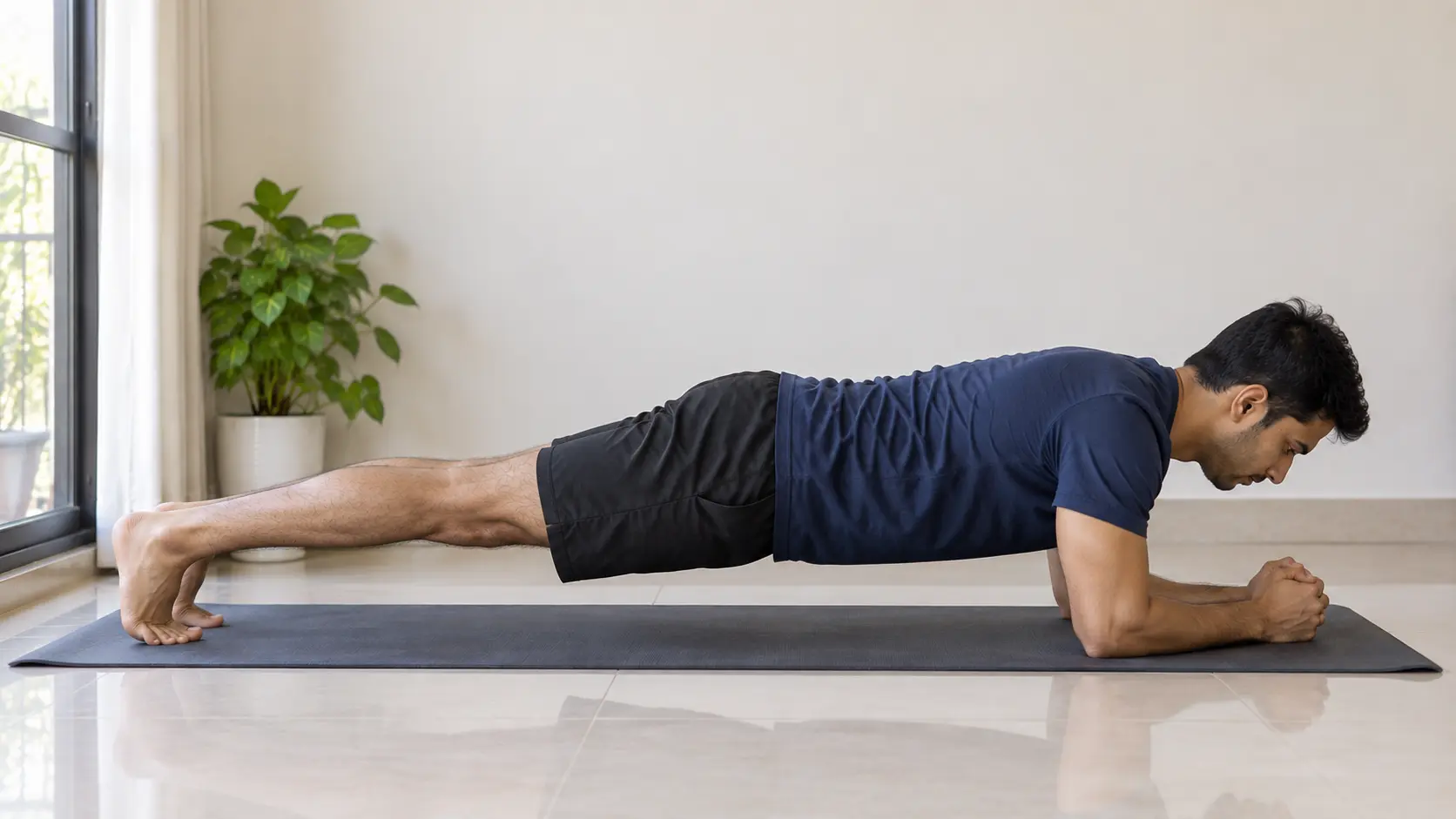
"Don't rush — perfect the form first. You are building the foundation, not racing."
Form Check — What a Good Rep Looks Like
Week 1 exists to build these five patterns correctly, because every week after it just stacks volume on top of them. Poor form doesn't stay harmless once the reps climb — it's usually the reason knees or a lower back start complaining in week 3.
← Swipe to compare →
| Movement | What a good rep looks like | Most common beginner error |
|---|---|---|
| Squat | Feet shoulder-width, toes turned slightly out. Hips travel back first, chest stays up, knees track in line with the toes. Go as low as you can while keeping a flat back. | Knees caving inward, heels lifting off the floor, lower back rounding at the bottom |
| Knee push-up | One straight line from knees through hips to head. Elbows about 45° from the ribs, not flared to 90°. Chest comes close to the floor. | Hips sagging or piking up, and only lowering a few inches |
| Glute bridge | Heels close to the glutes, drive through the heels, squeeze the glutes at the top, ribs pulled down. | Arching the lower back to get higher instead of squeezing the glutes |
| Plank | Elbows directly under the shoulders, one straight line from ankles to head, glutes and abs tight, neck neutral. | Hips sagging toward the floor — this is what makes planks hurt your lower back |
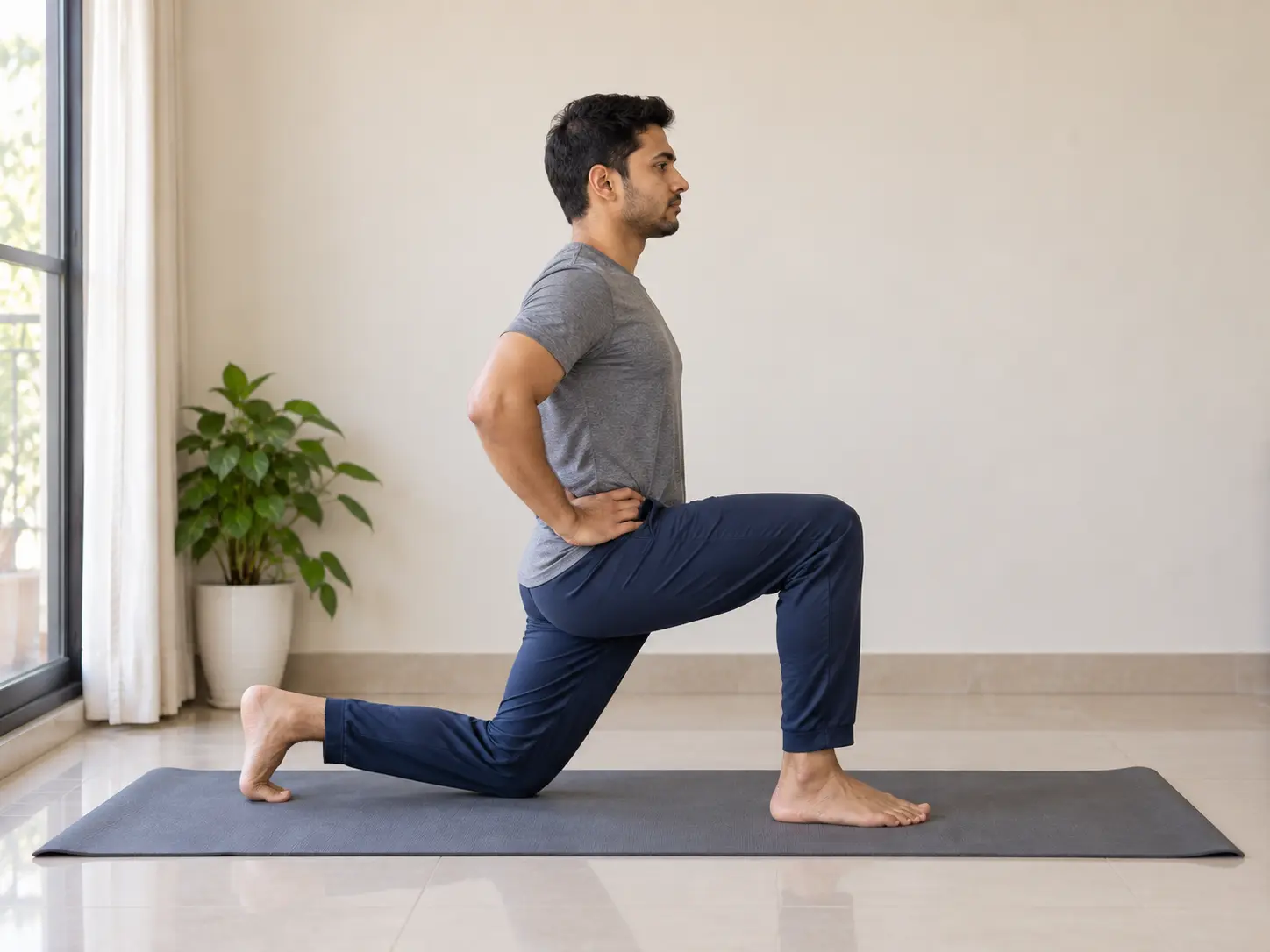
| Lunge | Step long enough that the front shin stays near vertical, back knee drops toward the floor, torso upright. | Too short a step, so the front knee travels well past the toes |
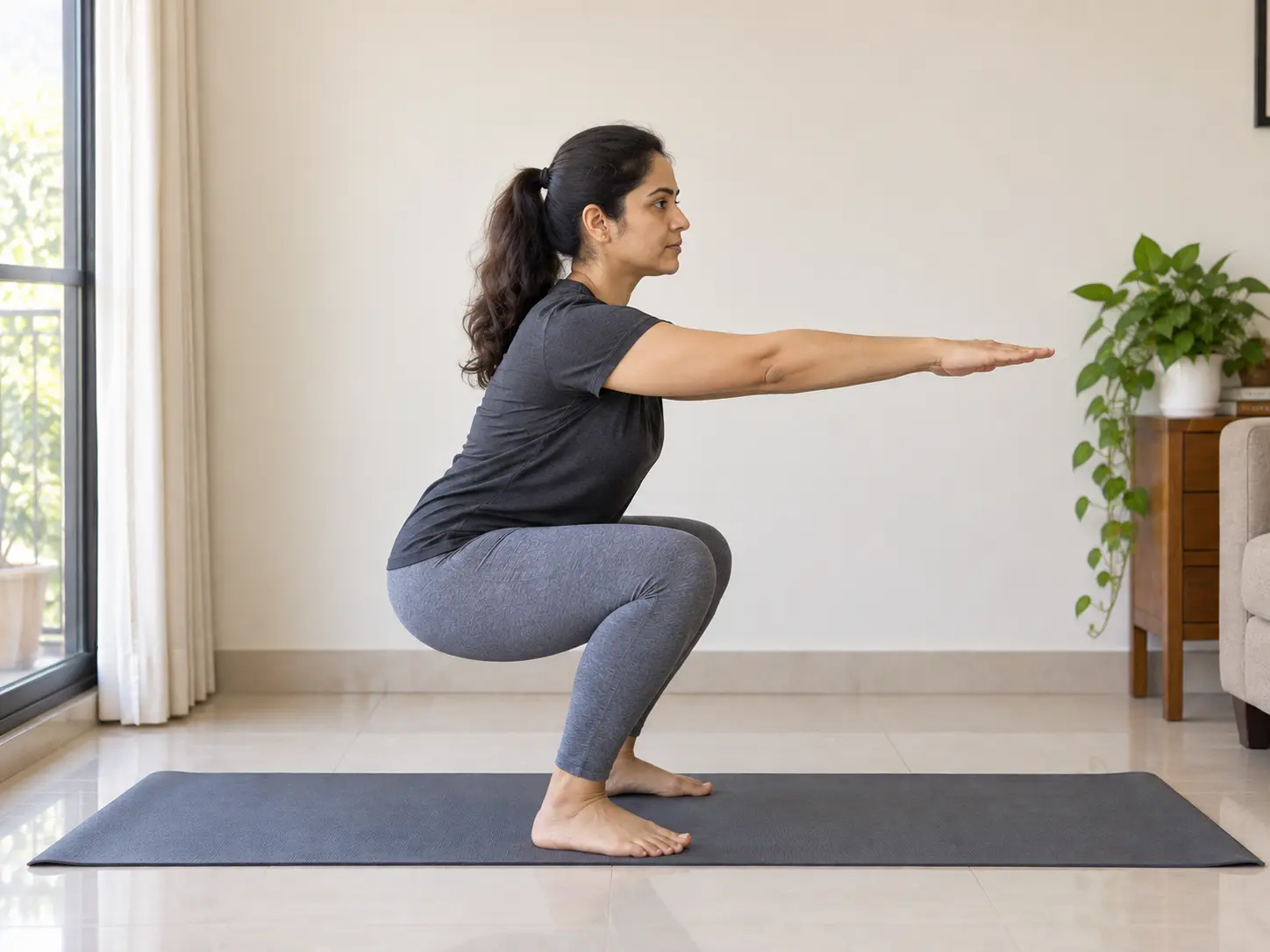
If you can't hit the described position yet, use the easier version rather than grinding out a sloppy full rep — knee push-ups instead of full ones, a shallower squat, a plank from the knees. A clean partial builds the pattern. A collapsed full rep builds something you'll have to unlearn later.
Week 2 — Strength & Core Activation
Goal: Increase reps + introduce muscle engagement
Schedule: Mon–Sat, same warm-up and cooldown as week 1. Sunday off — walk or light mobility.
← Swipe to compare →
| Exercise | Reps | Sets |
|---|---|---|
| Squats | 15 | 3–4 |
| Normal Push-ups (or Knee) | 10 | 3 |
| Lunges | 10 each leg | 3 |
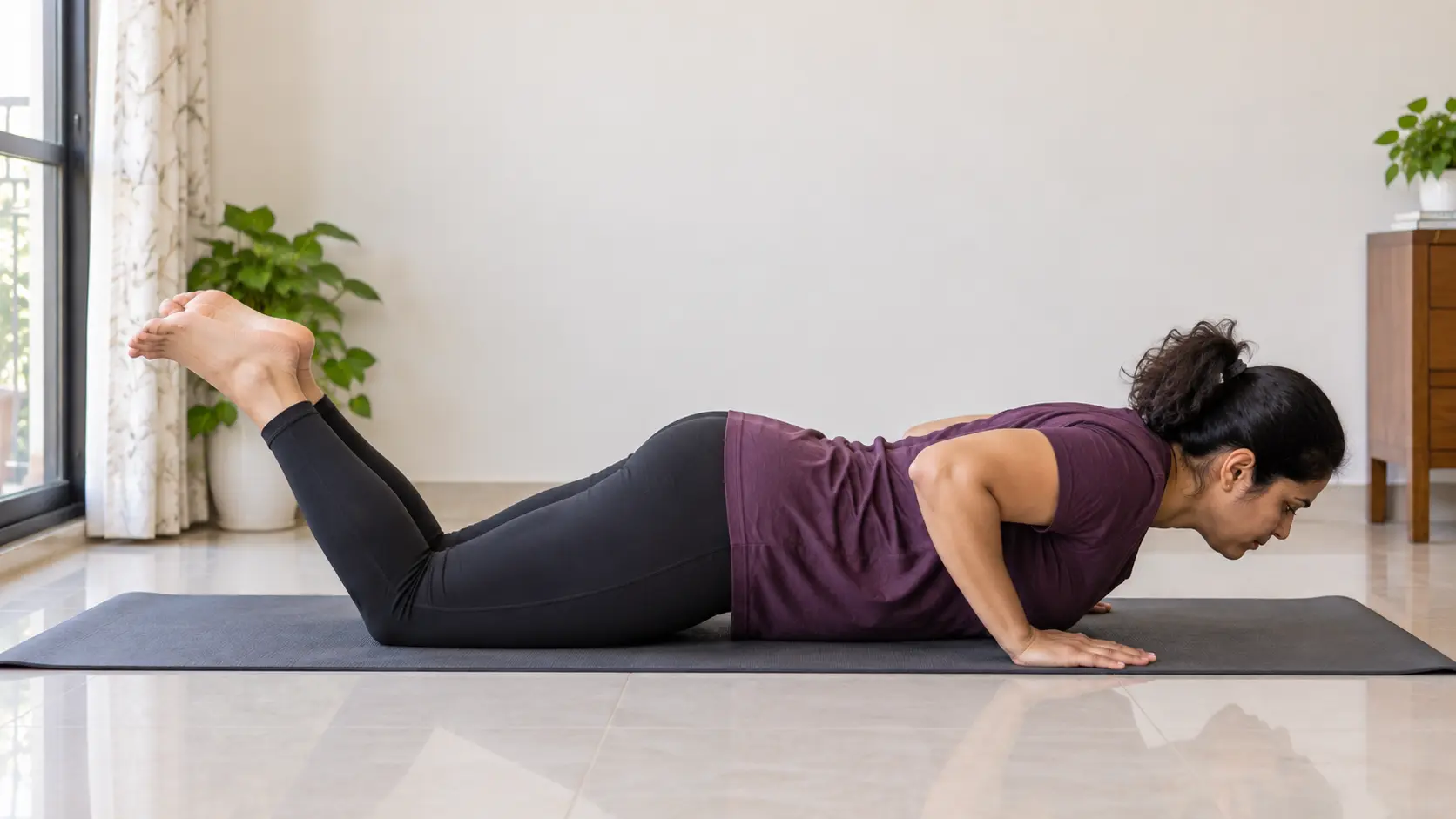
| Superman Hold | 30 sec | 3 |
| Plank | 25–30 sec | 3 |
Add core finisher (alternate days)
-
Crunches × 15
-
Leg raises × 10
-
Russian twists × 25
You will start feeling strength improvement this week.
Week 3 — Fat Burn & HIIT Phase
Goal: Burn fat + boost stamina + sweat sessions
Schedule: HIIT on Mon / Wed / Fri, the strength mix on Tue / Thu / Sat, Sunday rest.
HIIT Circuit (Repeat 3–4 rounds)
40 sec work + 20 sec rest
-
🔥 Jumping jacks
-
🔥 Mountain climbers
-
🔥 Squat pulses
-
🔥 Burpees (or step-back version)
-
🔥 High knees
Core + Strength Mix (3 days/week)
← Swipe to compare →
| Exercise | Reps | Sets |
|---|---|---|
| Push-ups | 12 | 3 |
| Lunges | 12 | 3 |
| Plank | 30–40 sec | 3 |
Low-impact swaps if jumping bothers your knees, back or pelvic floor — these keep the heart rate up without the landing forces:
← Swipe to compare →
| Instead of | Do this |
|---|---|
| Jumping jacks | Step-out jacks (one foot at a time) |
| Burpees | Step-back burpees, no jump |
| High knees | Fast marching on the spot |
| Squat pulses | Slow bodyweight squats to a chair |
| Mountain climbers | Slow, controlled knee drives |
By the end of this week most people notice waistbands sitting differently. The mirror usually moves before the scale does — that is normal, not a stall.
Week 4 — The Transformation Stretch
Goal: Performance improvement + strong routine
Workout Duration: 35–45 mins
← Swipe to compare →
| Day | Focus | Session |
|---|---|---|
| Mon | Full body strength | Squats 20×3 · push-ups 12×3 · lunges 12 each leg ×3 · plank 45 sec ×3 |
| Tue | Core & abs | Crunches 20×3 · leg raises 15×3 · Russian twists 30×3 · Superman hold 40 sec ×3 |
| Wed | HIIT | 30 sec work / 20 sec rest, 5 moves × 4 rounds |
| Thu | Lower body strength | Squats 20×4 · lunges 15 each leg ×3 · glute bridge 20×3 · wall sit 45 sec ×3 |
| Fri | Upper body & arms | Push-ups 15×3 · incline push-ups 15×3 · chair tricep dips 12×3 · plank shoulder taps 20×3 |
| Sat | Endurance challenge | The circuit below, one round at your own pace |
| Sun | Rest | Deep stretching or yoga |
Endurance Challenge (Saturday)
Complete 1 round at your pace:
-
✔ 100 jumping jacks
-
✔ 60 squats
-
✔ 40 lunges
-
✔ 30 push-ups
-
✔ 1 min plank
(You'll be proud of yourself after this.)
Diet Plan for 30 Days (Simple + Effective)
Key Diet Rules
-
✔ Protein at every meal — target roughly 1.6 g per kg of body weight. For a 70 kg person that is about 112 g a day. A meta-analysis of 49 trials in the British Journal of Sports Medicine found gains from resistance training plateau around this intake — well above the 0.8 g/kg figure quoted for sedentary adults. Work out your own number with the protein calculator.
-
✔ Reduce sugar/junk gradually
-
✔ Hydrate 2–3L water daily
-
✔ Increase fruits/veggies intake
-
✔ Prefer home-cooked meals
← Swipe to compare →
| Time | Example |
|---|---|
| Morning | Warm water + 5 soaked almonds |
| Breakfast | Oats/Poha/Moong chilla |
| Lunch | Dal + roti/rice + paneer + salad |
| Snack | Peanut/chana/fruit |
| Dinner | Soya/Paneer sabzi + roti/soup |
| Night | Herbal tea (optional) |
"No crash dieting. Eat real food → burn fat sustainably."
For the deficit side of this, the 7-day Indian weight loss diet chart is fully costed in calories and protein and pairs directly with this challenge. If you would rather set your own target first, run the TDEE calculator.
Transformation Tracking Sheet (Daily Habit Tracker)
Mark ✓ daily:
□ Workout completed
□ No junk food
□ 10K steps or movement
□ Protein target met
□ 2–3L water
□ 7–8 hrs sleep
Progress happens where habits build.
Expected Results After 30 Days
Every body responds differently, but most beginners notice:
-
Better stamina
-
Visible fat loss
-
Inch loss around the waist
-
Muscle tone improvement
-
Mood and energy boost
Transformation is not only physical — it's mental.
Conclusion
This 30-day fitness challenge isn't just a program — it's a starting point for a healthier lifestyle. If you follow workouts, stay active, eat balanced meals, and sleep properly, you will experience a visible difference in strength, confidence, and body composition.
You don't need motivation every day — you need discipline and routine. Show up daily, even if the workout is short. Small steps compound into big changes.
Start Day 1 today — Your future self will thank you.
📖 Read Also:
Best Home Gym Under ₹5000 in India (2026): Complete Beginner Equipment GuideIf you finish this challenge and want to keep progressing past bodyweight-only moves, this budget setup (mat, bands, rope, light dumbbells) covers everything for well under ₹5,000.
Frequently Asked Questions
Can a complete beginner do a 30-day home fitness challenge?
Yes — a 30-day home fitness challenge is designed for beginners. Most programs start with basic bodyweight moves like squats, push-ups, and planks and gradually increase intensity. The key is to go at your own pace and not skip rest days.
What equipment do I need for a 30-day home fitness challenge?
You need no equipment at all for most beginner home fitness challenges. A yoga mat is helpful for floor exercises and jumping moves. As you progress, resistance bands or light dumbbells can add variety but are completely optional — if you do add bands, the 15-exercise routine slots straight into a challenge like this one.
How many calories can I burn in a 30-day fitness challenge?
A 30–40 minute bodyweight session burns somewhere around 150–350 calories, depending mostly on your body weight and how hard you push — treat that as an estimate, not a measurement, since trackers overstate it routinely. The workouts alone will not create much of a deficit: 6 sessions a week at ~250 calories is roughly 1,500 a week, or about 0.2 kg of fat. Pair them with a modest food deficit and 1–3 kg over 30 days is realistic.
What should I eat during a 30-day fitness challenge?
Aim for roughly 1.6 g of protein per kg of body weight — about 112 g a day at 70 kg. That is the intake where resistance-training gains plateau in the published trials, and considerably more than the 0.8 g/kg often quoted, which is the baseline for sedentary adults rather than a target for people training. Add complex carbohydrates like oats, brown rice and dal, plenty of vegetables, and 2.5–3 litres of water a day.
Is it normal to feel sore during a 30-day challenge?
Muscle soreness in the first week is completely normal — this is called DOMS (delayed onset muscle soreness). Light stretching, rest, and staying hydrated helps. If you experience sharp joint pain, stop and rest for a day before continuing.
Related Reading
Free Tools to Help You
Put this article into action — use our free calculators to get your personalized numbers.
Was this article helpful?
Want More Tips Like This?
Join 1,000+ readers getting weekly fitness, diet, and wellness tips + FREE meal plan
No spam, ever. Unsubscribe anytime.

About the Author: Ashwani
Fitness influencer and wellness writer helping Indians build healthier lifestyles.
Read more about us →Comments
Leave a Comment
Your email will not be published. Comments are reviewed before appearing.
You Might Also Like
Continue your wellness journey

26 min read
Surya Namaskar for Weight Loss: Calories & 4-Week Plan
How many rounds of Surya Namaskar do you actually need to lose weight? Calorie burn tables by body weight, 108 rounds guide, belly fat cortisol science, 4-week beginner plan, and the equipment that makes daily practice easier.
26 min read
Best Kettlebells for Home Gym in India (2026): Which Weight to Buy
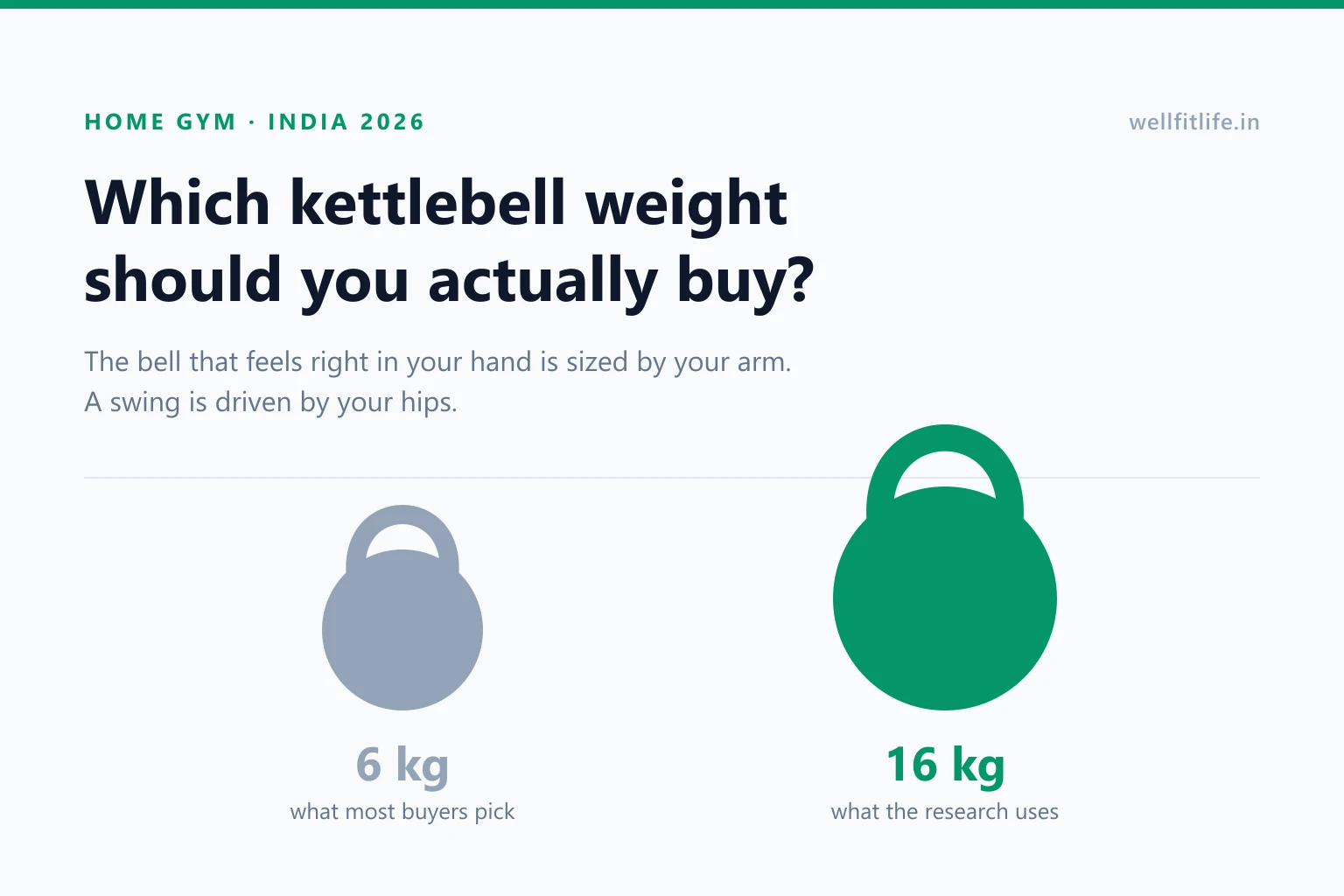
Almost every kettlebell sold in India is lighter than the ones the research is done with. The weight that feels right when you pick it up is roughly half the weight your hips need — and that single mistake is why most kettlebells end up under a bed.

17 min read
Amazon Great Indian Festival 2026: Home Gym Deals Worth Buying (and What to Skip)
The Great Indian Festival started on 8 October 2026. The percentage off on a fitness listing is measured against MRP, which is a legal ceiling rather than a real price, so that number tells you very little. What tells you whether a deal is real is the price history and the bank offer. Here is the short list of home gym equipment worth buying in the sale, and how to check each deal before you pay.