Ashwagandha vs Shilajit: Which Do You Need? (2026)
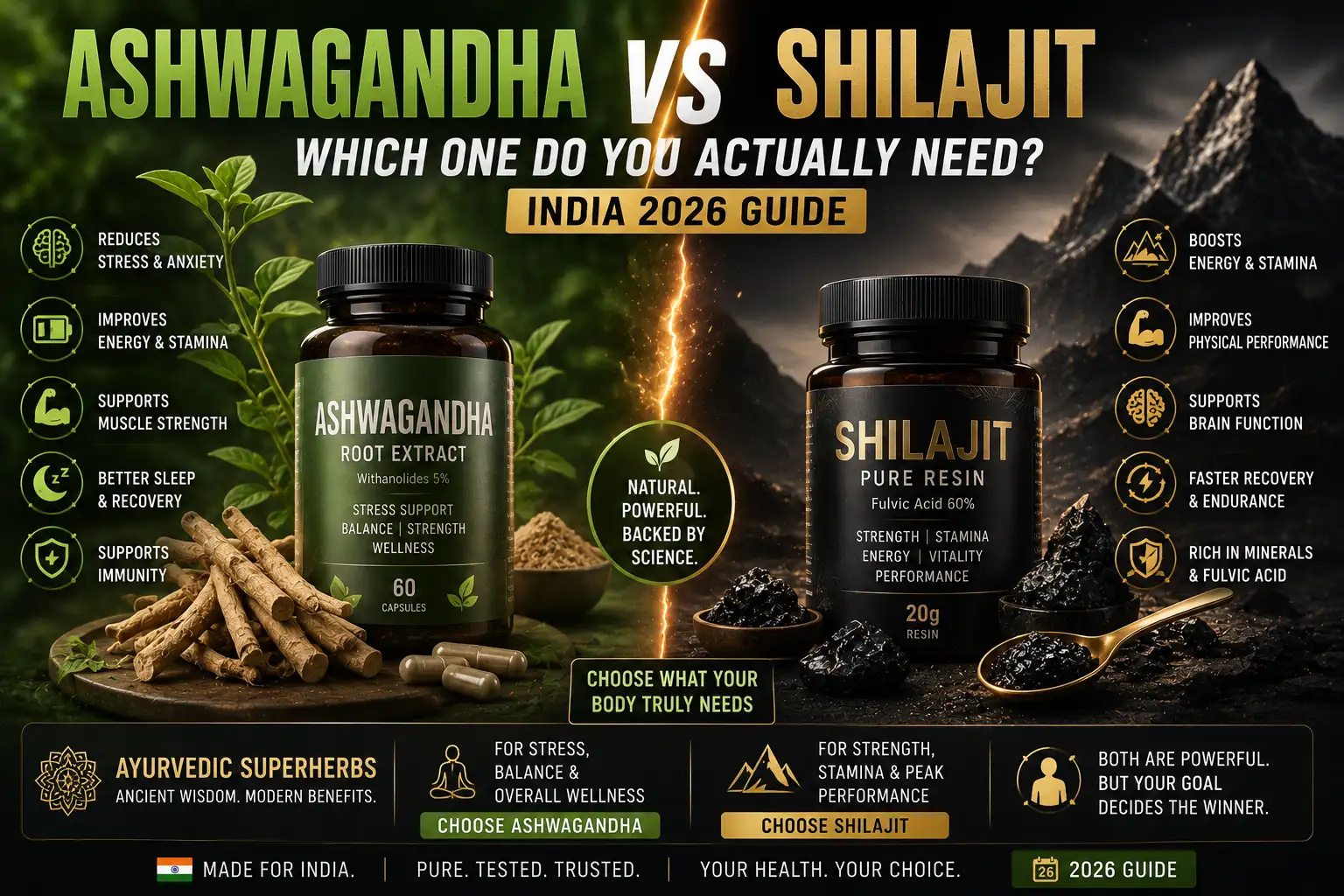
Ashwagandha vs Shilajit, judged on the clinical trials rather than the marketing. Ashwagandha has more evidence than most people expect — including for testosterone and endurance — while shilajit's trials are few but real. Benefits for men and women, gym performance, side effects, and how to stack both safely.
Medical Safety Note: This article is for general educational purposes only and is not a substitute for professional medical advice, diagnosis, or treatment. If you are pregnant, managing a condition like diabetes, PCOS, or thyroid disorder, or taking medication, please consult a qualified doctor or registered dietitian before changing your diet, supplements, or exercise routine.
Affiliate Disclosure: As an Amazon Associate I earn from qualifying purchases. This post contains affiliate links. If you buy through them, we may earn a small commission at no extra cost to you — this never affects our recommendations. We only suggest products we believe in. Read our full affiliate disclosure.
Quick Answer
Stress, poor sleep or anxiety → ashwagandha. Low energy, stamina or physical fatigue → shilajit. That is genuinely the whole decision. Ashwagandha is an adaptogen with reasonable trial evidence for lowering cortisol and improving sleep quality. Shilajit is a mineral resin used for energy and stamina, with far thinner clinical evidence behind it. If this is your first supplement and you are unsure, ashwagandha is the better-evidenced bet — and if your goal is testosterone or endurance, it is too, despite shilajit's reputation.
Rasayanam Ashwagandha KSM-66 Root Extract — 60 Capsules
Rasayanam capsules made with KSM-66, the root-only extract standardised to 5% withanolides that was used in the cortisol and muscle-strength trials cited in this article. The trials used 600mg a day (300mg twice daily), so check the mg per capsule on the listing and dose to match.
Kapiva Shilajit Gold Resin (with Ashwagandha, Swarna Bhasma & Gokshura)
Our top-ranked shilajit, with NABL lab reports included in the pack. Note that the Gold variant is a blend, not plain resin: shilajit plus ashwagandha, gokshura and swarna bhasma. Because it already contains ashwagandha, do not add a separate ashwagandha supplement without counting the combined dose.
Both compared properly below — dosage, what the evidence actually supports, and who should take neither.
Both are Ayurvedic staples, and both are marketed for energy, stamina and testosterone. The clinical trials tell a more specific story than the marketing does: ashwagandha has been tested in far more randomised trials, across more goals, than shilajit. This guide goes goal by goal and says which one the evidence actually supports, how strong that evidence is, and who should take neither.
Medical Disclaimer: This article is for informational purposes only and is not medical advice. Both herbs are potent bioactives: avoid both if you are pregnant or breastfeeding, and consult a doctor before starting either one if you have a thyroid, liver, autoimmune, heart, or iron-overload condition, or take any regular medication.
The Full Comparison
Short answer: ashwagandha has the stronger clinical evidence for most goals, including some usually credited to shilajit. Shilajit's best-supported uses are narrower: resisting strength loss when fatigued, and bone density after menopause. The two can be taken together, with the precautions in the stacking section below.
← Swipe to compare →
| Your Primary Goal | Better evidence for | How strong |
|---|---|---|
| Stress, anxiety, cortisol | Ashwagandha | Several RCTs |
| Sleep quality | Ashwagandha | Meta-analysis; small effect |
| Muscle strength & recovery | Ashwagandha | RCTs |
| Cardio endurance (VO2max) | Ashwagandha | Meta-analysis |
| Testosterone & fertility | Ashwagandha | More trials than shilajit; shilajit has one small RCT |
| Strength under fatigue | Shilajit | One RCT |
| Bone density after menopause | Shilajit | One RCT |
| Day-to-day energy | Neither proven | Mostly traditional use |
Disclosure: This post contains Amazon affiliate links. If you purchase through them, WellFitLife earns a small commission at no extra cost to you. Every recommendation here is based on independent research — no brand has paid to be on this list.
Understanding the Basics
Before comparing them head-to-head, it is essential to understand what these two natural powerhouses actually are, where they come from, and how they interact with the human body.
What is Ashwagandha?
Ashwagandha (Withania somnifera), often referred to as "Indian Ginseng" or "Winter Cherry," is a small shrub native to India, the Middle East, and parts of Africa. In Ayurveda, the root of the plant is primarily used, dried, and ground into a fine powder or extracted into capsules. (If you want the full breakdown of this herb alone, read our honest Ashwagandha guide for Indians.)
Mechanism of Action: Ashwagandha is clinically classified as an adaptogen. Adaptogens are natural substances that help the body manage and adapt to physical, emotional, and environmental stress. The primary active compounds in Ashwagandha are withanolides. These bioactives work by regulating the hypothalamic-pituitary-adrenal (HPA) axis — the body's central stress response system — effectively lowering elevated cortisol (the stress hormone) levels.
Core Ashwagandha Benefits:
- Stress and Anxiety Reduction: In a 60-day randomized, placebo-controlled trial, 600mg of standardized root extract daily reduced serum cortisol by ~28% and significantly lowered perceived stress scores versus placebo.
- Improved Sleep Quality: A meta-analysis of five RCTs found a small but significant improvement in sleep, stronger in people with insomnia, at 600mg a day or more, and after eight weeks or longer (Cheah et al., 2021).
- Testosterone: In overweight men aged 40–70, testosterone rose 14.7% more than on placebo over eight weeks (Lopresti et al., 2019).
- Muscle Strength and Recovery: It aids in muscle recovery and reduces exercise-induced muscle damage (more on the study behind this below).
- Thyroid — a caution, not a benefit: it can raise thyroid hormone levels (Sharma et al., 2018), which is why anyone with a thyroid condition should talk to their doctor first.
What is Shilajit?
Unlike Ashwagandha, Shilajit is not a plant or an herb. It is a sticky, blackish-brown, tar-like resin found primarily in the high-altitude rocks of the Himalayas. It is formed over centuries by the slow decomposition of plant matter and minerals under extreme pressure and temperature.
Mechanism of Action: Shilajit's main active component is fulvic acid, alongside a range of minerals. Laboratory and animal studies suggest it may support mitochondrial energy production, but that has not been shown directly in human trials — so treat claims about "cellular energy" as a hypothesis, not a finding.
Core Shilajit Benefits:
- Strength Under Fatigue: In an eight-week RCT in 63 recreationally active men, 500mg a day of a purified shilajit extract helped retain maximal strength after a fatiguing exercise protocol (Keller et al., 2019). Evidence for everyday energy is mostly traditional.
- Testosterone Support: A 90-day placebo-controlled study found purified Shilajit (250mg twice daily) significantly increased total testosterone, free testosterone, and DHEA in healthy men aged 45–55.
- Bone Density After Menopause: In a 48-week RCT, postmenopausal women with osteopenia taking 250mg or 500mg of shilajit extract a day lost less bone density than those on placebo (Pingali and Nutalapati, 2022).
Ashwagandha vs Shilajit: A Head-to-Head Comparison
To help you visualize the differences, here is a comprehensive breakdown of how these two adaptogens compare across various parameters.
← Swipe to compare →
| Feature/Parameter | Ashwagandha | Shilajit |
|---|---|---|
| Origin | Root extract of the Withania somnifera plant. | Mineral-rich resin from Himalayan rocks. |
| Primary Active Compound | Withanolides, alkaloids. | Fulvic acid, trace minerals. |
| Best-evidenced uses | Stress and cortisol, sleep, muscle strength, VO2max, testosterone. | Strength retention under fatigue, bone density after menopause, testosterone (one RCT). |
| Energy Profile | Not a stimulant; steadier energy over weeks as stress falls. | Traditionally used for stamina; human evidence is limited. |
| Best Time to Take | Evening or before bed (to promote relaxation). | Morning (to boost all-day energy). |
| Mental Impact | Reduces anxiety and perceived stress in trials. | No good human evidence on memory or focus. |
| Physical Form | Powder, capsules, tinctures. | Pure resin, capsules, powder. |
Deep Dive: Which is Better for Your Specific Goals?
Choosing between Ashwagandha and Shilajit depends entirely on what you are trying to achieve. Let's break down their efficacy across specific use cases.
Ashwagandha vs Shilajit for Men
Both supplements are highly sought after for men's health, particularly regarding strength, stamina, and reproductive function, but they tackle these issues from different angles.
For Testosterone and Fertility:
- Ashwagandha: It has more testosterone trials than its reputation suggests. Testosterone rose in the eight-week muscle-strength RCT in training men (Wankhede et al., 2015) and rose 14.7% more than placebo in overweight men aged 40–70 (Lopresti et al., 2019) — a study that found no difference in cortisol, so the effect is not simply stress relief. In a placebo-controlled pilot study in men with low sperm counts, sperm count rose 167% from baseline over 90 days (Ambiye et al., 2013).
- Shilajit: One placebo-controlled trial in healthy men aged 45–55 found higher total and free testosterone after 90 days (Pandit et al., 2016). An earlier study in men with low sperm counts reported a 61.4% rise in total sperm count, but it had no placebo group (Biswas et al., 2010).
Verdict for Men: On the current trials, ashwagandha has the stronger case for testosterone and fertility, and shilajit has one small positive RCT. Neither treats clinically low testosterone or infertility — those need a doctor.
Ashwagandha vs Shilajit for Women
There is a persistent myth that Shilajit and Ashwagandha are only for men. In reality, both offer profound benefits for women's health.
- Ashwagandha for Women: The stress, anxiety and sleep trials include women, and those are its best-supported uses. It is not a thyroid remedy: because it can raise thyroid hormone levels, women with any thyroid condition — including those on thyroid medication — should check with their doctor first.
- Shilajit for Women: Its one women-specific trial is a genuine result: postmenopausal women with osteopenia lost less bone density over 48 weeks on shilajit extract than on placebo (Pingali and Nutalapati, 2022). Claims about iron absorption and anti-ageing have no human trial behind them.
Verdict for Women: For anxiety or poor sleep, start with Ashwagandha. For bone health after menopause, Shilajit has one supporting RCT — alongside, not instead of, your doctor's advice. With a thyroid condition, take neither without speaking to your doctor.
Ashwagandha vs Shilajit for Gym Performance & Muscle Recovery
Fitness enthusiasts often debate which supplement to add to their stack.
- Muscle Strength and Hypertrophy: Ashwagandha has the edge here. In an 8-week resistance-training RCT, men taking 600mg of KSM-66 daily gained significantly more strength on bench press and leg extension, more muscle size, and recovered faster (lower creatine kinase) than the placebo group.
- Endurance: Ashwagandha has the better evidence here too — a meta-analysis of randomised trials found it raised VO2max by about 3 mL/kg/min (Pérez-Gómez et al., 2020). Shilajit's one exercise trial measured something different: holding on to strength when fatigued (Keller et al., 2019). In my own use of Kapiva's Shilajit resin, the strength and stamina difference in the gym showed up within the first week — I've shared the full experience in our best Shilajit brand in India review.
Verdict for Gym-Goers: Ashwagandha has the stronger evidence for both muscle and endurance. Shilajit's best-supported gym use is resisting strength loss late in a hard session. And remember — neither replaces creatine for explosive strength; see our best creatine in India guide if that's your goal.
Can You Take Ashwagandha and Shilajit Together?
Generally, yes. Combining them is common in Ayurvedic practice and no harmful interaction between the two is known — but no trial has tested the combination, so the benefits of stacking are assumed rather than measured.
Check for double-dosing first. Many shilajit products are blends. Kapiva Shilajit Gold, for example, already contains ashwagandha. Taking it with a separate ashwagandha capsule means more ashwagandha than you think, so add up the combined dose before stacking.
How to Stack Them: Splitting the doses is the traditional approach and is practical:
- Morning: Take Shilajit dissolved in warm water.
- Evening: Take Ashwagandha with warm milk or water before bed to lower evening cortisol, relax the mind, and promote deep, restorative sleep.
(Note: Always consult a healthcare professional before starting a combination protocol, especially if you are on medication.)
Safety, Side Effects, and Who Should Avoid Them
While both are natural and generally considered safe for most healthy adults, they are potent bioactive substances. Quality, purity, and individual health conditions matter heavily.
Ashwagandha Side Effects & Precautions
- Common Side Effects: Mild stomach upset, nausea, diarrhoea, or drowsiness, particularly if taken on an empty stomach or at very high doses.
- Liver Concerns: There have been rare but documented reports of liver injury associated with Ashwagandha — the NIH LiverTox database lists it as a likely cause of liver injury, based on published cases including a series from Iceland and the US (Björnsson et al., 2020) and a case series from India (Philips et al., 2023), typically appearing 2–12 weeks after starting. If you experience jaundice, dark urine, or severe abdominal pain, stop use immediately.
- Who Should Avoid It:
- Pregnant and breastfeeding women.
- Individuals with autoimmune diseases (as it can stimulate the immune system).
- Those with hyperthyroidism or on thyroid medication — ashwagandha can raise thyroid hormone levels, and cases of ashwagandha-induced thyrotoxicosis have been reported (case report).
The Denmark ban: Denmark banned ashwagandha supplements in 2023, citing possible effects on thyroid and sex hormones and on pregnancy. Researchers have criticised the risk assessment behind the ban for presenting no new data (McGill Office for Science and Society). It is a reason to respect the precautions above, not evidence of harm at normal doses in healthy adults.
- Anyone taking sedatives, diabetes medications, or blood pressure drugs, as it can compound their effects.
Shilajit Side Effects & Precautions
- Common Side Effects: Generally well-tolerated in trials, but some people report mild nausea or stomach discomfort.
- The Purity Risk: The biggest danger with Shilajit is contamination. Raw, unpurified Shilajit can contain dangerous levels of heavy metals (like lead and arsenic) and harmful microbes. Blends containing bhasma ingredients deserve extra care: metal-based Ayurvedic preparations are the category most often found with heavy metals (Saper et al., 2008). Always buy from reputable brands that provide third-party NABL lab testing — we've broken down exactly which brands pass this bar in our best Shilajit brand comparison.
- Who Should Avoid It:
- Pregnant and breastfeeding women.
- Individuals with hemochromatosis (excess iron in the blood) or gout/high uric acid.
- Those with heart conditions or on any regular medication — interactions have not been studied, so check with your doctor.
Dosage Guidelines for 2026
To see benefits from adaptogens, consistency is more important than taking massive doses. Both take time to accumulate in your system.
Ashwagandha Dosage:
- Most clinical studies use 250mg to 600mg of a standardized root extract (like KSM-66) per day — see our KSM-66 vs Himalaya vs Patanjali comparison for which Indian brands actually use standardized extracts.
- It is best to start low (e.g., 300mg) and take it with food or warm milk in the evening to prevent stomach discomfort.
Shilajit Dosage:
- For purified resin, a standard dose is 250mg to 500mg per day (usually a pea-sized amount).
- Dissolve it completely in warm water or milk and consume it in the morning on an empty stomach.
Results are rarely overnight. Commit to a consistent protocol for 4 to 8 weeks before assessing the effects.
Myths vs Facts
Myth 1: Ashwagandha gives you an immediate energy rush like coffee. Fact: Ashwagandha is not a stimulant. It does not provide acute energy. Instead, it prevents the fatigue associated with chronic stress, leading to more stable, sustained energy over weeks of use.
Myth 2: Resin is the only real shilajit — capsules are inferior. Fact: The human trials point the other way. The testosterone and fatigue trials cited here both used PrimaVie, a purified, standardised shilajit extract taken as a capsule, and the bone-density trial also used a standardised extract. Resin has tradition behind it but no trial data. What matters is purification and lab testing, not the form.
Myth 3: You need to cycle off these supplements every few weeks. Fact: While it is a good general practice to take a break from any supplement, there is no strict scientific mandate to cycle off Ashwagandha or Shilajit, as your body does not build a severe tolerance to them in the same way it does to caffeine. However, reassessing your need every 3–4 months is wise.
Which Should You Buy? (Our Picks)
If you are still on the fence, use this straightforward decision matrix:
Choose Ashwagandha if:
- You feel constantly stressed, anxious, or overwhelmed.
- You struggle to fall asleep or suffer from insomnia.
- Your primary fitness goal is building muscle size and accelerating post-workout recovery.
- You want to lower cortisol, or improve endurance and testosterone — where its trial evidence is stronger than shilajit's.
Rasayanam Ashwagandha KSM-66 Root Extract — 60 Capsules
Rasayanam capsules made with KSM-66, the root-only extract standardised to 5% withanolides that was used in the cortisol and muscle-strength trials cited in this article. The trials used 600mg a day (300mg twice daily), so check the mg per capsule on the listing and dose to match.
Choose Shilajit if:
- You suffer from chronic physical fatigue and lack daily vitality.
- You want to hold on to strength late in hard training sessions.
- You are postmenopausal and interested in bone health (alongside your doctor's advice).
- You have already tried ashwagandha, or cannot take it.
Kapiva Shilajit Gold Resin (with Ashwagandha, Swarna Bhasma & Gokshura)
Our top-ranked shilajit, with NABL lab reports included in the pack. Note that the Gold variant is a blend, not plain resin: shilajit plus ashwagandha, gokshura and swarna bhasma. Because it already contains ashwagandha, do not add a separate ashwagandha supplement without counting the combined dose.
Choose Both if: You want what each is best evidenced for. Shilajit in the morning and ashwagandha in the evening is a sensible split — just check that your shilajit is not already a blend containing ashwagandha.
📖 Read Also:
Best Shilajit Brand in India (2026): Dabur vs Upakarma vs Kapiva — Honest ComparisonDecided Shilajit is your pick? Here's our lab-testing-first comparison of the three biggest shilajit brands in India — including the one I personally use.
Frequently Asked Questions
Which is better for anxiety: Shilajit or Ashwagandha?
Ashwagandha is significantly better for anxiety. It directly modulates the body's stress response and lowers cortisol, whereas Shilajit is primarily focused on physical energy.
Can Ashwagandha or Shilajit raise testosterone?
Both have raised testosterone in trials, but ashwagandha has more of them: rises in training men and in overweight men aged 40–70, plus a placebo-controlled sperm study. Shilajit has one placebo-controlled trial in men aged 45–55. Neither is a treatment for clinically low testosterone.
How long does it take to notice effects?
Neither supplement works instantly like a stimulant. Most of the trials cited here ran for 8 weeks or longer, so give either one a consistent 4 to 8 weeks before judging.
Are there liver risks with these supplements?
There are rare reports of liver injury associated with Ashwagandha, usually 2–12 weeks after starting. If you have pre-existing liver conditions, consult a doctor. The small shilajit trials have not reported liver problems, but they were short and small — and impure shilajit contaminated with heavy metals is a real risk.
Can I take these with my medications?
Both can interact with medications. Ashwagandha may interact with sedatives, thyroid meds, blood pressure drugs, and immunosuppressants. Shilajit may alter how your body absorbs certain drugs. Always consult a healthcare professional before adding them to a prescription regimen.
Final Word
If you take one thing from this comparison, let it be this: Ashwagandha calms, Shilajit energises. Match the herb to your actual problem — not to whichever one is trending on your feed — and give it a consistent 4 to 8 weeks before judging.
And if you're still building your foundation, neither of these should be your first purchase — protein and creatine come first. Our beginner's guide to gym supplements in India lays out the full priority order.
Was this article helpful?
Want More Tips Like This?
Join 1,000+ readers getting weekly fitness, diet, and wellness tips + FREE meal plan
No spam, ever. Unsubscribe anytime.

About the Author: Ashwani
Fitness enthusiast and wellness writer. I research and write about supplements, workouts, and Indian diet strategies, and share my own experience where I have it — so you can make informed decisions without wasting money.
Read more about us →Comments
Leave a Comment
Your email will not be published. Comments are reviewed before appearing.
You Might Also Like
Continue your wellness journey
25 min read
Best 1000mg Omega-3 Fish Oil in India (2026): EPA+DHA Compared
A capsule labelled 1000mg fish oil can contain as little as 300mg of actual omega-3. Here is what the EPA+DHA numbers really say, what a gram of it costs across the strength tiers, and the dose-response finding that argues against the biggest bottle.
19 min read
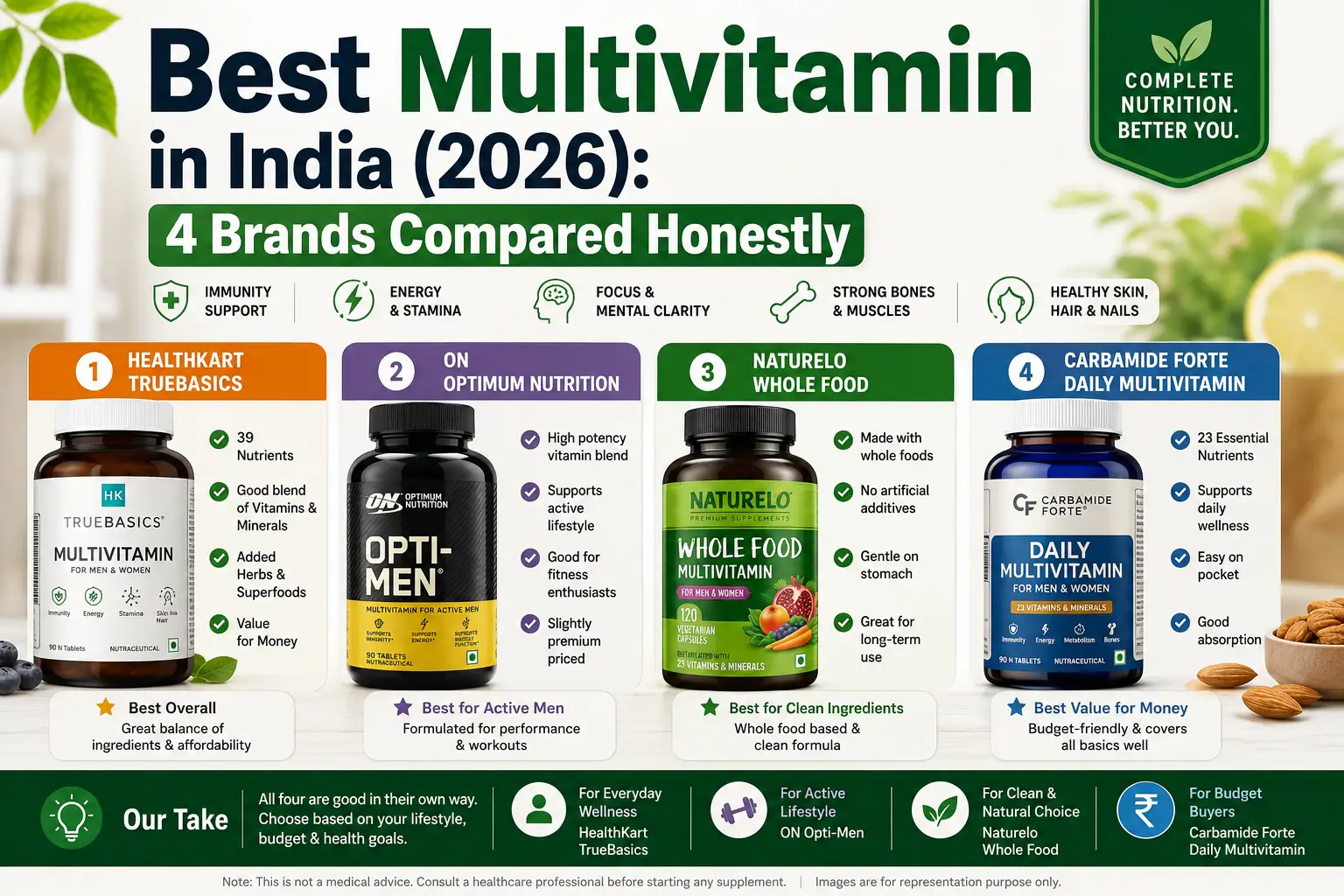
Best Multivitamin in India (2026): 4 Brands Compared Honestly
Centrum, Revital, HK Vitals and MuscleBlaze MB-Vite compared on what is actually in them — plus the honest answer to whether you need a multivitamin at all.
28 min read
Best Protein Bars in India 2026: RiteBite vs Yogabar vs MuscleBlaze
All three flagship bars deliver exactly 20g of protein, so the protein number tells you nothing. What separates them is saturated fat, fibre, polyol load — and a cost per gram of protein roughly three times what whey costs.