5-Minute Healthy Breakfast for Office Goers India — No Cooking Required
No time to cook in the morning? These 12 no-cook healthy Indian breakfasts take under 5 minutes, pack well for the office commute, and keep you full until lunch.
Medical Safety Note: This article is for general educational purposes only and is not a substitute for professional medical advice, diagnosis, or treatment. If you are pregnant, managing a condition like diabetes, PCOS, or thyroid disorder, or taking medication, please consult a qualified doctor or registered dietitian before changing your diet, supplements, or exercise routine.
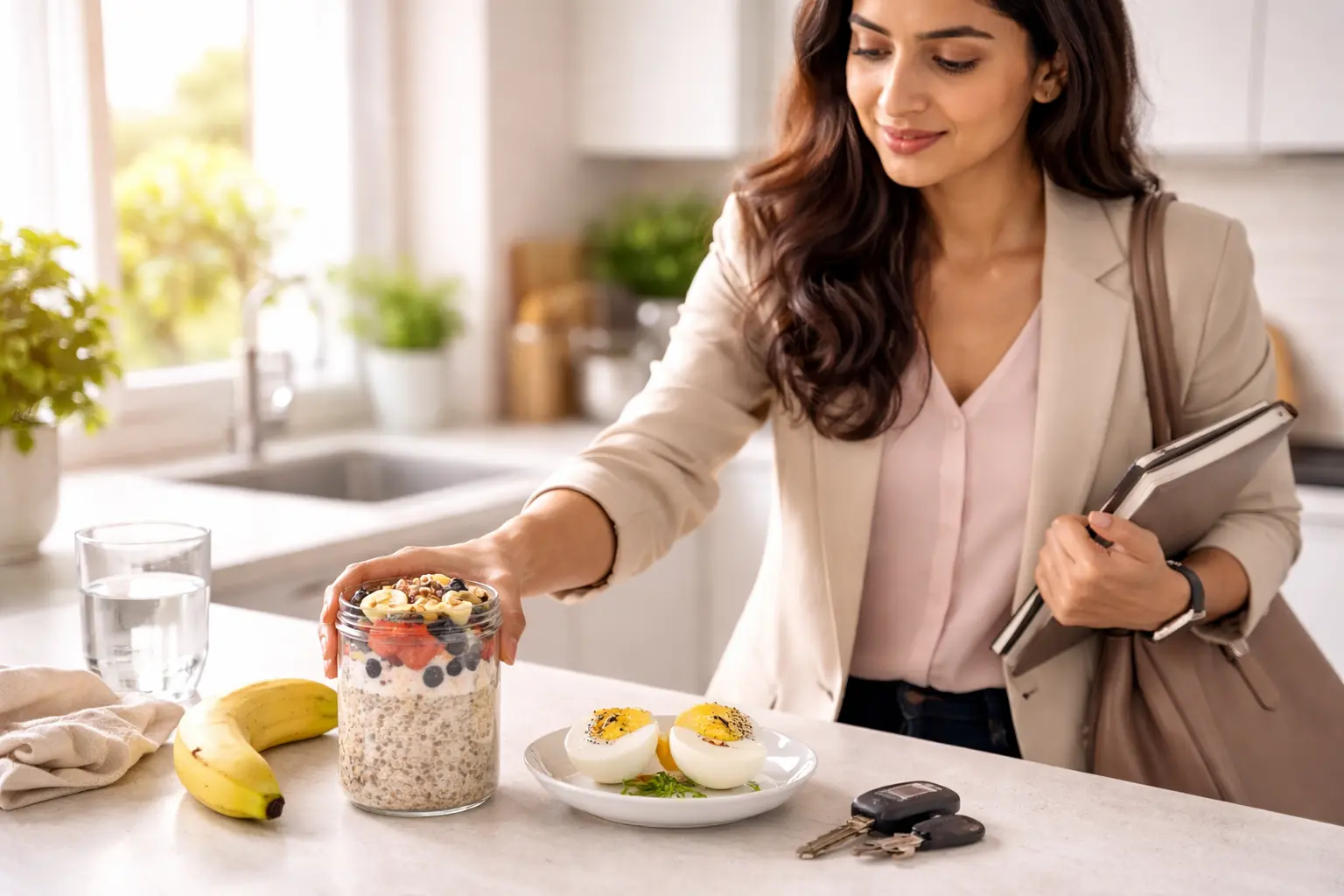
The average Indian office worker's morning looks like this: alarm at 6:30, 15 minutes of phone scrolling, hurried shower, iron the clothes, find the keys, worry about traffic, and rush out the door by 7:45 — with no time for anything resembling a proper breakfast.
The result? An empty stomach arriving at the office, followed by a vending machine biscuit run at 9 AM, a heavy lunch at 1 PM to compensate, an energy crash at 3 PM, and a dinner that is larger than necessary because the whole day's hunger accumulated.
Breaking this cycle does not require cooking. It does not require waking up an hour earlier. It requires 5 minutes and the right ingredients already in your kitchen or fridge.
All 12 breakfasts in this guide require zero cooking, take under 5 minutes to assemble, and are genuinely nutritious — not just low-calorie empty foods that leave you hungrier than before.
📖 Read Also:
1200 Calorie Indian Diet Plan (2026): 7-Day Veg & Non-Veg Meal Plan for Weight LossSee how these no-cook breakfasts slot into a full calorie-counted day, with exact numbers across a 7-day Indian meal plan.
Why Skipping Breakfast Backfires for Office Workers
Office work demands sustained cognitive performance — focus, decision-making, communication, problem-solving. All of these functions depend on a steady glucose supply to the brain.
After an overnight fast of 8–10 hours, blood glucose is at its lowest point of the day. Skipping breakfast extends this state, leading to:
- Compensatory overeating — hunger accumulates through the morning and lunch becomes noticeably larger than it would otherwise have been
- Poor food choices — strong hunger reliably pushes people toward high-sugar, high-fat options, which is why the 9 AM vending machine wins so often
- A weaker memory day — modest, but measurable in trials (see below)
- The 3 PM crash — a direct consequence of the oversized lunch, not of the missed breakfast itself
Worth being precise about how strong this evidence actually is, because most breakfast articles overstate it. A systematic review of clinical trials in healthy adults — Galioto & Spitznagel, Advances in Nutrition (2016) — found a small short-term benefit to memory from eating breakfast versus fasting. Results for attention and executive function were inconsistent in adults, unlike the clearer benefits measured in children and adolescents. So: breakfast is one reliable lever for steady morning focus, not a guaranteed productivity boost. The stronger, better-evidenced argument for eating it is the one below — what skipping does to your appetite and food choices for the rest of the day.
The argument "I am not hungry in the morning" is often a consequence of eating late the previous night. If dinner is at 10 PM and you wake at 6:30 AM, only 8.5 hours have passed — the body may not have fully completed digestion. Try moving dinner earlier by 30–60 minutes and morning hunger will return naturally.
All 12 Breakfasts at a Glance
← Swipe to compare →
| Breakfast | Calories | Protein | Prep Time | Portable? |
|---|---|---|---|---|
| Overnight Oats | 440 | 14 g | 3 min (night before) | Yes |
| Banana + Peanut Butter | 295 | 9 g | 1 min | Yes |
| Curd Bowl with Fruits & Nuts | 330 | 12 g | 3 min | Yes (carry separately) |
| Dates + Almonds | 170 regular / 335 Medjool | 3–4 g | 1 min | Yes |
| Protein Shake (whey + milk) | 265 | 32 g | 2 min | Yes |
| Greek Yogurt + Honey | 170 | 15 g | 1 min | Yes |
| Whole Wheat Bread + Peanut Butter + Banana | 355 | 15 g | 3 min | Yes |
| Makhana + Dry Fruits Mix | 230 | 7 g | 1 min | Yes |
| Boiled Eggs (2, pre-boiled) | 156 | 13 g | 0 min | Yes |
| Soaked Chia Seed Pudding | 385 | 14 g | 3 min (night before) | Yes |
| Sprouted Moong + Lemon | 45 | 4 g | 2 min | Yes |
| Fruit Bowl with Curd | 175 | 5 g | 4 min | Partially |
Calculated from USDA FoodData Central values for exactly the portions listed in each section below, with milk taken as Indian toned milk (58 kcal, 3.2 g protein per 100 ml). Treat them as close estimates, not lab figures — brand, fruit size, and how heaped your tablespoon is will move any row by 10–15%.
Two rows are worth reading twice. Dates swing enormously by type — a Medjool date is roughly three times the size of a regular one, so the same "4–5 dates" is either a light snack or a third of your morning calories. And sprouted moong is far lighter than it looks: sprouts are about 90% water, so a bowl that feels substantial is barely 45 calories. It is on this list for its protein-per-calorie ratio and its convenience, not as a standalone meal — pair it with an egg or a banana.
Breakfast 1: Overnight Oats
The ultimate meal-prep breakfast — made in 3 minutes the night before.
Overnight oats have no cooking involved. The oats soak in liquid overnight and are ready to eat cold in the morning.
Ingredients:
- ½ cup rolled oats
- ¾ cup low-fat milk or curd
- 1 tbsp chia seeds
- 1 tsp honey or 2 dates (blended)
- 1 banana or seasonal fruit
Method:
- Combine oats, milk/curd, chia seeds, and sweetener in a jar
- Mix well, cover, refrigerate overnight
- In the morning, top with sliced fruit
- Eat from the jar or carry to office in a sealed container
Time: 3 minutes the night before. Zero minutes in the morning.
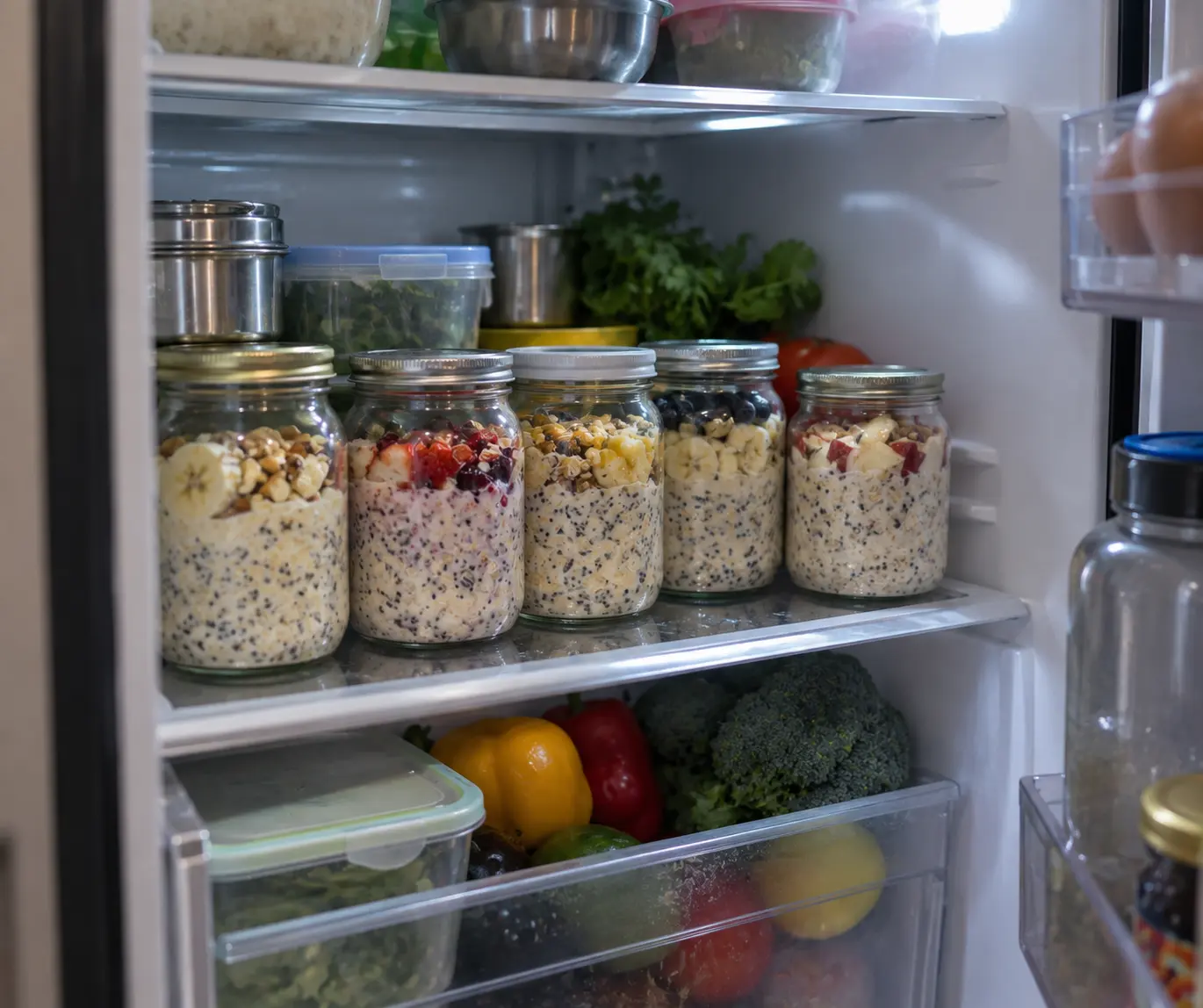
Make 3–4 overnight oat jars every Sunday night. Monday through Thursday breakfast is completely solved — just grab a jar from the fridge on your way out. Add different toppings each day to prevent boredom.
Breakfast 2: Banana + Peanut Butter
The simplest, most portable energy breakfast you can make.
- 1 medium banana
- 2 tablespoons natural peanut butter
Peel the banana, dip or spread with peanut butter, eat. Done in 60 seconds. That combination is 295 calories and 9 g protein — drop to 1 tablespoon of peanut butter if you want it closer to 200.
The banana provides fast-digesting carbohydrates for immediate energy. Peanut butter adds protein, healthy fat, and slows digestion so energy is sustained. This combination keeps most people full for 3 hours.
Portable version: Carry a banana and a small container of peanut butter in your bag. Eat at your desk when you arrive.
Breakfast 3: Curd Bowl with Fruits and Nuts
A complete breakfast in a bowl — 3 minutes, zero heat needed.
- 1 cup plain curd (not sweetened)
- 1 seasonal fruit (banana, papaya, apple, or mango)
- 1 tbsp mixed nuts (almonds, walnuts)
- 1 tsp seeds (flax, chia, or pumpkin)
- Optional: pinch of cinnamon
Layer curd in a bowl, top with fruit, nuts, and seeds. Eat immediately or pack in a container with toppings separate.
Always use plain, unsweetened curd — not flavoured yogurt. Flavoured yogurt sold in Indian grocery stores contains 15–25 g of added sugar. That is more sugar than a small mithai in most cases. Plain curd with natural fruit is vastly healthier.
Breakfast 4: Dates + Almonds
The zero-preparation option for the most rushed mornings.
- 4–5 dates
- 10 almonds (soaked overnight is best)
That is it. Grab and go.
Check which dates you are buying — it matters more than you would expect. A regular (deglet nour) date is about 7 g; a Medjool is about 24 g. Four Medjool dates with almonds is nearly double the same handful of regular ones:
Dates provide quick energy through natural sugars plus potassium and magnesium. Almonds add protein, healthy fat, and vitamin E. Soaking almonds overnight improves their digestibility and increases nutrient absorption.
At 3–4 g of protein this is the lowest-protein option on the list, and it is not the most filling. It earns its place purely on being possible in a genuinely zero-time morning. If this is your breakfast, plan a substantial mid-morning snack — a boiled egg or a banana — at your desk.
Breakfast 5: Simple Protein Shake
32 g protein in under 2 minutes — ideal for gym-goers heading to the office.
- 1 scoop whey protein (vanilla or unflavoured)
- 250 ml cold toned milk
- 1 banana (optional, for carbs)
Blend or shake in a shaker bottle for 20 seconds. Done.
With milk, that is 265 calories and 32 g protein — the highest-protein breakfast here by a wide margin. Made with water instead, it drops to about 120 calories and 24 g protein; add the banana and you are at roughly 225 calories.
If you do not have or do not want to buy whey protein, substitute with: 200 ml milk + 1 cup curd blended together (gives ~15 g protein). Not as concentrated, but works as a high-protein liquid breakfast. If you are considering buying whey for the first time, start with our beginner's guide to whey protein in India rather than the cheapest tub on Amazon.
Breakfast 6: Greek Yogurt with Honey
The highest-protein no-cook breakfast on this list.
Greek yogurt (not regular yogurt) contains 2–3x the protein of regular curd. A 150 g serving with a teaspoon of honey provides approximately 15 g protein at 170 calories — the best protein-to-calorie ratio on this list after the protein shake.
- 150 g plain Greek yogurt
- 1 tsp honey
- Optional: 1 tbsp granola (low-sugar variety) for crunch
Available at most supermarkets in India (Epigamia, Danone Oikos, Mother Dairy are common brands). More expensive than regular curd but the protein per rupee ratio is excellent.
Breakfast 7: Whole Wheat Bread + Peanut Butter + Banana
Balanced macros in 3 minutes — a complete breakfast.
- 2 slices whole wheat bread (toasted or untoasted)
- 1.5 tbsp natural peanut butter (spread)
- ½ banana (sliced on top)
Complex carbs from whole wheat + protein and fat from peanut butter + natural sugar from banana = a genuinely balanced breakfast that keeps you focused until lunch.
Check the ingredients list on peanut butter before buying. The whole test takes five seconds in the aisle — turn the jar around and read the list, not the front label.
Front-of-jar claims like "natural", "protein-rich" or "no cholesterol" are unregulated marketing. Only the ingredients list is binding:
← Swipe to compare →
| On the ingredients list | What it means |
|---|---|
| Peanuts (and sometimes salt) — nothing else | What you want. Two ingredients, ideally one |
| Sugar, jaggery, or any syrup | Sweetened. Common even in jars labelled "natural" |
| Palm oil or hydrogenated vegetable oil | Added to stop oil separation — the processing you are paying to avoid |
| "Roasted peanuts (92%)" | Fine — the % just tells you what the other 8% is, so check that too |
A genuinely natural jar separates, with a layer of oil on top. That is a good sign, not a defect — stir it back in. We compared the natural peanut butter brands sold in India on exactly this, if you want the shortlist.
Breakfast 8: Makhana + Dry Fruits Mix
The office-desk-friendly breakfast that requires zero preparation.
Pre-portion into a small container the night before:
- ½ cup roasted makhana
- 5 almonds
- 3 walnuts
- 2 dates (chopped)
- 1 tbsp pumpkin or sunflower seeds
Total: ~230 calories, 7 g protein. Eat at your desk with a glass of water. Not the highest protein option, but genuinely nutritious and effortless.
Breakfast 9: Boiled Eggs (Pre-Boiled)
Zero morning effort — if you prep Sunday evening.
Boil 5–6 eggs every Sunday. Store in the fridge. Every morning, grab 2 eggs, sprinkle with black salt and chaat masala, and eat in 2 minutes.
2 boiled eggs = 156 calories, 13 g protein. Pair with a banana for carbohydrates and the combination keeps you full for 3–4 hours.
This works best for people who work out in the morning — it doubles as a quick post-workout protein hit.
Breakfast 10: Soaked Chia Seed Pudding
Prepare in 3 minutes at night — a nutritional powerhouse.
- 3 tbsp chia seeds
- 1 cup low-fat milk or coconut milk
- 1 tsp honey or maple syrup
- Fruit topping (mango, strawberry, or banana)
Mix chia seeds, milk, and sweetener in a jar. Refrigerate overnight — chia seeds absorb the liquid and form a pudding. Top with fruit in the morning.
Chia seeds are high in omega-3 fatty acids, fibre, and protein. Made with a full cup of milk this is the second most substantial breakfast here — about 385 calories and 14 g protein — and the gel-forming fibre keeps you full for hours.
Chia seeds are increasingly available in India at supermarkets, health food stores, and online. They are not cheap (₹200–400 per 250 g) but last a long time since you only use 3 tablespoons per serving.
Breakfast 11: Sprouted Moong with Lemon
The lightest option here — excellent per calorie, but it needs a partner.
- 1 cup ready moong sprouts
- Lemon juice, black salt, chaat masala
- Optional: chopped onion and tomato
Mix everything. Done in 2 minutes — about 45 calories and 4 g protein.
Sprouting makes moong absorb a great deal of water, so it lands at roughly 30 calories per 100 g and a bowl that looks like a full meal is closer to a snack:
That is not a flaw: the protein-per-calorie ratio is among the best on this list, comparable to Greek yogurt and behind only the protein shake. But on its own it will not carry you to lunch — eat it alongside two boiled eggs or a banana.
Keep a batch of sprouted moong in the fridge. Soak moong overnight (8 hours), then leave in a strainer covered with a damp cloth for 24–36 hours. They sprout naturally at room temperature. One batch lasts 3 days in the fridge.
Breakfast 12: Fruit Bowl with Curd
Colourful, satisfying, and genuinely fast.
- 1 cup seasonal fruit (papaya, banana, apple, watermelon)
- ½ cup plain curd
- 1 tsp honey
Layer fruit in a bowl, top with curd and honey. 4 minutes, about 175 calories and 5 g protein.
For office portability: carry fruit pieces in one container and curd in another — mix when you arrive.
The Sunday Meal Prep Strategy
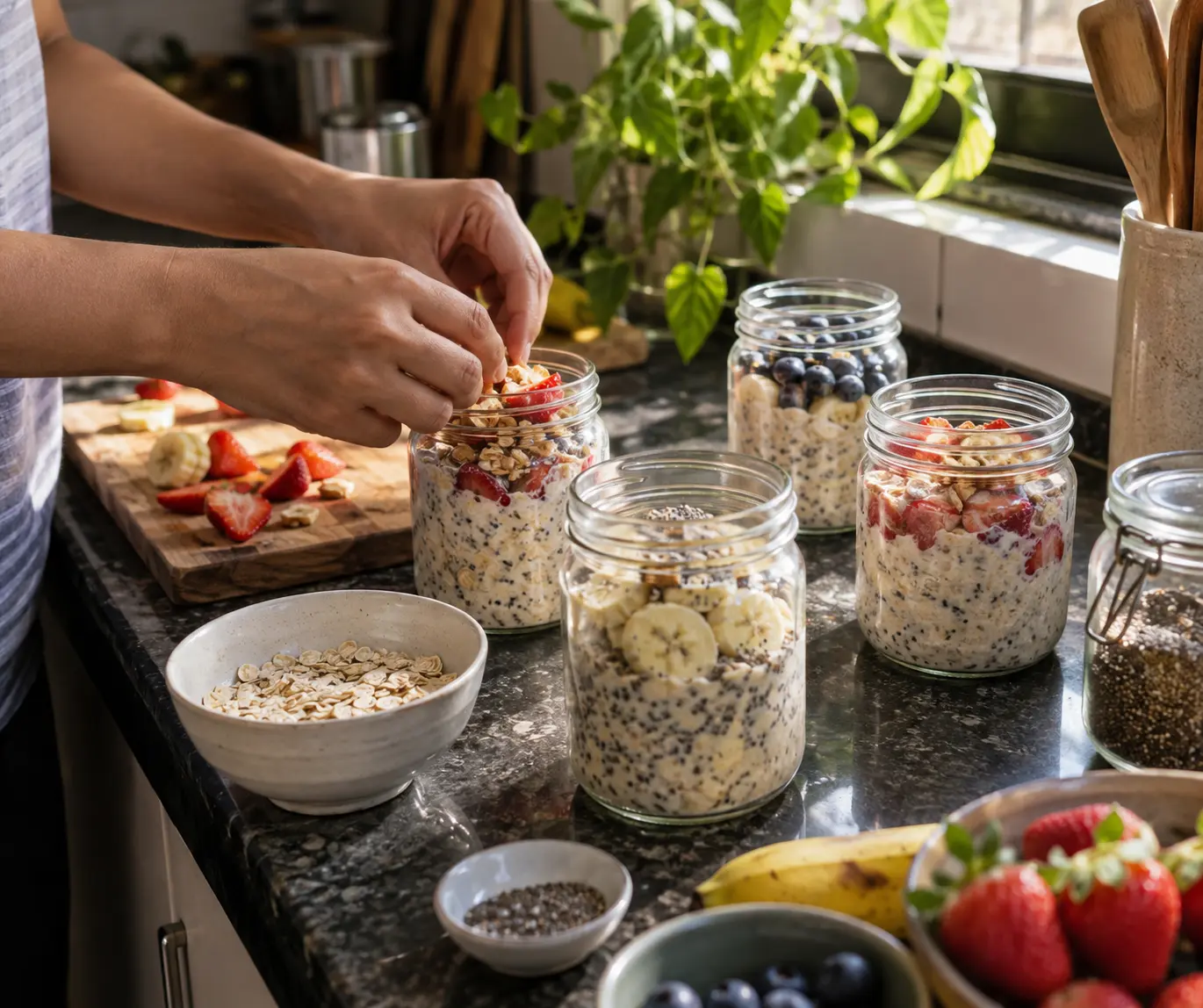
Removing morning decisions is the key to consistent healthy breakfasts. This is the same principle as a full weekly meal prep routine, scaled down to a single meal — spend 20 minutes every Sunday to set yourself up for the week:
← Swipe to compare →
| Prep Task | Time | Covers |
|---|---|---|
| Boil 5–6 eggs | 12 min | Mon–Fri boiled egg breakfast |
| Make 4 overnight oat jars | 10 min | 4 days of breakfast sorted |
| Soak almonds (for Mon) | 1 min | Ready by morning |
| Sprout moong | 2 min active (36 hr passive) | 3 days of sprout breakfast |
| Portion makhana+nuts into containers | 5 min | 5 days of snack/backup breakfast |
With this prep done, every morning is a simple grab-and-go operation.
What to Keep at Your Office Desk
For days when you genuinely have no breakfast, keep these at your desk:
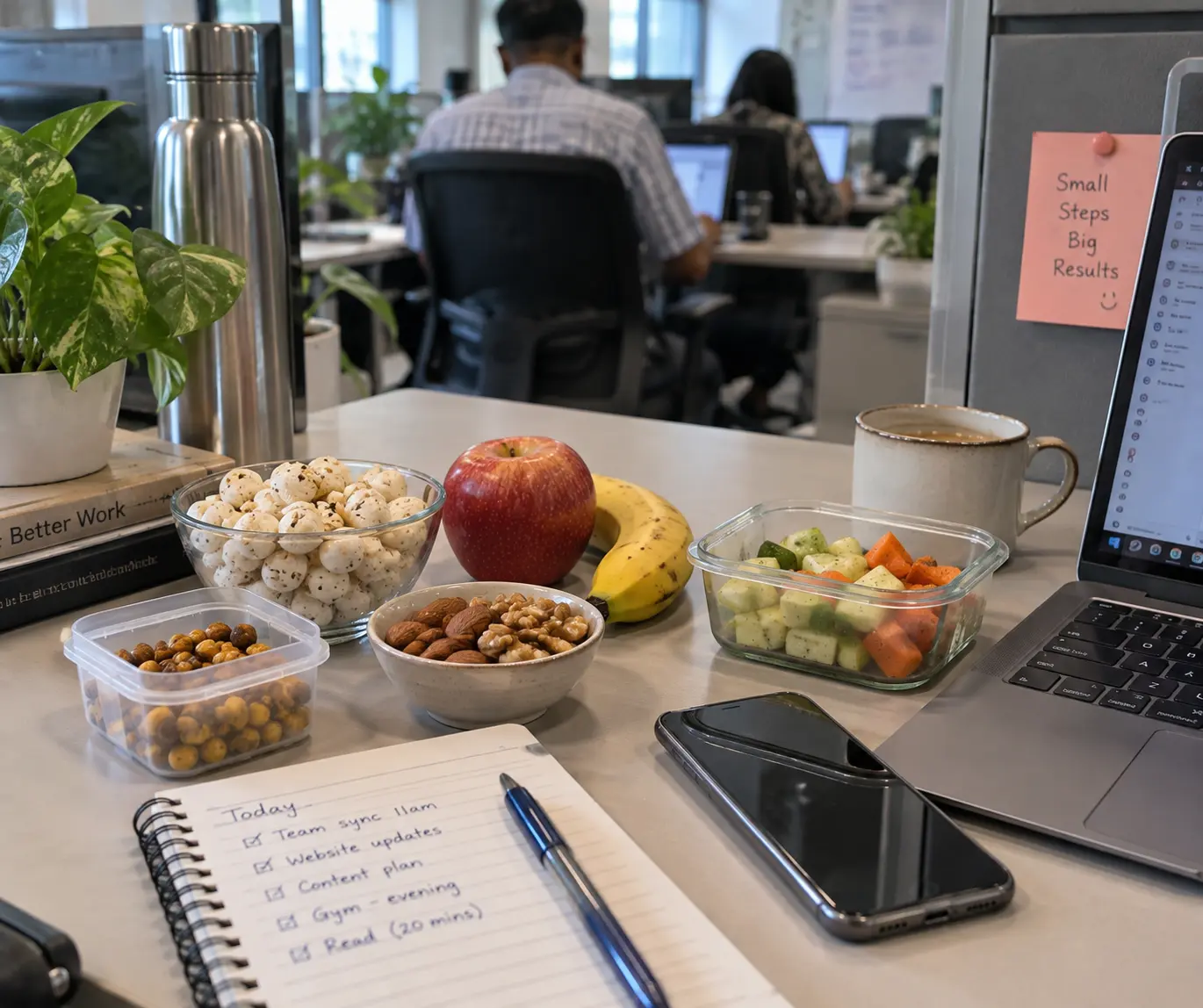
- Roasted chana — small airtight box, no refrigeration needed
- Mixed nuts and dates — small container, no refrigeration
- Makhana — lightweight, does not smell, no refrigeration
- Peanut butter single-serve packets — available online, pair with any fruit
- Protein bar (low-sugar, check label) — emergency backup
Desk snacks are emergency backups — not regular meal replacements. If you are reaching for your office desk food every day instead of a proper breakfast, your morning routine needs restructuring, not more snacks.
📖 Read Also:
Healthy Indian Breakfast Recipes for Weight LossFor the mornings when you do have fifteen minutes — the cooked Indian breakfasts that are actually worth the extra time, with calories for each.
📖 Read Also:
Indian Weekly Meal Prep GuideThe Sunday routine above, extended to lunch and dinner — what to batch, what to skip, and how to keep it to under an hour.
FAQ
1. Is it okay to eat the same breakfast every day?
For practical people, yes. If overnight oats or boiled eggs + banana works for you and you can maintain it consistently, that consistency is more valuable than variety. Add different fruit toppings or change the nuts to prevent boredom.
2. Can I skip breakfast and eat a bigger lunch?
For some people — particularly those following intermittent fasting — this works. However, for most office workers who need sustained cognitive performance from early morning, a small breakfast leads to better focus and less overeating at lunch. Try both approaches for 2 weeks and observe which one gives you better energy and total calorie control.
3. How do I stop feeling hungry by 10 AM after breakfast?
Increase protein in your breakfast. A banana alone (high carbs, low protein) digests quickly and leaves you hungry in 90 minutes. Add peanut butter, curd, boiled eggs, or Greek yogurt to any breakfast — the protein and fat significantly extends satiety.
4. What if I genuinely have zero appetite in the morning?
Start small. Even a banana and 5 almonds is better than nothing. Over 1–2 weeks, your appetite will adjust and morning hunger will become more natural. Also examine what time you are eating dinner — late dinners (9–10 PM) often suppress morning appetite.
5. Are protein shakes a healthy breakfast replacement?
Occasionally, yes. A protein shake with milk and banana covers carbs and protein adequately. However, it lacks the fibre, micronutrients, and gut-supportive properties of whole food breakfasts. Use protein shakes as a convenient tool, not a daily long-term replacement for real food.
This article is for informational purposes only. Individual nutritional needs vary — consult a registered dietitian for personalised advice.
Free Tools to Help You
Put this article into action — use our free calculators to get your personalized numbers.
Was this article helpful?
Want More Tips Like This?
Join 1,000+ readers getting weekly fitness, diet, and wellness tips + FREE meal plan
No spam, ever. Unsubscribe anytime.

About the Author: Ashwani
Fitness influencer and wellness writer helping Indians build healthier lifestyles.
Read more about us →Comments
Leave a Comment
Your email will not be published. Comments are reviewed before appearing.
You Might Also Like
Continue your wellness journey
33 min read
Indian Diet Plan for Weight Loss: The Complete 2026 Guide
Most Indians gain weight not from indulgence but from not knowing their portions. This complete Indian diet plan covers calorie targets, 7-day meal charts, 1200 and 1500 calorie plans, vegetarian options, and the 10 mistakes keeping you stuck — updated June 2026.

14 min read
Indian Festive Eating: Enjoy Diwali & Navratri Without Weight Gain
Diwali sweets, Navratri fasting, Holi bhaang, Eid biryani — Indian festivals are built around food. Most people gain 2–4 kg every festive season and spend months trying to undo it. This guide shows you how to genuinely enjoy every festival without the guilt or the weight gain.

11 min read
Soaked Almonds vs Raw Almonds: Morning Benefits & What Science Says
Every Indian grandmother insists on soaked almonds in the morning. But is the science behind this tradition actually real? Do soaked almonds genuinely have more benefits than raw? A complete, evidence-based answer.